Application Brief: Improving Friction Material Screening with Brake Particle Collection
Accelerating Brake Material Development with Benchtop Testing
New brake formulations are driven by the desire for performance enhancement, cost reduction, or alignment to environmental regulations. A brake material, which typically can contain upwards of 20 different ingredients and multiple processing steps, must ultimately fulfill the stopping requirements of the vehicle for which it is intended. While it is challenging to replicate on-vehicle braking performance characteristics in an inertia brake dynamometer test, it has previously been considered even more challenging to do so in a small-scale bench test.
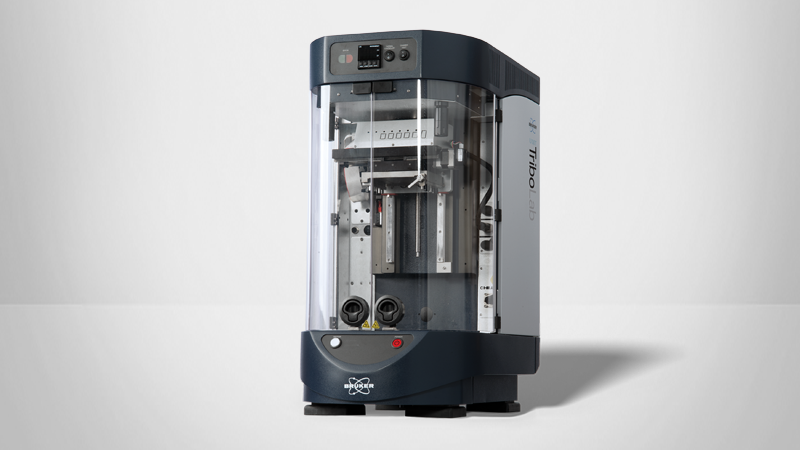
This application brief introduces Bruker's brake material screening module for the UMT TriboLab platform and its integrated particle collection chamber. It describes how pre-screening the friction behavior of brake material formulations can be done prior to submission to full-scale inertia dynamometer testing, with particle collection conducted under the same test conditions.
Readers can expect to learn:
How benchtop brake screening complements full-scale dynamometer testing
How to collect wear debris at specific stages of SAE J2522 or AK-Master-style sequences
How COF, particle size, and particle composition data differ between NAO and low-steel brake material formulations
KEYWORDS: Tribometer; Mechanical Tester; Application Brief; Bruker; UMT TriboLab; Brake Particle Collection; Friction Materials; Automotive; SAE J2522

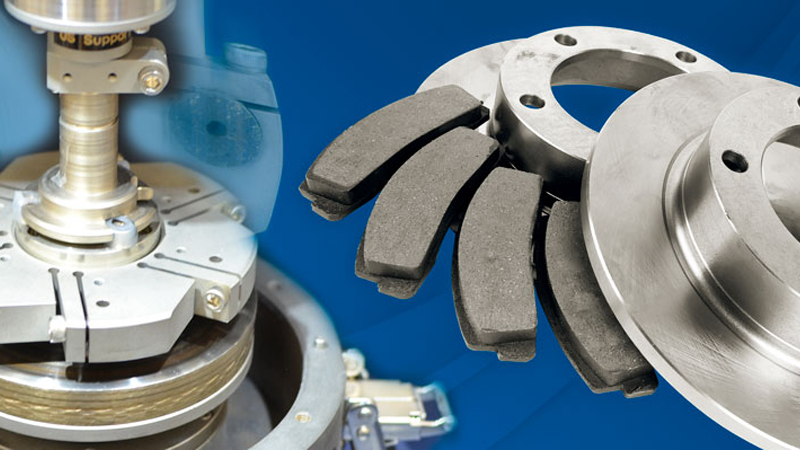
The brake material screening module comes with a template for converting many of the brake-specific conditions from the most common OEM dynamometer tests (e.g., the SAE J2522 or AK-Master test) to be replicated on the TriboLab system. The coefficient of friction (COF) is captured for the range of conditions, including, green, burnish, speed/ pressure sensitivity, motorway, cold, fade and recovery. Such screening tests can significantly speed up development time. Friction material developers can study the effect of many variables, including contact pressure, speed, temperature, and humidity in very well controlled conditions with high-resolution viewing of the data details.


In addition to COF behavior of new brake material formulations, recent interest during brake material development is also high in understanding and assessing particle generation (i.e., the wear debris). This latest research aspect can also be pursued with Bruker’s brake particle collection chamber on the TriboLab tester. The particle collection system offers multiple collection methods, depending on the user’s needs. Particles can be collected on adhesive-backed collection strips (Figure 2), which can be masked during different stages of the testing, or collected from the easy-to-remove-andclean chamber and bottom tray, or through the use of an in-line filter and vacuum pump system for particle separation by size (Figure 3).
Particles can be collected from the chamber either at the end of the test for further characterization and analysis, or from specific stages during a simulation of a particular dynamometer sequence, such as the SAE J2522 or AK-Master test. Researchers can also collect particles under any custom selfdefined research test conditions, such as at specific temperatures, speeds or pressures. Figure 4 shows histograms of particle sizes obtained after testing a non-asbestos organic (NAO) brake material and low steel (LS) brake material with TriboLab.
LEARN MORE:


An example of the differing compositions of particles collected from different brake pad types is shown in the EDS spectra in Figure 5, obtained from the same NAO and LS brake materials.
With data obtained from the TriboLab benchtop brake screening test module and particle collection setup, friction material developers and brake manufacturers can decrease their development time, reduce costs, and increase efficiency by down selecting from many trial compositions those materials that exhibit the best performance in the benchtop studies. Only the most promising compositions would then be submitted to full-scale dynamometer or vehicle stopping tests. Additional benefits include the possibility of fundamental studies of particle generation and potential changes in composition that occur during braking, using well characterized and controlled test conditions.
References
- California SB 346, Kehoe. Hazardous materials: motor vehicle brake friction materials, Sept. 27, 2010.
- Washington SB 6557. BRAKE FRICTION MATERIAL-- RESTRICTIONS ON USE, June 10, 2019.
Author
Steve Shaffer
steve.shaffer@bruker.com