Tech Note: Assessing Glass Strength Using Controlled Defects
Creating Controlled Defects in Glass
Improving glass durability requires understanding how flaws initiate and propagate cracks under load. Because failure is statistical, experiments benefit from known, repeatable defect populations. Controlled defect creation paired with fracture testing provides a direct way to relate flaw distributions to measured strength.
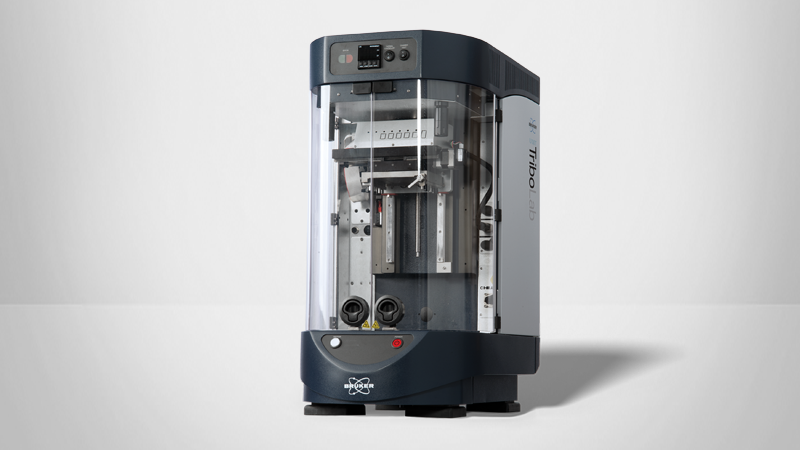
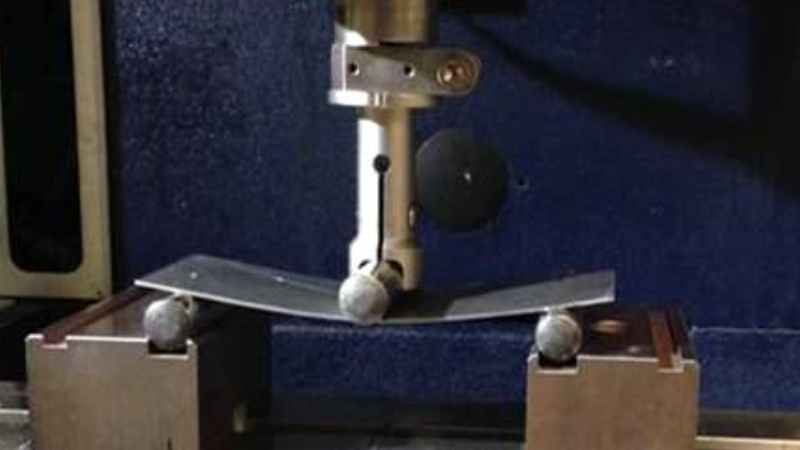
This technical note describes a method to provide controlled defects in glass by applying scratches of precise, repeatable length and depth under servo-feedback-controlled conditions. Then, the glass is fractured under controlled conditions using a three-point-bend fixture installed on a Bruker UMT TriboLab.
Readers can expect to find:
- Background on brittle fracture as a flaw-driven statistical process in glass
- Research motivations for improving fracture resistance in glass applications
- A controlled-defect concept linking flaw distribution, stress, and failure probability
KEYWORDS: Tribometer; Mechanical Tester; TN1003; Bruker; Technical Note; UMT TriboLab; Scratch Testing; Glass; Three-Point Bend

Assessing Glass Strength Using Controlled Defects
Brittle Fracture is a Statistical Process
Brittle fractures occur by the propagation of a flaw to the point where it exceeds the critical crack length for a particular material. At that point, catastrophic failure occurs nearly instantaneously. Glass that might be used in a touchscreen device or an energy saving exterior glazing is prone to such brittle-fracture behavior. The probability of failure of a piece of glass correlates with the probability of a flaw of critical length existing within the glass, in a zone being stressed. So the probability of failure depends both on the amount of load or stress on the piece of glass, as well as the glass flaw distribution.

Improving the Resistance to Glass Failure
To increase the durability of these important applications of glass, there is much interest in research that can:
- Reduce the sub-critical crack growth rate
- Increase the critical crack length
- Arrest the propagation of a crack which otherwise would result in catastrophic failure
A number of approaches are being investigated in this regard, including:
- Coatings
- Compositional modifications
- Microstructural and/or processing changes
Research Tools Available
To aid in the research and assessment of methods to improve glass fracture resistance, a means to provide controlled defects in glass can be used. By imparting known defects into a set of glass samples of reasonable statistical size (e.g., 10), and then fracturing these samples under known, controlled conditions, the effect of various treatments can be determined.
A Bruker UMT, equipped with a standard diamond tip, such as a Rockwell indenter, can be used to apply scratches of a precise and repeatable length and depth under servofeedback controlled conditions. Subsequently, a threepoint- bend fixture can be installed on the UMT to then fracture the glass under controlled conditions.