
American Association for Cancer Research Annual Meeting
McCormick Place Convention Center
Chicago, Illinois (Booth #4408)
Bruker at AACR 2025
Bruker is proud to partake in this year's AACR with our preclinical imaging and spatial biology solutions.
We will be highlighting how our bioluminescence and fluorescence imaging instruments as well as our PET/SPECT/CT solutions are helping researchers advance cancer research.
Be sure to stop by the Bruker Advanced Imaging & 4D Proteomics booth (#4408) to speak with our experts and participate in our fun games!
Interested in Bruker Spatial Biology Solutions? Come by booth #2320 to see how we are leveraging spatial biology and multiomics to drive novel discoveries in cancer research.
Meet our Advanced Imaging & 4D Proteomics Solutions
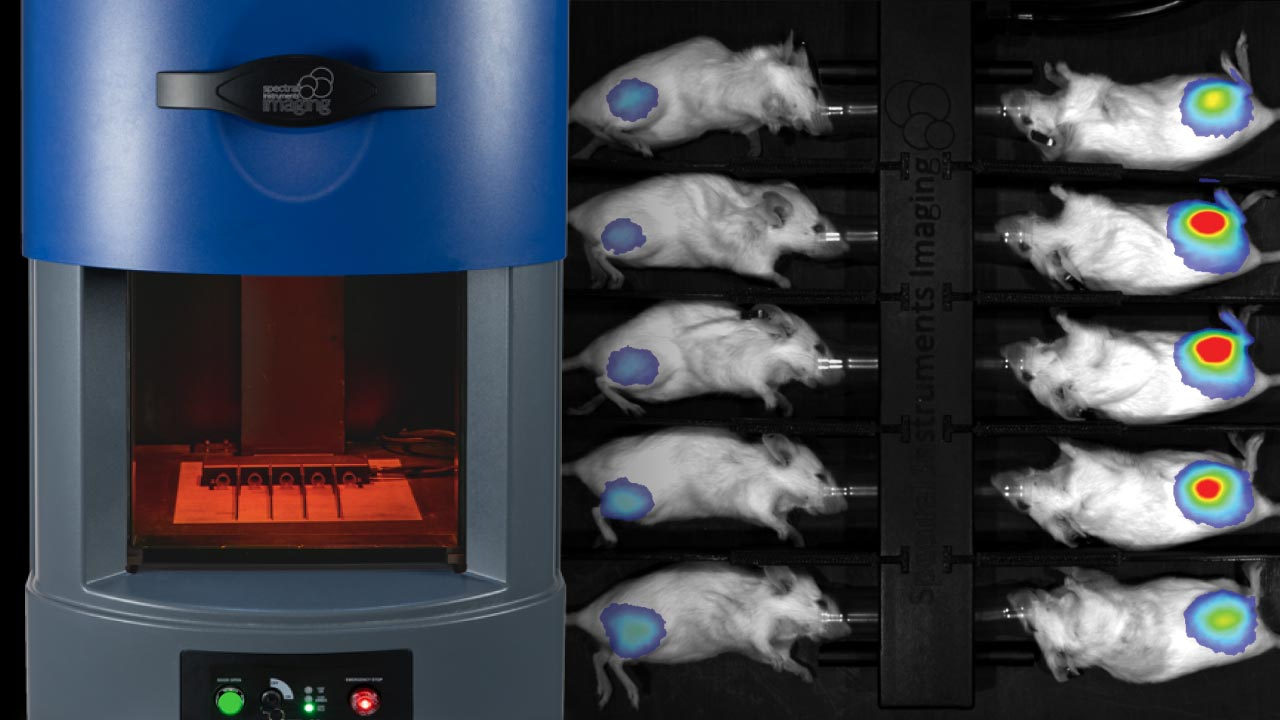
Spectral Instruments Imaging (Spectral) solutions play a crucial role in cancer research by providing advanced preclinical in-vivo optical imaging systems. These systems enable researchers to visualize and study biological processes in living organisms, which is essential for understanding cancer progression and evaluating potential treatments.
- High Sensitivity Imaging: Spectral systems, such as the Lago X, offer superior sensitivity for detecting bioluminescence (BLI), fluorescence (FLI), and X-ray signals. This allows researchers to observe cancer cells and their behavior in real-time
- Quantifiable Imaging: The advanced optics and absolute calibration of spectral systems ensure that imaging results are quantifiable. This means researchers can accurately measure changes in tumor size, growth rates, and response to treatments
- Multi-Modality Imaging: Spectral systems support multiple imaging modalities, including BLI, FLI, and X-ray. This versatility enables comprehensive studies of cancer biology, from tracking tumor growth to monitoring metastasis. Spectral systems are also able to co-register with other Bruker modalities, providing even greater flexibility
- High Throughput: Systems like the LAGO X allow for high-throughput imaging, meaning multiple animals can be imaged simultaneously. This increases the efficiency of preclinical studies and accelerates the research process
- Ease of Use: Spectral's Aura software provides a seamless workflow, enhancing productivity and making it easier for researchers to conduct complex imaging studies
By integrating these advanced imaging technologies, Spectral Instruments Imaging solutions help researchers gain deeper insights into cancer biology, ultimately aiding in the development of more effective treatments.
MOLECUBES enhances cancer research through its advanced preclinical imaging systems, which include PET, SPECT, and CT modalities. Here are some key ways MOLECUBES contributes to cancer research:
- High-Resolution Imaging: MOLECUBES' systems, such as the γ-CUBE for SPECT and β-CUBE for PET, provide high-resolution images that allow researchers to visualize and quantify tumor targeting and biodistribution of radiopharmaceuticals
- Multimodal Imaging: MOLECUBES offers a modular approach with its X-CUBE (CT), γ-CUBE (SPECT), and β-CUBE (PET) systems. This enables comprehensive imaging studies by combining different modalities to get a complete picture of tumor biology and treatment response
- Compact and User-Friendly Design: The benchtop design of MOLECUBES systems makes them accessible and easy to use in any research lab. Their intuitive software and fast workflows enhance productivity and allow even novice users to capture high-quality images
- Theranostic Applications: MOLECUBES' imaging systems are used in theranostic research, where they help in visualizing and quantifying the targeting of radiopharmaceuticals to tumors. This is crucial for developing treatments that minimize damage to healthy tissues while effectively targeting cancer cells
- High Throughput: The compact design and efficient workflow of MOLECUBES systems enable high-throughput imaging, which is essential for large-scale preclinical studies
By providing these advanced imaging capabilities, MOLECUBES supports researchers in gaining deeper insights into cancer biology, improving the development of targeted therapies, and enhancing the overall understanding of cancer treatment efficacy.