
IUCr 2026
August 10-18, 2026
The BMO Centre, Stampede Park, Calgary, Alberta, Canada
We look forward to seeing you at the 27th Congress and General Assembly of the International Union of Crystallography (IUCr2026). The congress will be held in Calgary, Alberta, Canada, from August 11 to 18, 2026.
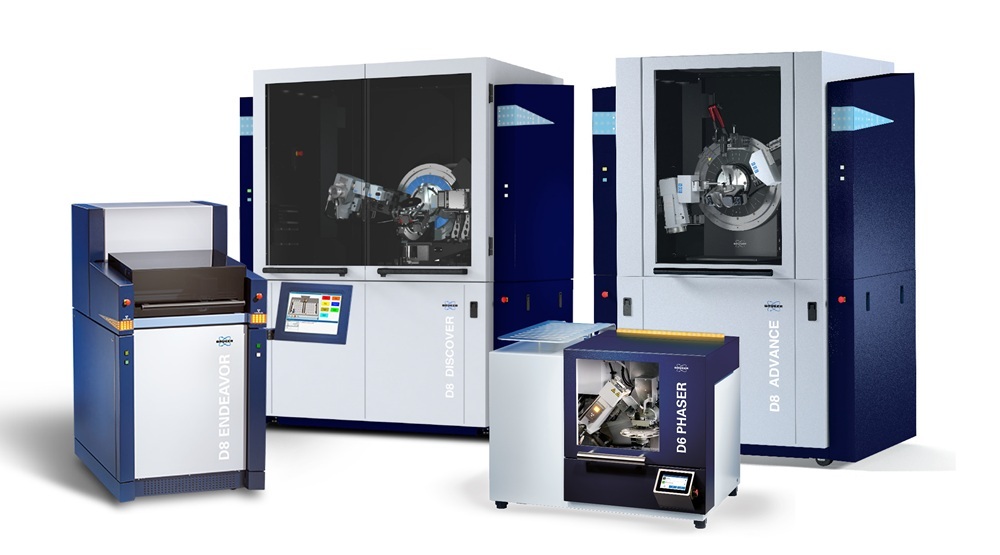
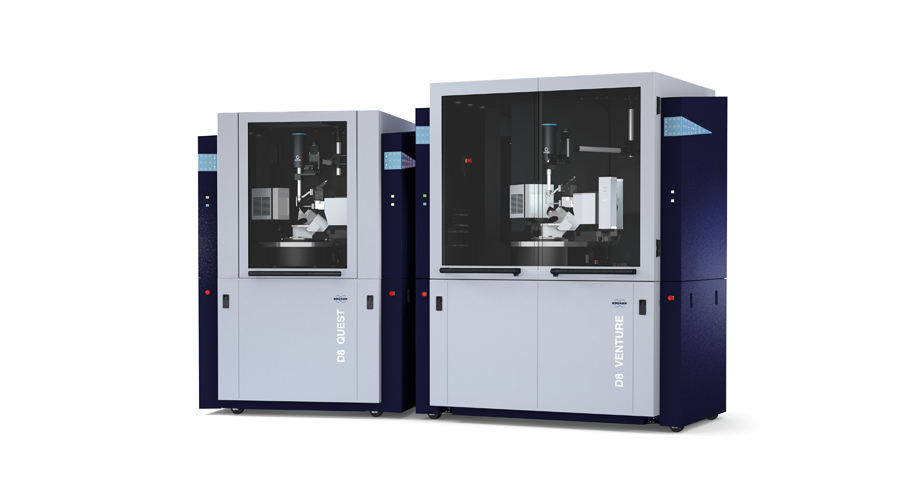
We present updates in XRD and SC-XRD instrumentation, software, and methods. Explore our solutions for high energy X-ray diffraction and see how our technologies advance structural science research.
IUCr2026 brings together the global crystallography community, including researchers, educators, and industry leaders, to share the latest scientific advances and applications across all areas of structural science.
Visit us at Booth No. 19 to learn about our developments, discuss your challenges, try new tools for workflow enhancement, or just for a chat.
Luncheon: High-Energy X-ray Diffraction and Single Crystal Diffraction in the Laboratory
Date & Time TBD. Please check back regularly for updates!
In this luncheon presentation, we will introduce the instrumentation and applications of high-energy X-ray diffraction (XRD) and single crystal X-ray diffraction (SC-XRD) in laboratory settings. By utilizing Mo and Ag radiation, these techniques bring capabilities typically associated with synchrotron experiments into home laboratories. This transition allows for deeper penetration, access to higher scattering vectors, and improved data quality, facilitating the study of complex materials in realistic environments.
High-energy laboratory XRD enhances conventional diffraction techniques, enabling non-destructive analysis of real materials in their true environments. The increased penetration depth allows for measurements of intact devices, battery cells, catalysts, and capillary samples. Additionally, access to higher scattering vectors improves sensitivity to local and short-range order.
When paired with high-energy detectors and operando and non-ambient capabilities, high-energy XRD offers integrated workflows for phase analysis, Rietveld refinement, and pair distribution function (PDF) analysis. This combination provides deeper structural insights while minimizing reliance on synchrotron experiments.
High-energy SC-XRD, utilizing Mo and especially Ag radiation, facilitates precise structure determination of challenging materials, including small crystals, strongly absorbing samples, and complex solid-state systems. The reduced absorption and extinction effects enhance intensity accuracy and allow for higher-resolution data collection.
These advantages are particularly significant in applications such as high-pressure crystallography in diamond anvil cells, quantum crystallography, and advanced materials chemistry. Coupling high-brilliance sources with high-efficiency detectors and advanced software workflows improves data quality, accelerates experiments, and deepens our understanding of atomic structure and bonding.
Bruker's Conference Program:
August 11th
8:30 AM - 4:30 PM: Support and teach at the ShelXle Workshop 017
Mastering Single-Crystal Structure Refinement: From Fundamentals to Advanced Techniques
Organizers: Matthias Zeller
August 18th
MS-130: Artificial Intelligence and Machine Learning in Crystallography and Scattering
11:30 AM - 11:50 AM: Presentation
Deep Learning–Driven Optical Centering for Automated Single Crystal X-ray Diffraction
Speakers: Michael Ruf, Bruker AXSMS-121: Tribute to George Sheldrick: Legacy of a Crystallographic Computing Pioneer
12:30 PM - 1:00 PM: Presentation
Standing on the Shoulders of a Giant in Crystallography
Speakers: Anna V. Luebben, Bruker AXS SE