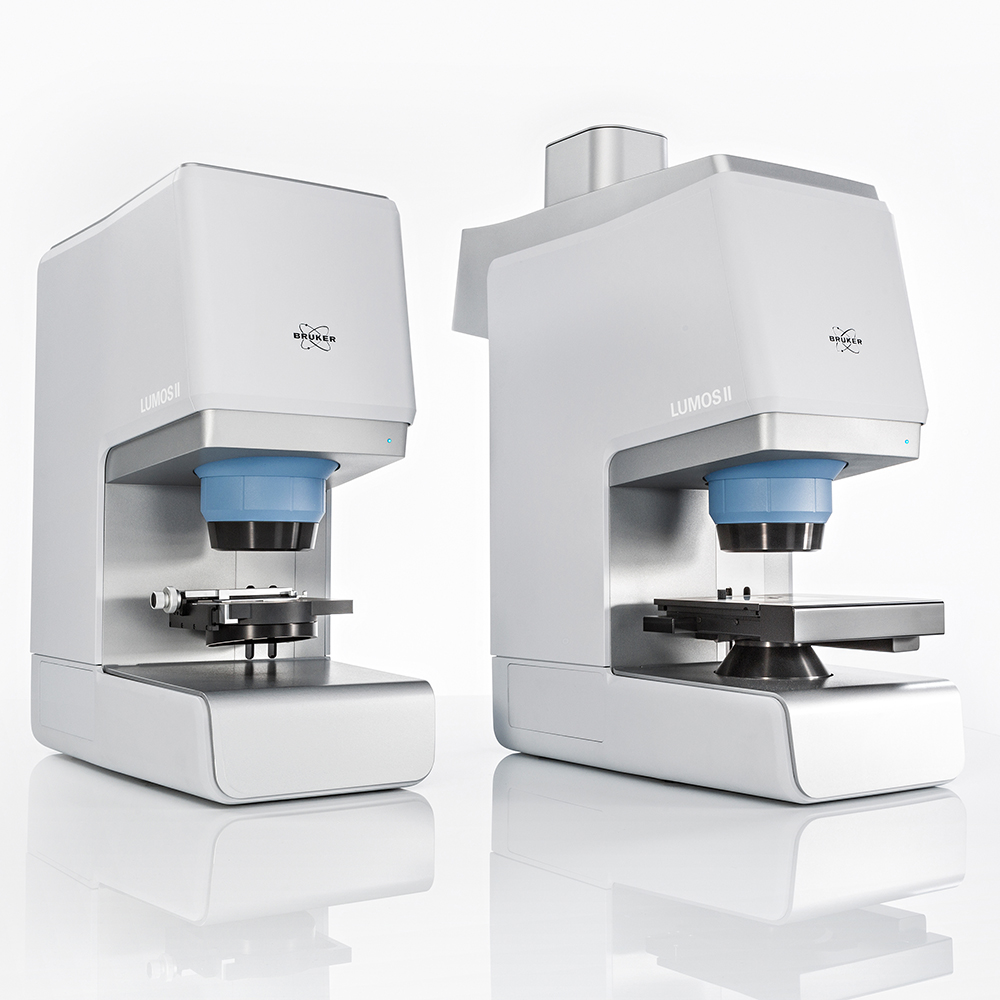

FT-IR Solutions for Microplastics Analysis
How Microplastics are Analyzed by FT-IR

FT-IR gives you the analytical depth when you need it.
FT-IR imaging delivers detailed, reliable results, making it a trusted approach for high-quality particle identification and characterization. In fact, the analytical detail of FT-IR is unmatched, enabling the identification of organic and inorganic particles alike with high analytical confidence.

How Many Particles? Which Polymers? What Sizes and Shapes?
Built to report which polymers are present, how many particles, and their size/shape distribution. Imaging-based infrared microscopy assigns a chemical identity to each detected particle and converts full‑filter spectral data into a particle list with polymer class, dimensions, and morphology.

Simplifying data evaluation and presentation.
Start measurements with ease and obtain particle lists including polymer ID, size and shape metrics, confidence values, as well as summary statistics and maps. Automated acquisition and integrated AI‑driven evaluation convert large spectral datasets into report‑ready outputs.
The Benefits of FT-IR
- Avoids bias and creates reliable, auditable data. Hyperspectral imaging eliminates the need for an optical detection step and enables full-filter analysis according to ISO 16094-2. This approach reliably captures transparent particles, overlapping particles, and fibrous materials, ensuring complete and comprehensive characterization.
- Excels under challenging conditions. Maintains reliable performance even in the presence of moderate sample matrix contributions or minor contaminants resulting from imperfect sample preparation. With coverage of the full MIR spectral range, it provides strong analytical depth for confident polymer discrimination.
- Offers flexible sampling capabilities. It can handle tasks ranging from standard analysis to advanced studies of individual particles at the highest spatial resolution with its automated µ-ATR crystal. Access to various FT-IR libraries allows confident identification of unknown materials and unexpected contaminants.