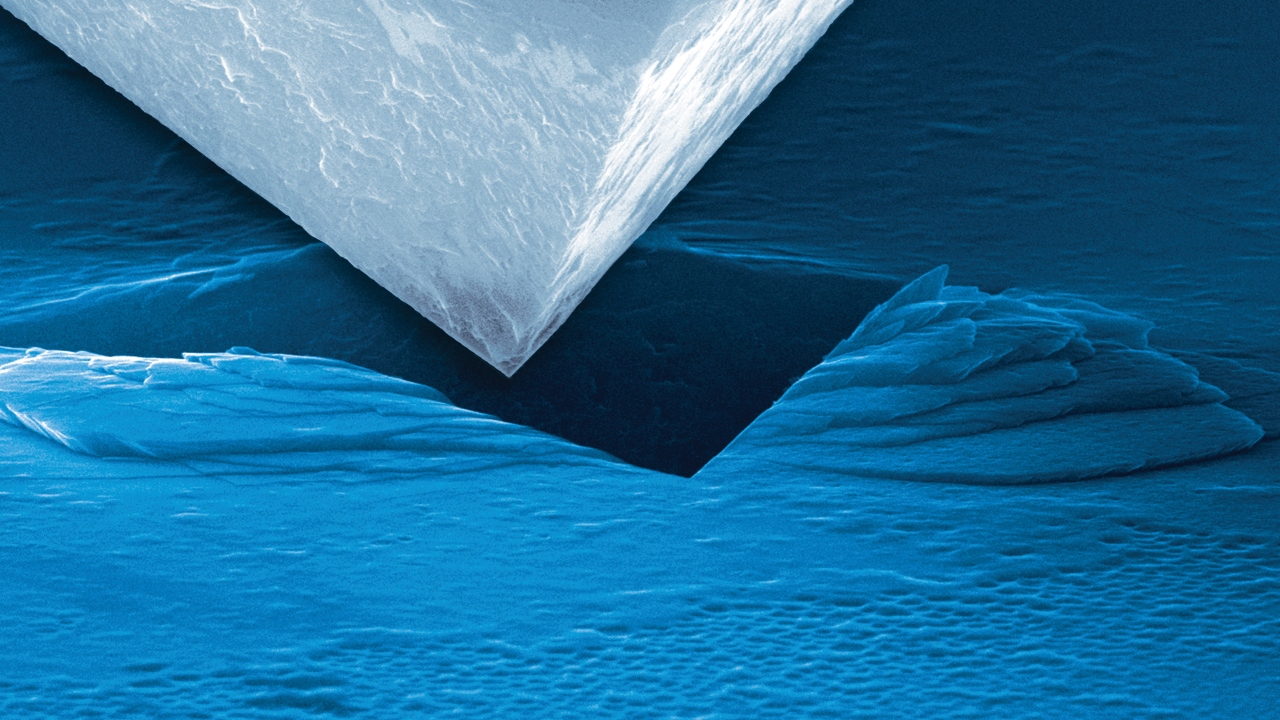

Advanced In‑Situ SEM Nanomechanical Characterization with the PI 89 SEM PicoIndenter
Understand material behavior under real‑world conditions with advanced SEM-based nanomechanical characterization.
In this webinar, guest expert Prof. Amit Misra, Ph.D., (University of Michigan) and Bruker Staff Scientist Kevin Schmalbach, Ph.D., discuss high strain rate nanoindentation and nanoscale mechanical testing approaches used to probe deformation mechanisms. Examples highlight how these methods support fundamental and applied materials research.
Viewers will learn about:
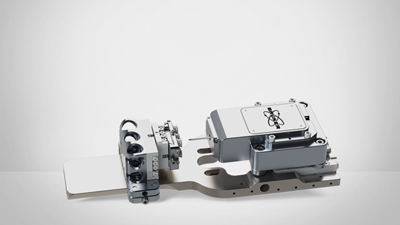
- High strain rate nanomechanical testing using the PI 89 SEM PicoIndenter
- In‑situ mechanical characterization of heterogeneous microstructures
- Research on nanoscale testing applied to metallic and composite systems
Advanced In-Situ SEM Nanomechanical Characterization with the PI 89 SEM PicoIndenter
This webinar features two presentations. The first discusses experiments and results from high strain rate nanoindentation of tungsten using the PI 89 PicoIndenter across room, elevated, and cryogenic temperatures. The second presentation focuses on deformation mechanisms in additively manufactured composite microstructures, with emphasis on binary model systems, such as Al–Si and Fe–Cu.
Featured Technologies:
Simultaneous High Temperature and High Strain Rate Nanoindentation of Structural Materials
Kevin Schmalbach, Ph.D., Staff Scientist, Nanoindentation Unit, Bruker
High strain rate nanoindentation presents additional challenges compared to quasistatic testing, including the need for high-speed electronics, rapid feedback control, well-characterized system dynamics, and advanced analysis techniques. It is essential for understanding material behavior under conditions relevant to real-world applications, such as impacts in automotive and aerospace environments. In this work, we present experimental results from high strain rate nanoindentation of tungsten using the PI 89 PicoIndenter across a wide temperature range, including room, elevated, and cryogenic conditions.
Contact:
Find out more about the technology featured in this webinar or our other nanomechanical testing solutions:
Nanomechanical Characterization of Nanoscale Composites
Amit Misra, Ph.D., Materials Science & Engineering, University of Michigan
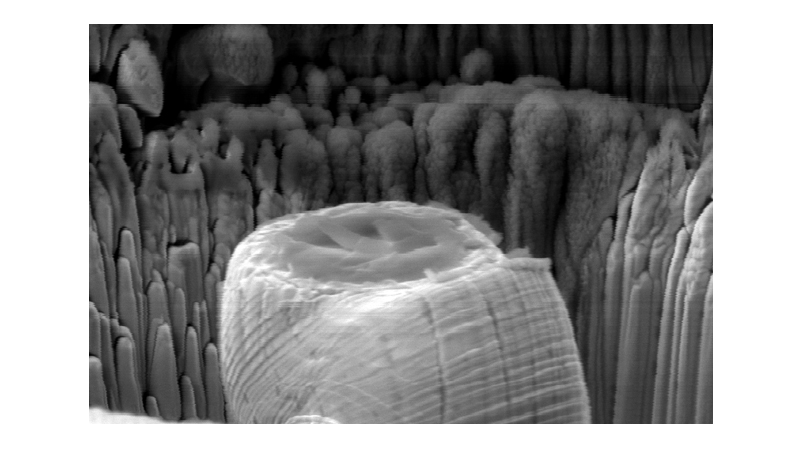
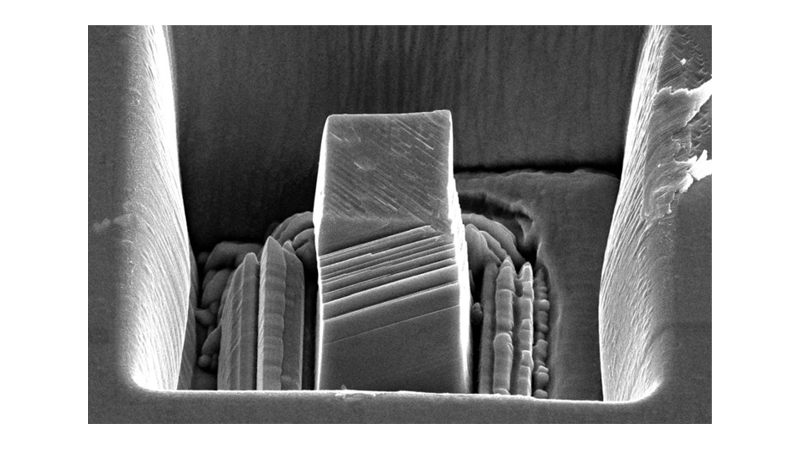
Nanomechanical characterization using Bruker’s Hysitron instruments to elucidate deformation mechanisms in additive manufactured composite microstructures in binary model systems, such as Al-Si and Fe-Cu, are presented. Direct-pull in-situ tension and micro-compression in a scanning electron microscope, integrated with postmortem scanning transmission electron microscopy and atomistic modeling are shown to be effective in the measurement of strength, strain hardening, and plastic deformability and fundamental understanding of novel dislocation mechanisms.