FT-IR Spectroscopy for Space & Planetary Research
Spectroscopy for Exploring and Understanding Space
Understanding the chemistry, materials, and environments of space requires spectroscopic measurements under conditions ranging from high vacuum and cryogenic temperatures to radiation exposure and planetary atmosphere simulations. FT-IR spectroscopy provides a versatile platform for investigating molecules, materials, and optical components relevant to planetary science and space exploration.
From interstellar molecules and planetary atmospheres to spacecraft materials and optical components, FT-IR spectroscopy supports research throughout the space science and technology lifecycle, from fundamental laboratory studies to the development and characterization of hardware for space missions.
Astrochemistry & Molecular Space Science
Investigate the formation, transformation, and identification of molecules under conditions relevant to interstellar and circumstellar environments.
- Matrix isolation of reactive and transient species
- Interstellar and planetary ice analogues
- Low-temperature molecular spectroscopy
- Photochemistry and radiation-induced processes
- Gas-phase molecular characterization
- Identification of reaction intermediates
- Laboratory reference spectra for astronomical observations
Planetary Science
Reproduce and study the chemical and physical conditions found on planets, moons, asteroids, and other extraterrestrial bodies.
- Planetary atmosphere and surface chemistry
- Mineral and molecular identification
- Gas–surface interactions
- Low-temperature and vacuum studies
- Atmospheric and environmental simulations
- Spectroscopic characterization of planetary analogues
- Investigation of processes relevant to planetary evolution
- Spacecraft Materials & Components
Characterize materials and optical components designed to operate in demanding space environments.
FT-IR spectroscopy provides non-destructive characterization of optical coatings, windows, filters, polymers, composites, thermal-control materials, and other functional materials, including their optical and chemical properties across relevant infrared ranges.
Applications include:
- Optical component characterization and spectral transmission
- Reflectance and emissivity measurements
- Thermal-optical properties of spacecraft materials
- Coating and surface characterization
- Material stability and degradation studies
- Environmental testing and aging
- Contamination and outgassing studies
- Comparison of materials before and after environmental exposure
- Simulating the Space Environment
Space-related experiments often require a combination of vacuum, cryogenic temperatures, controlled atmospheres, radiation, and optical excitation. FT-IR systems can be integrated with cryostats, vacuum chambers, environmental cells, irradiation sources, and optical excitation systems to monitor chemical and physical changes under controlled environmental conditions.
Time-resolved, rapid-scan, and step-scan FT-IR measurements enable researchers to follow dynamic processes, including photochemical reactions, radiation-induced transformations, and transient molecular changes.
From Laboratory Research to Space Missions
FT-IR spectroscopy connects fundamental molecular science with practical space technology.
Characterize molecules. Understand planetary environments. Test materials. Validate optical components.
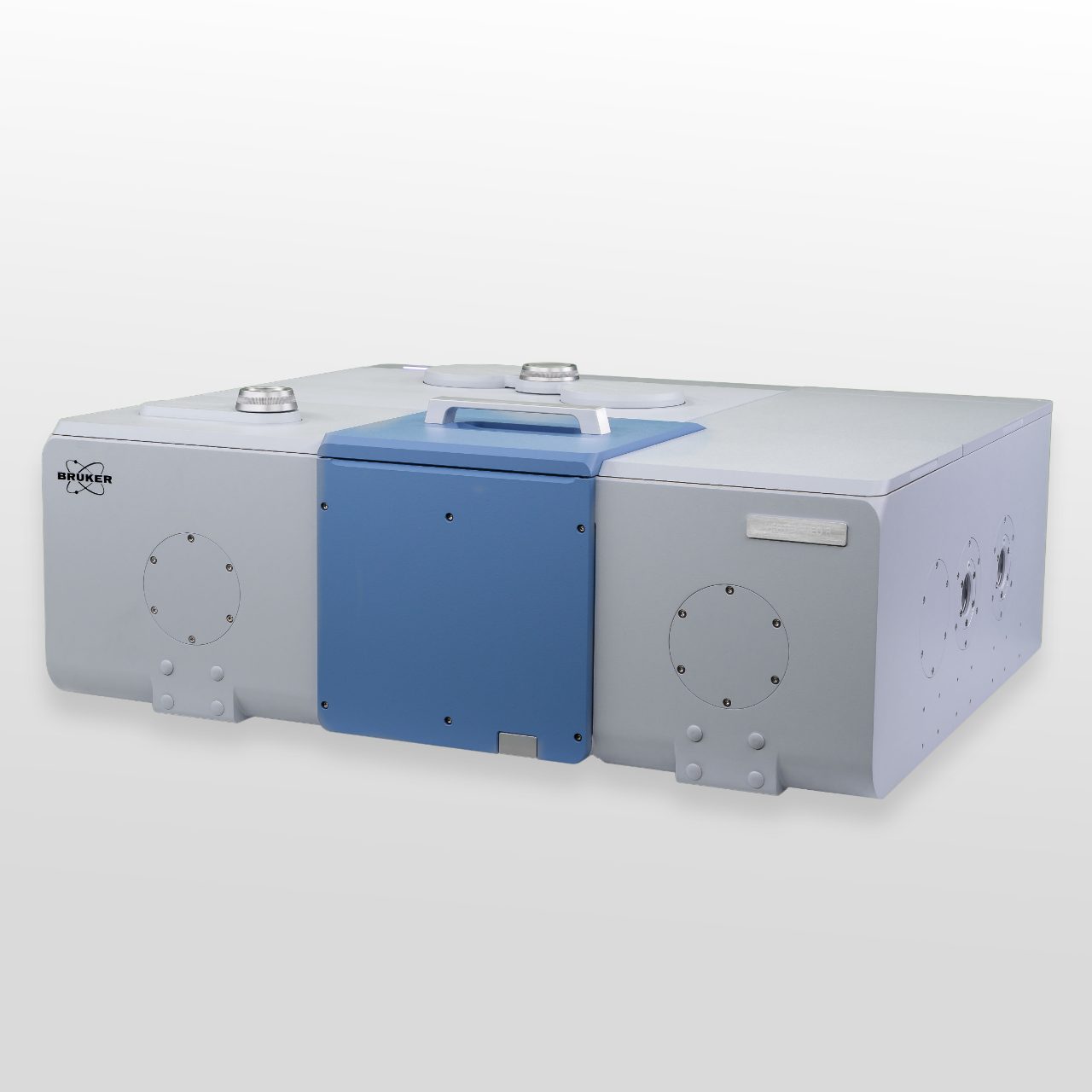
With flexible configurations spanning the mid-IR, far-IR, and THz spectral regions, Bruker FT-IR systems can be adapted to a wide range of astrochemical, planetary, materials, and space-technology applications.