Electrotunable Lens (ETL)
About Bruker's ETL Module
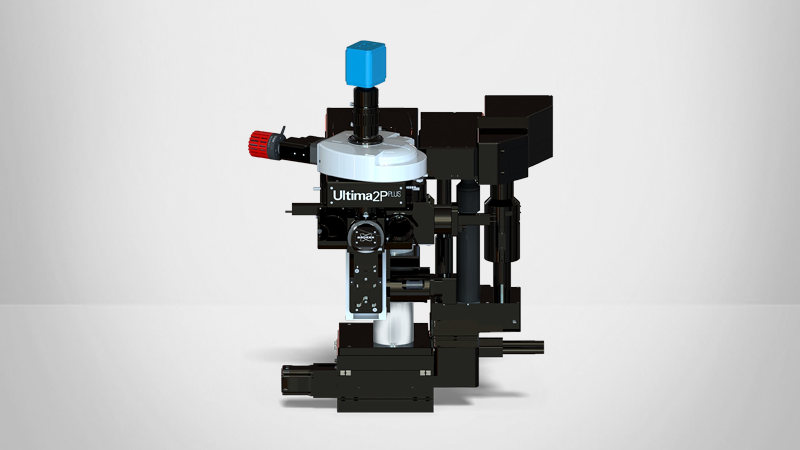
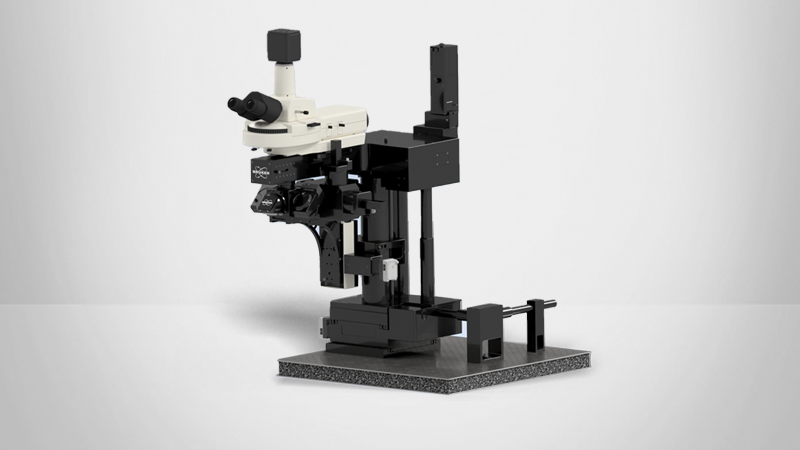
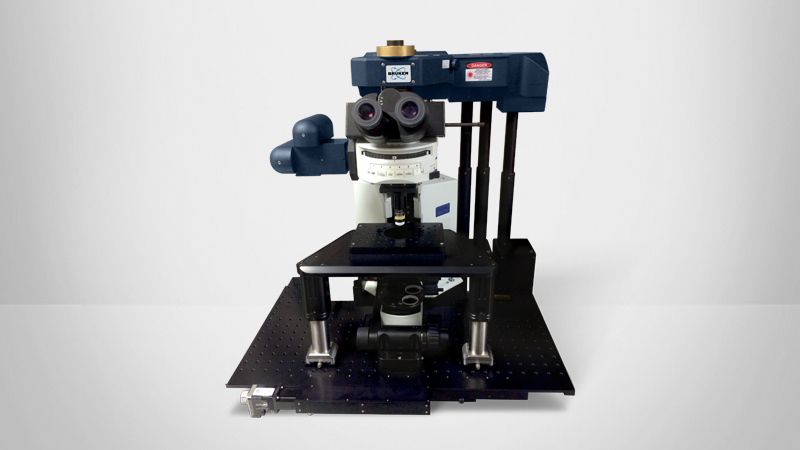
Electrotunable lens (ETL) also known as liquid lens, is a variable remote focus device that varies focal length with electrical current. The ETL require no mechanical structures and can adjust the focal plane of a stationary microscope objective, replacing a focus stage.
Using a bare tunable lens introduces significant optical aberrations therefore Bruker combined the tunable lens with a relay lens system to reduce the aberrations. Bruker-designed drive electronics allow tunable lenses to be easily synchronized with other microscope components.
On Ultima 2Pplus the ETL is decoupled from photo-stimulation light path and installed within imaging resonant path. The ETL with a stationary objective enables imaging different planes while holographic 3D optogenetics or neurotransmitter uncaging experiments are performed on multiphoton system. This arrangement is preferred over the use of piezo devices to move an objective lens between imaged planes to capture cells activity upon photo-stimulation.

How the ETL Extends Ultima System Capabilities
In this video: Jimmy Fong (Director, Products and Technology, Bruker Fluorescence Microscopy) explains how Bruker’s electrotunable lens (ETL) enables fast, remote axial focusing while maintaining consistent imaging quality across focal planes. He describes how Bruker overcame traditional ETL aberration limitations using radial correction, making ETL‑based volumetric imaging practical for demanding experiments.
The overview also shows how the ETL supports flexible 3D imaging workflows without moving the objective lens — specifically simultaneous 3D imaging and holographic photostimulation experiments — with example data from deep‑brain imaging applications.
Contact us or continue reading to learn more.

3D-view of volumetric stack recorded using the ETL focusing module. Layer 5B neurons in mouse visual cortex in vivo, labelled with tdTomato. Scale bar 100 µm. Unpublished data (2019) courtesy of Lisa Bauer, Dustin Herrmann, Mehmet Fisek, Michael Häusser’s lab, UCL, London.
Utilizes Bruker Patent: US11243394B2, CN112997103B