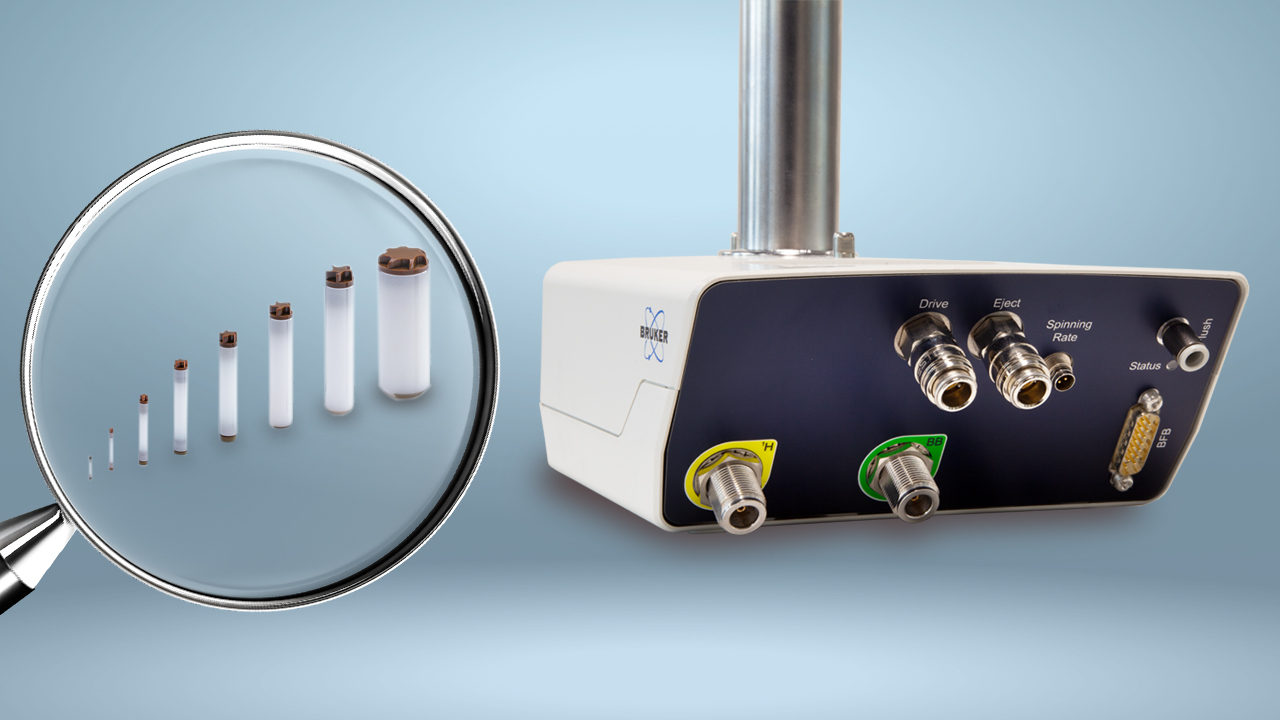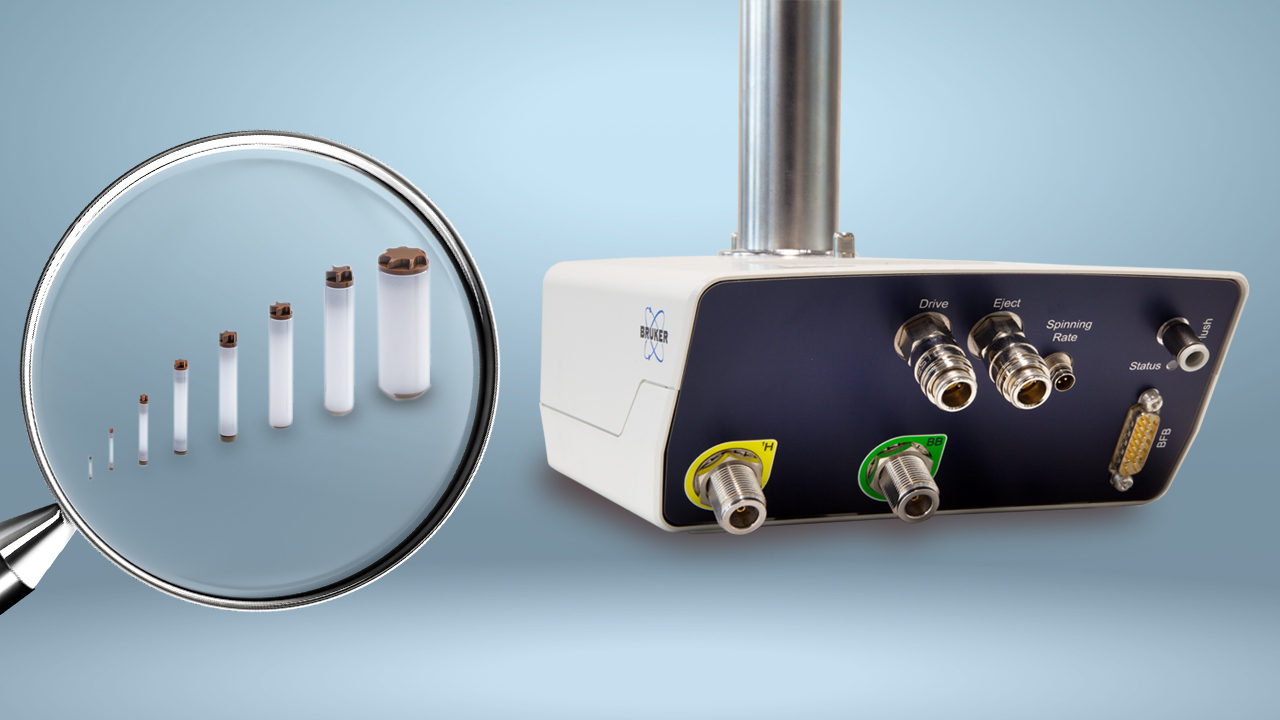

Solid‑State NMR experiments on low‑gamma nuclei such as 14N and 15N are often limited by sensitivity, complex setup, and long acquisition times. The CPMAS Low‑Gamma iProbe addresses these challenges by combining high power handling, automated tuning and matching, and automated magic‑angle adjustment to enable reliable, high‑sensitivity measurements with minimal manual intervention.This application note demonstrates how Bruker’s Low‑Gamma iProbe and integrated ATMA technology enable fully automated ultra‑wideline solid‑state NMR experiments. Practical workflows, probe features, and representative data illustrate how unattended frequency‑stepped acquisitions and CPMG‑based sensitivity enhancement simplify the measurement of broad static spectra and improve reproducibility across demanding low‑gamma applications.
Key points
- Superior sensitivity for low‑gamma nuclei: High signal‑to‑noise ratios are achieved, significantly reducing experimental time for nuclei such as 14N and 15N.
- Fully automated ultra‑wideline experiments: Integrated ATMA enables automatic tuning, matching, and frequency stepping, allowing unattended acquisition of broad static spectra.
- Reliable and reproducible probe setup: Automated magic‑angle adjustment and stored calibration parameters ensure narrow linewidths and consistent results across experiments.
Download the full application note to explore the complete experimental workflows, detailed parameter sets, and representative spectra demonstrating how the CPMAS Low‑Gamma iProbe enables “fully automated execution of ultra‑wideline experiments” while delivering high sensitivity and operational efficiency.