
Enhancing NMR Productivity: Applications and Implementation of Multi-Receiver NMR
Multi-receiver NMR enables the simultaneous acquisition of data from multiple nuclei within a single experiment, providing a powerful way to increase productivity and throughput in modern NMR laboratories. This application note demonstrates how single-, dual-, and triple-receiver experiments can be applied to reaction monitoring and structural verification, while reducing experiment time and delivering complementary analytical information. Practical examples include real-time monitoring of chemical reactions using 1H , 19F and 11B detection as well as advanced parallel and interleaved 2D NMR experiments. Native multi-receiver functionality of the Bruker Avance NEO-X platform and implementation in TopSpin and IconNMR are also presented.
Why This Matters
Reaction monitoring and structure verification often require information from multiple nuclei and multiple NMR experiments. In conventional single-receiver systems, separate measurements are necessary to collect this information, increasing experiment time and reducing temporal resolution. Multi-receiver NMR overcomes these limitations by enabling simultaneous or interleaved acquisition of multiple datasets, allowing scientists to capture complementary information while making more efficient use of instrument time. The application note demonstrates how this approach can support both routine analyses and advanced NMR experiments.
Key Benefits
- Faster Data Acquisition. Simultaneously acquire signals from multiple nuclei including 1H, 19F , and 11B within a single experiment to reduce overall experiment time.
- Enhanced Reaction Monitoring. Obtain complementary information from multiple nuclei with high temporal resolution, supporting the characterization of reactants, intermediates, and products.
- Simplified Spectra Through Decoupling. Interleaved acquisition enables heteronuclear decoupling during acquisition, reducing peak overlap and improving spectral interpretation.
- Parallel 2D NMR Experiments. Record experiments such as 1H- 1H COSY and 1H- 13C COSY simultaneously using PANSY methodologies, providing substantial time savings.
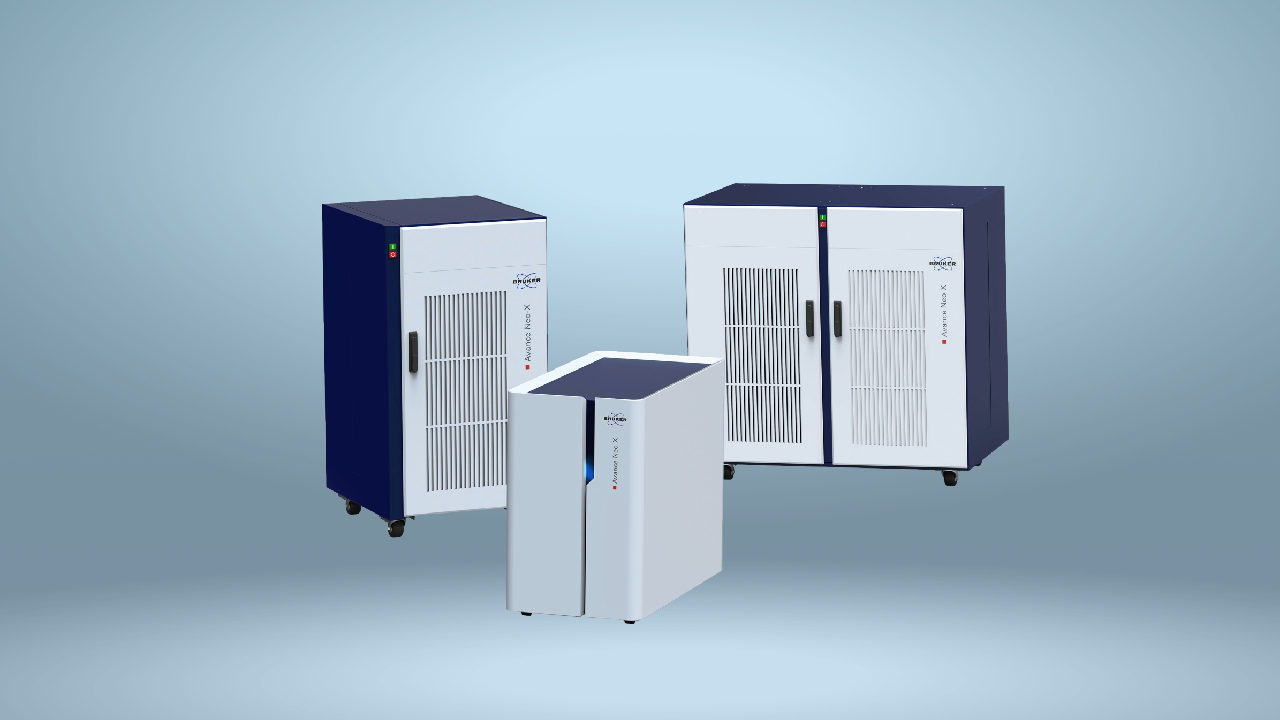
- Native Multi-Receiver Architecture. The Bruker Avance NEO-X console incorporates fully independent transceiver modules, enabling multi-receiver experiments without additional hardware.
Takeaway
This application note demonstrates how multi-receiver NMR can significantly improve laboratory productivity by combining faster data acquisition with richer analytical information. Through simultaneous detection of multiple nuclei and parallel execution of advanced NMR experiments, researchers can perform reaction monitoring and structural verification more efficiently. The built-in multi-receiver capabilities of the Bruker Avance NEO-X platform allow these workflows to be implemented directly within TopSpin and IconNMR without additional hardware requirements.
Download the Application Note
Learn how multi-receiver NMR reduces experiment time while providing complementary data from multiple nuclei in a single measurement.