NanoScope API
API-Driven Automation for Efficient Control and Autonomous Workflows
Bruker's NanoScope API™ provides real-time control of Dimension AFMs from Python scripts. It builds on more than two decades of Bruker AFM automation and provides direct programmatic access to scan parameters, stage motion, engage and withdraw, and image capture. Users can create custom scripts that automate repetitive tasks, experimental setup, measurement execution, data collection, and analysis workflows. NanoScope API also enables direct communication with researchers' own machine learning models, opening the door to autonomous experimentation and AI-enabled microscopy.

An Introduction to Scripted AFM Control with NanoScope API
In this video: Bede Pittenger, Ph.D., Senior Staff Development Scientist for AFM Applications at Bruker, introduces NanoScope API, from why scripted automation matters for AFM to how a first script is written and run.
He covers the session log window, built-in protection for the scanner, the documentation and examples included with the software, and how one script can both capture images and analyze the resulting data.
Contact us or continue reading to learn more.
Scripted Control of Your Dimension AFM
Predefined routines and adaptive experiments
NanoScope API supports both predefined and adaptive automation, giving users the flexibility to automate experiments in the way that best fits their needs. For predefined automation, users can execute repeatable, script-based workflows that follow a defined sequence of actions, ensuring consistency and high throughput. For adaptive automation, NanoScope API enables use of machine-learning models or AI Agents to guide AFM measurements. Data is analyzed in real time and imaging parameters adjusted appropriately, allowing the AFM system to respond intelligently without operator intervention.

Integration with external instruments
NanoScope API enables communication between the AFM and external accessories or other instruments to create coordinated experimental platforms. One script can coordinate the AFM with magnets, environmental enclosures, rotary stages, and sample-handling robotics, creating synchronized multimodal experiments from a single workflow.

Equipped for Modern and Future Research
Autonomous experimentation
Modern research is moving toward autonomous laboratories where software can plan, execute, and optimize experiments with minimal user intervention. NanoScope API provides the critical interface that allows software agents and advanced automation tools to interact directly with the AFM.
AI-enabled microscopy
Intelligent microscopy is advancing through AI-guided experiment planning, feature recognition, automated measurement selection, continuous workflow optimization, and agentic control of AFM operation. NanoScope API offers easy access to the closed-loop automation and integration flexibility these approaches require.


Examples from Current Research
Magnetic domain evolution under an applied field
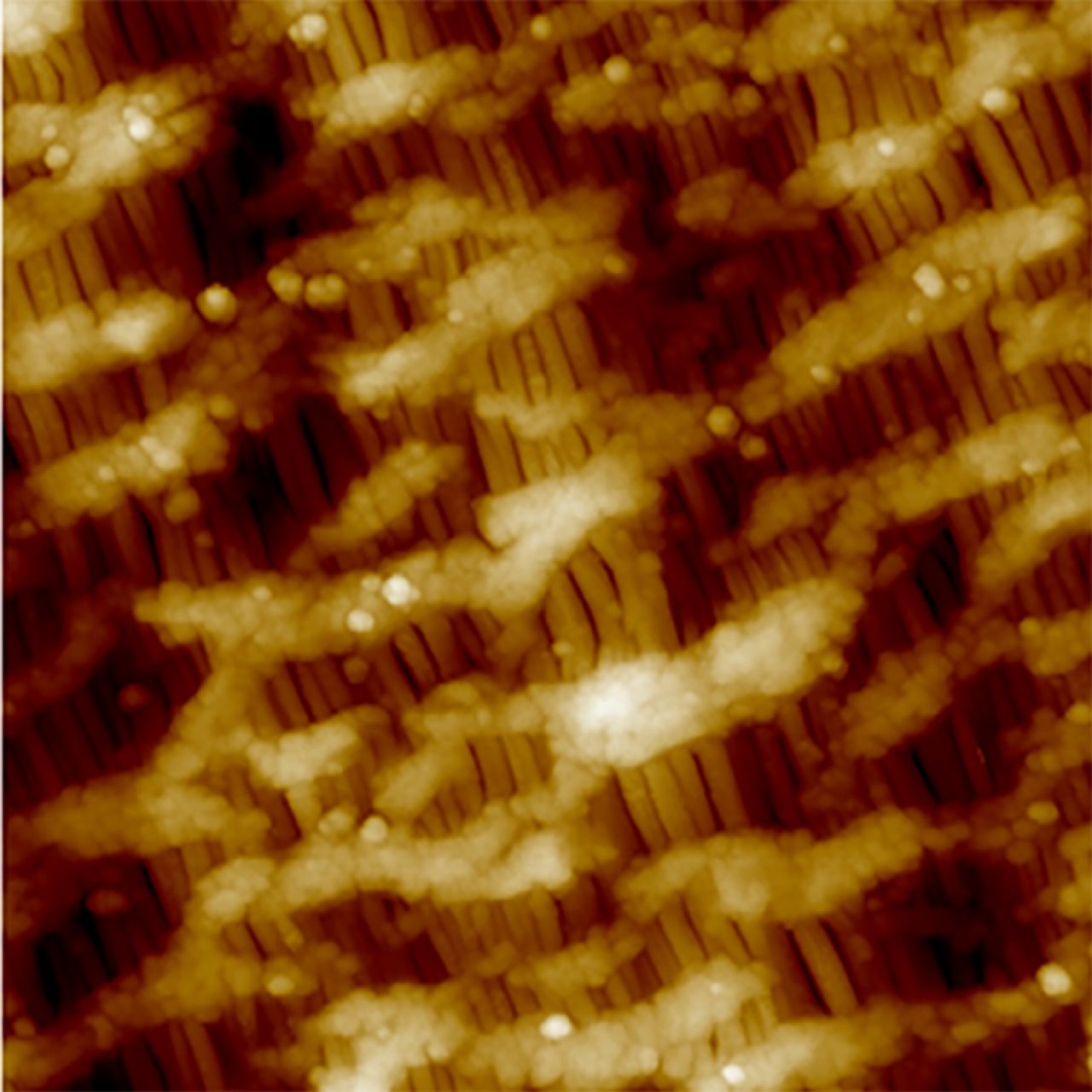
NanoScope API can run both an external magnet and a Dimension Icon AFM synchronously during an overnight experiment that runs unattended. The script sets the Caylar magnet field strength, engages, images and captures, withdraws, and steps the field again. ScanAsyst Plus continually optimizes scan parameters during imaging. The data series is processed to compensate for XY shift, then exported as a video.

Machine-learning-guided mapping of a combinatorial alloy library
Richard (Yu) Liu, Ph.D., and Sergei Kalinin, Ph.D., from the University of Tennessee, Knoxville — in collaboration with Bruker — paired NanoScope API with machine learning. The model first tunes imaging parameters by Bayesian optimization, scoring scan quality from real-time trace and retrace signals, and then guides mapping of a combinatorial alloy library across a 4-inch wafer. After each scan, it scores surface roughness and grain size, and identifies where its predictions are least certain. Based on this analysis, it determines the next imaging site, which the AFM then automatically moves to and measures.

Automated AFM measurement of double-sided disks
Resonac Hard Disk Corporation uses NanoScope API to measure double-sided disks in a single closed cycle. One script controls the enclosure, the Dimension Nexus stage, the disk-handling tray and robot, and the AFM scan parameters, while ScanAsyst Plus optimizes feedback parameters during imaging.

Frequently Asked Questions
Capabilities
NanoScope API is a software interface that allows the use of coded scripts to communicate with Dimension AFM systems. It enables AFM operation, sample measurements, and data analysis to be performed automatically instead of requiring a user to do everything manually.
It is designed for researchers and operators who want to automate multi-modal, multi-site, or multi-sample measurements, synchronize with external accessories, or enable communication with other instruments to support self-driving laboratory workflows.
No, it does not replace the AFM user interface. NanoScope API complements the existing software by providing a programmable way to access and control instrument functionalities.
Yes. NanoScope API enables software to control measurements, access data, and make decisions programmatically, making it possible to build autonomous workflows that can adapt experiments based on results in real time.
Yes. NanoScope API can be connected to data analysis, machine learning, and optimization software to enable intelligent experiment planning and automated decision-making.
Yes. NanoScope API provides programmatic access to instrument functions and data, allowing AI agents to plan, execute, and optimize experiments with minimal human intervention.
Compatibility
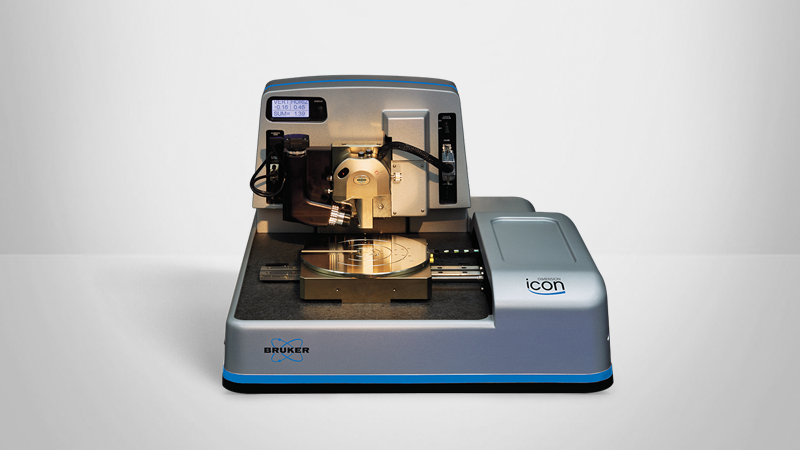
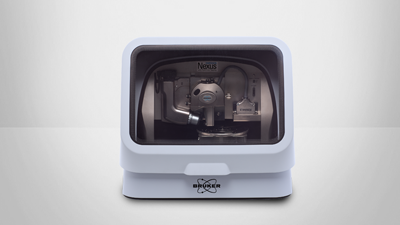
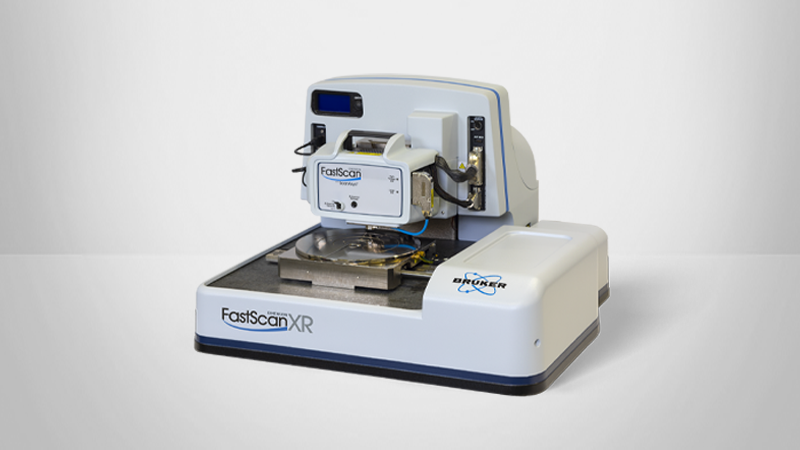
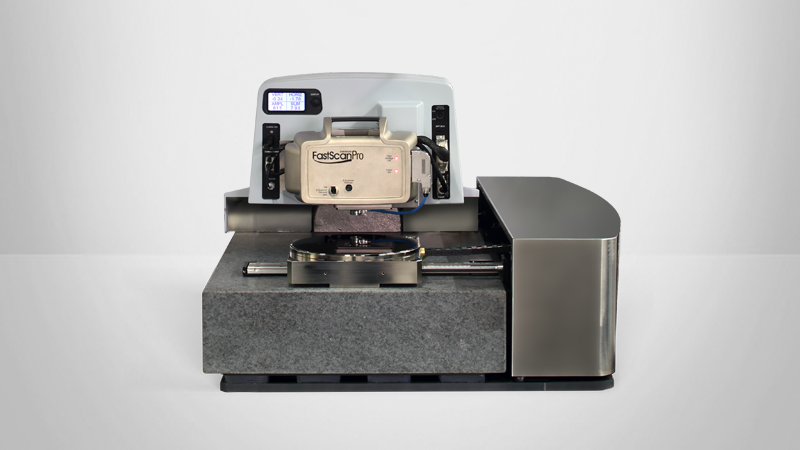
NanoScope API works on Dimension Icon, Nexus, Pro, and XR systems operating on a NanoScope 6 controller and NanoScope Software v10.3R1sr1.
NanoScope API can be added to a compatible system that you already own. Availability depends on your AFM configuration and software version. Contact your Bruker Sales Representative to confirm compatibility and discuss potential upgrade options for your specific system.
The command set is focused on a supported group of functions and operating modes, so not everything available in manual operation can be scripted today. The set expands with each release, so discuss any capability you require with your sales representative.
Usability
You need to be comfortable reading and adapting Python code, not necessarily writing it from scratch. The NanoScope API package includes various sample scripts that can be adapted for a user’s desired experiment.
NanoScope API comes with several example scripts to get you started. One script is a few lines long and simply reads and changes the scan size. It is a practical first step as soon as the software is installed.
Both. NanoScope API enables researchers to automate experiments, create custom workflows, and integrate with AI and data analysis tools. In production environments, it helps automate routine measurements, improve consistency, and increase throughput through standardized, high-volume workflows.
Purchasing and support
NanoScope API is available for both new Dimension AFM system purchases and as an upgrade for existing Dimension AFMs. Contact your Bruker Sales Representative to discuss your options for purchasing this software option.
A troubleshooting guide for NanoScope API is available in your Dimension Icon or Nexus User Guide. If you require further assistance, please contact your local Bruker Technical Support Team.