
Webinar Overview
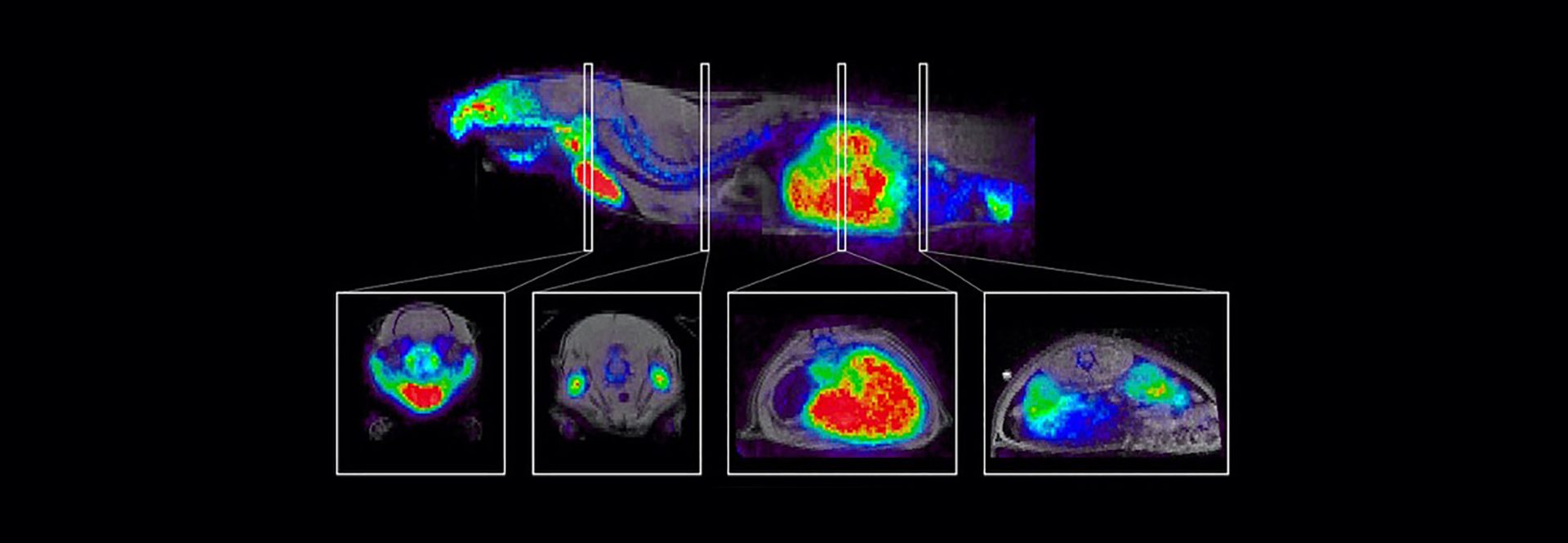
This webinar will present different approaches to study liver diseases with simultaneous PET/MR Imaging. Our first speaker Professor Erik Shapiro from Michigan State University will focus on liver function and how new ways of combining PET and MR imaging using hepatospecific metal chelate PET tracers and contrast enhanced MRI potentially can be used to observe early changes in liver function during disease.
The second part of the webinar is presented by Viktoria Ehret and Usevalad Ustsinau from Medical University of Vienna. Their talk will focus on liver metabolism and how combining metabolic targeted PET tracers and deuterium metabolic imaging (DMI) can be used to enhance our understanding of organ-level metabolic processes in vivo.
The talks will be presented live followed by a Q&A session.
MAY 25, 2023 - 4PM CEST | 10AM EDT
Who should attend
Researchers, postgraduate students, and principal investigators working in academia as well as researchers working with drug and tracer development in the pharmaceutical sector. Some basic understanding of PET and MRI imaging is required.
PET/MRI of liver function using hepatospecific metal chelates
- What is the function of the liver and how is it affected by disease
- How can we measure specific aspects of liver function
- What are the benefits and disadvantages of using MRI to measure liver function
- Turning MRI contrast agents into PET agents
- How can simultaneous PET/MRI be used to better measure liver function
Multiparametric Imaging for Assessment of Hepatic Glucose and Lipid Metabolism using PET/MR and DMI Techniques
In this talk, we will present a comprehensive evaluation of glucose and free fatty acid metabolism at the organ level, utilizing state-of-the-art imaging technology. With our in-house preclinical Bruker BioSpec 94/30 USR MRT scanner, equipped with a PET-Insert, we can observe physiological processes, perform functional metabolic imaging, and accurately measure receptor, transporter, and enzyme densities using specific metabolic PET-tracers. In combination with the recently introduced MR-based in vivo deuterium metabolic imaging (DMI), we can provide localized assessments of hepatic glucose and lipid metabolism, taking the anatomical structure of the body into account. This approach represents a significant advancement in metabolic imaging and has the potential to greatly enhance our understanding of organ-level metabolic processes.