
Analytical Vision December 2025
Fast, On-Site Aerosol Analysis with T-AERO and TXRF
Airborne particulate matter (PM) is a silent threat to health and productivity, especially in urban environments. While PM10 and PM2.5 are widely monitored, heavy metal emissions remain harder to track, as traditional methods demand long sampling times and complex preparation.
Bruker’s T-AERO package changes that. By combining direct aerosol sampling with Total Reflection X-Ray Fluorescence (TXRF) spectroscopy, T-AERO delivers near real-time elemental analysis with results in as little as one hour. No filters. No digestion steps. Just fast, accurate data when and where you need it.
What makes T-AERO different?
- Direct deposition of particles onto TXRF carriers
- Ultra-low detection limits for toxic metals (pg/m³ range)
- Portable design for immediate on-site use
- Fractionated sampling across PM10, PM2.5, PM1, and PM0.15
From atmospheric research to workplace safety, T-AERO is redefining air quality monitoring. See how it’s already making an impact in Europe through the MI-TRAP initiative and why it’s the future of aerosol analysis.
Watch the launch webinar and download the flyer to learn more.
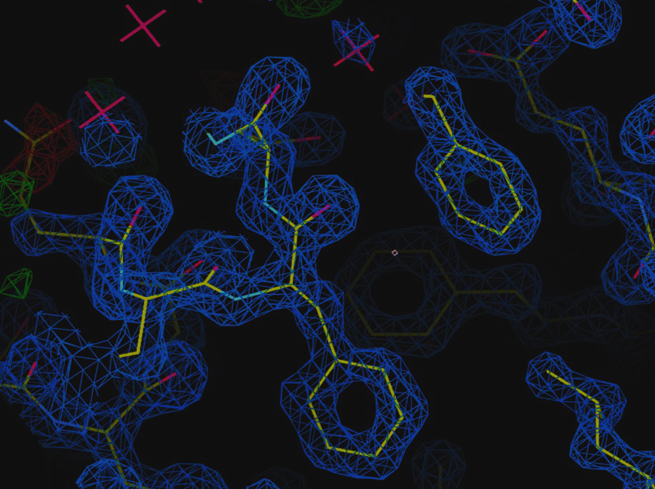
Synchrotron-Quality Protein Structures Without the Wait
Why wait in line for beam time? Pharmaceutical labs are accelerating structure-based drug design with in-house single crystal X-ray diffraction (SC-XRD). From visualizing ligand binding in SARS-CoV-2 enzymes to solving BRD4 in just 15 minutes, researchers are unlocking atomic-level insights faster than ever. Bruker’s D8 VENTURE and D8 QUEST systems deliver synchrotron-quality results right in your lab, empowering breakthroughs in epigenetics, GPCRs, and solid-form optimization without the delays.
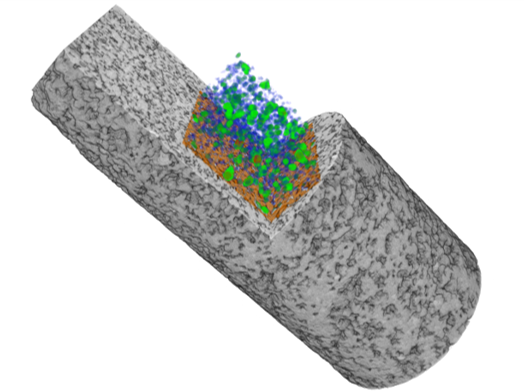
In-Depth 3D Analysis of a Sandstone Core Plug
The X4 POSEIDON brings geoscience into sharp focus with non-destructive, high-resolution X-ray Microscopy (XRM). In this application note, a sandstone mini core plug is analyzed to reveal porosity, grain size, fractures, and anomalies—plus clay-filled pores in stunning detail. With rapid overview scans and zoomed imaging down to 2 µm voxel resolution, researchers can quantify pore size and study dynamic processes like fluid-rock interactions.
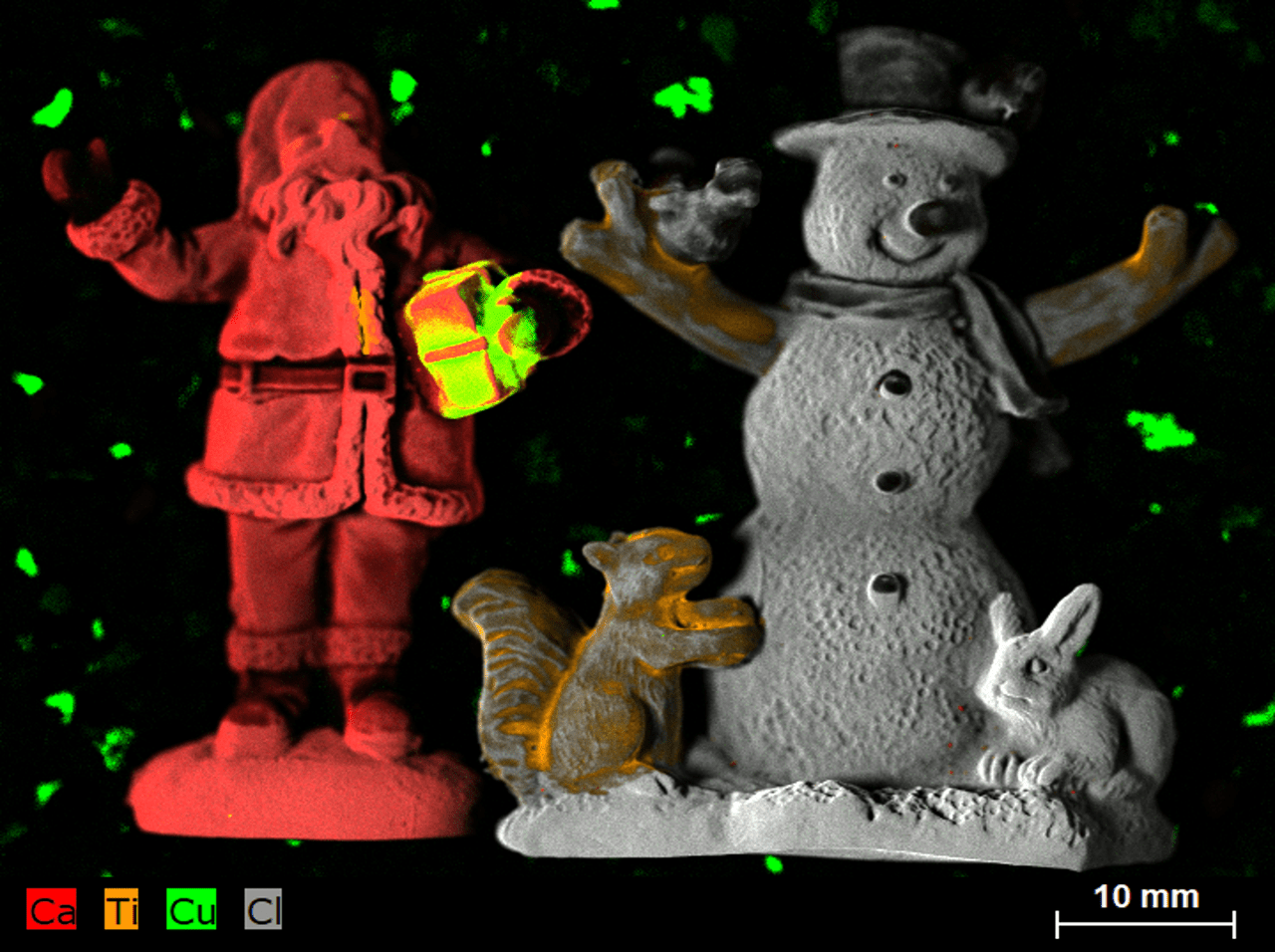
What’s Inside Your Holiday Decorations?
Ever wondered what your festive figurines are made of? We did! Using the M6 JETSTREAM micro-XRF, we scanned two Christmas decorations and found PVC (confirmed by the Cl signal) and pigments for their bright colors. Micro-XRF makes it easy to satisfy curiosity—non-destructive and no sample prep required.
See more festive science on our LinkedIn page!
Discontinuation of the DDM Quantification Option in DIFFRAC.EVA
We would like to clarify for our customers that the Direct Derivation Method (DDM) quantification option within our DIFFRAC.EVA software, previously announced alongside the Reference Intensity Ratio (RIR) and Mass Absorption Coefficient (MAC) methods for semi-quantitative analysis (SQUALL) based on full pattern matching, is no longer available. The DDM feature was discontinued with the release of DIFFRAC.EVA version 7.0.0.6 in late 2023 and is not part of the current software offering, nor will it be included in any future releases of DIFFRAC.EVA. For quantitative analysis, we recommend continuing to use the RIR and MAC methods, which remain fully supported in DIFFRAC.EVA.


