
Intro
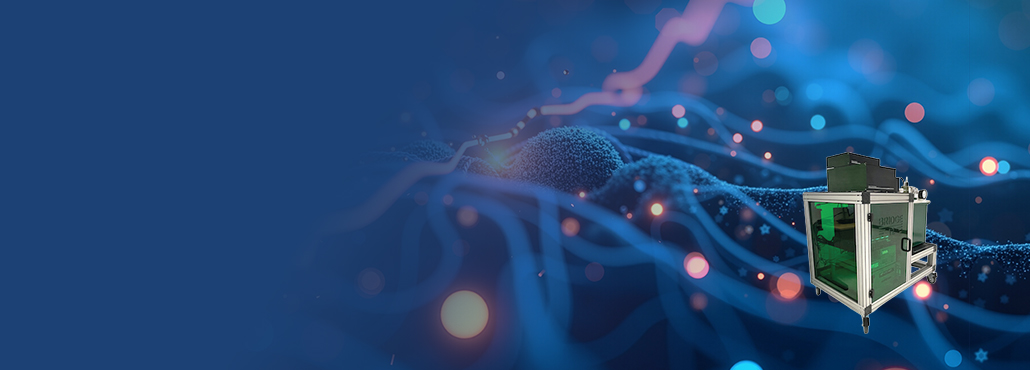
The Compact-Q DEER Spectrometer is designed to support researchers in academia and industry to efficiently characterize quantum materials, develop devices for quantum sensing, advance and validate algorithms to control qubits, and other applications in spin-based quantum technologies. The Compact-Q DEER system features a modern microwave architecture, high-resolution AWG, and digital signal processing schemes enabling high flexibility in addressing modern challenges of quantum technologies.
Webinar Overview
The focus of this webinar will be to highlight the capabilities of the Compact-Q DEER spectrometer towards the characterization and coherent control of qubits for quantum technologies. Modern experiments in Quantum Information Science (QIS) demand a state-of-the-art microwave architecture, fast, high-memory, high-resolution AWGs, large transmission and detection bandwidths, and modern digital signal processing features to create the most sophisticated pulse shapes, quantum gates and read-out sequences. Having all of those features incorporated, as well as operating at an intermediate frequency of 500 MHz, and utilizing a cryogen-free 1.5 T magnet with integrated Variable Temperature Insert (iVTI) enabling temperatures from 2 K to RT, the Compact-Q system meets modern demands and provides a versatile and high-fidelity platform for probing qubit properties and execution of quantum algorithms driving innovations in quantum technologies.
Tuesday, February 10 2026
11 AM EST | 5 PM CET
What to Expect
During this webinar, we will demonstrate how the Compact-Q DEER is ideally suited for applications in QIS. We will show how broad-band echo sequences can be used to manipulate spin states and how electron spin coherences can be created and detected. We will explain the different spectrometer features, the data acquisition platform along with different experiments, highlighting how the Compact-Q can elevate your research in quantum information science (QIS).
Key Learning Points
Versatility, high-performance, and user-friendly operation of the Compact-Q DEER spectrometer will be highlighted along with:
- Easy to use resonator bandwidth control
- AWG generated pulses, digital down conversion, and FIR filtering
- Pulse shaping and quantum gate optimization
- Broadband and selective inversion pulse schemes
- Studying spin dephasing mechanisms and materials characterization
Who Should Attend?
- Undergraduate and graduate students in chemistry, physics, quantum information science, material science, and related fields
- Early-career researchers, postdoctoral fellows, and instrument facility managers familiar or new to EPR spectroscopy
- Professors and instructors teaching EPR spectroscopy or related courses
- Spectroscopy facility managers
- Industry professionals, scientists, and engineers in materials science and quantum technologies industries
Speakers
Alvaro Montoya
Ph.D. in chemistry from the University of Florida
EPR Application Scientist, Bruker BioSpin
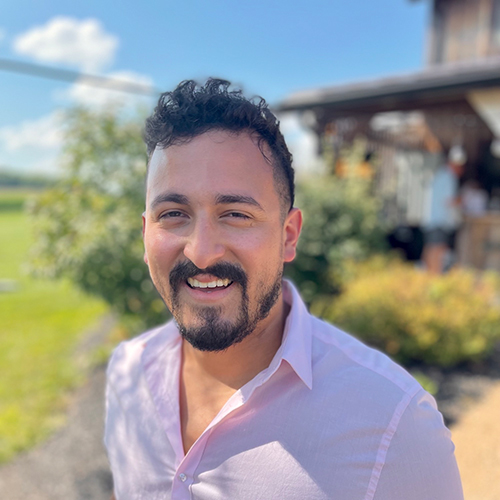
Alvaro Montoya began his EPR career as a Ph.D. student at the University of Florida after obtaining his B.S. in Chemistry from Susquehanna University. Early in his graduate career, he made use of CW and High Field EPR in studying the catalytic mechanisms of metalloenzymes. He then grew a profound appreciation for FT EPR and expanded his EPR toolbox for his research endeavors. After completing his Ph.D., Alvaro joined Bruker in January of 2023 working as an Applications Scientist.

Dmitry Akhmetzyanov
Ph.D. in chemistry from Goethe University Frankfurt am Main
Research Scientist, Bruker BioSpinDr. Akhmetzyanov began exploring EPR spectroscopy during his undergraduate studies at Kazan University, the birthplace of EPR. Throughout his Bachelor’s and Master’s programs, Dmitry’s work centered on applying EPR techniques to materials science. For his Ph.D., Dmitry joined Thomas Prisner’s group at Goethe University Frankfurt am Main, where he focused on development and applications of pulsed EPR dipolar spectroscopy to study structures and dynamics of macromolecules. After his research positions in Germany and Canada, Dmitry joined Bruker in 2024. In the current role as a Research Scientist, he focuses on advancing EPR spectroscopy, developing novel applications, and supporting customers.