The Mechanics Driving Metastasis: Biophysical Phenotyping of High-Grade Serous Ovarian Cancer Spheroids
See how researchers are linking spheroid mechanics to metastasis
In this presentation, Jordan Turney (Swansea University) presents his research on how the physical properties of ovarian cancer spheroids influence metastatic behavior. Using biomechanical measurements, structural imaging, and invasion assays, he explores the relationship between spheroid mechanics, treatment resistance, and cancer invasion.
Topics covered include:
- Measuring the mechanical properties of ovarian cancer spheroids and treatment-resistant tumor models
- Linking spheroid architecture and extracellular matrix organization to metastatic potential
- Quantifying invasion behavior in biomimetic microenvironments
The Mechanics Driving Metastasis: Biophysical Phenotyping of High-Grade Serous Ovarian Cancer Spheroids
At the time of diagnosis, the majority of high-grade serous ovarian cancer (HGSOC) patients are late stage and show signs of peritoneal metastasis. The mechanism of metastasis is dissemination through the peritoneum as multicellular 3D spheroids, yet most nanomechanical characterisation of this disease has been performed on 2D monolayers The relevance of monolayers as a model of metastatic structures and how they can be targeted remains largely untested.
This talk follows one question through a complete workflow: does the mechanical state of an HGSOC spheroid matter functionally, or is it a byproduct of the underlying biology and can we use this to inform our therapeutic options?
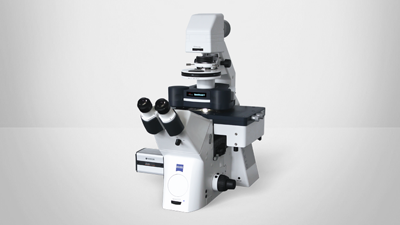
This talk discusses sample optimisation and the use of the latest generation bioAFM from Bruker (Nanowizard V) on the cellwizard stage in order to achieve accurate and high resolution bioAFM measurements. Techniques included are substrate coating, colloidal probe geometry, per-frequency viscous drag calibration, and contact-point handling of rough heterogenous samples. The contact mechanics required when working with curved, layered multicelllar bodies rather than flat half-space samples will also be addressed.
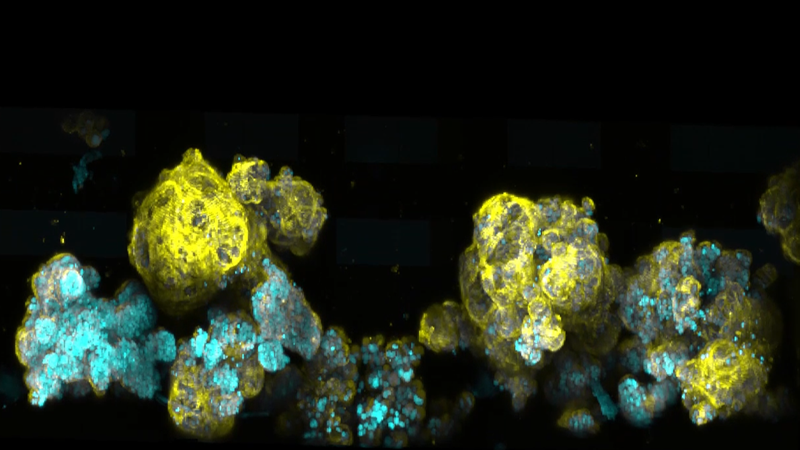
To determine biophysical properties, nanomechanical maps and active oscillatory microrheology are compared across parental SKOV3, a cisplatin-resistant derivative, and MRC-5 fibroblast co-cultures, applying structural-damping, double power-law and stress-relaxation treatments to the same dataset to show where these models agree and where they diverge. Volumetric confocal quantification of crucial structures such as F-actin and Collagen I links the mechanical response to core-versus-periphery architecture that has no monolayer equivalent.
Invasive and metastatic potential are quantified using confocal microscopy and image-based invasion assay chambers. Matrigel-collagen type I matrices seeded with co-cultured spheroids provide a biomimetic model of peritoneal dissemination, enabling quantification of migration distance, trajectory angle, and spatial localization of cell populations initiating and leading invasion."
Finally, miR-200b gene therapy in monoculture spheroids is used to perturb this mechanical state directly, with invasion assessed under matched conditions in order to asses whether measured biophysical signature tracks invasive capacity. Measuring these biophysical properties also indicates and informs new molecular targets to improve therapeutic outcome.
Featured Technologies:
Contact:
Find out more about the technology featured in this webinar or our other solutions for atomic force microscopy:
Speaker

Jordan Turney
4th Year Biomedical Engineering Student, RBGO Group, Swansea University