
Intro
Learn about how Fourier-Transform Infrared (IR) and Electron Paramagnetic Resonance (EPR) spectroscopies enable in-depth understanding of polymer reactions. This webinar will review two main topics:
- The curing process of polymers and how FT-IR allows for real time monitoring of kinetics and degree of cure, with calibration protocols to measure conversion percentages.
- The use of EPR spectroscopy to study radical mechanisms involved in polymerization, degradation, and stability of polymer materials.
Webinar Overview
Polymers are an integral part of everyday life, from household goods to various fields of research and industrial applications. The ability to study the formation, degradation and stability of polymers is an important endeavor in the development of materials with better performance and longevity. Join us for this informative webinar on understanding the mechanisms and kinetics of various polymer processes via Fourier-Transform Infrared (FT-IR) and EPR Spectroscopy.
The polymer curing process, from reaction kinetics to quantification of the process, is important to understand for new materials. FT-IR is highly suited for tracking the curing process due to its sensitivity to changes in functional groups We will showcase the ability of FT-IR in monitoring reaction kinetics and quantifying the degree of cure. Attendees will also gain technical insights into optimized workflows for R&D and QA environments. Polymerization or degradation of polymer materials can often involve the formation of free radicals. The best suited method for unambiguous detection of free radicals in polymer processes is EPR Spectroscopy, which is a high-sensitivity, versatile and non-destructive technique. We will showcase the ease-of-use the Magnettech ESR5000 benchtop spectrometer and how users can incorporate workflows to identify radicals/impurities, track kinetics, and stress test polymer materials.
Tuesday, March 31 2026
11 AM EST | 5 PM CET
What to Expect
In this webinar, we will show how FT-IR and EPR methods provide valuable information during polymer formation and degradation processes. Learn how FT-IR can track reaction kinetics in real time and provide calibration procedures for the curing process. Dive into EPR as a robust, non-destructive technique for studying radical driven mechanisms in polymer materials under diverse conditions.
Key Learning Points
This webinar demonstrates how FT-IR and EPR are suitable for studying polymer reactions and kinetics under various conditions
- FT-IR workflows for kinetics of curing and quantifying degree of cure
- Case studies using UV treated acrylates and calibration procedures for curing percentages
- EPR for tracking free radical driven processes in polymer reactions, degradation and testing of polymers exposed to various stimuli
Who Should Attend?
- Polymer chemists and researchers developing new materials
- Industry professionals working with polymer materials looking to add screening tools to their workflows
- Polymer scientists wanting to understand the radical mechanisms that drive processes such as polymerization or degradation
Speakers
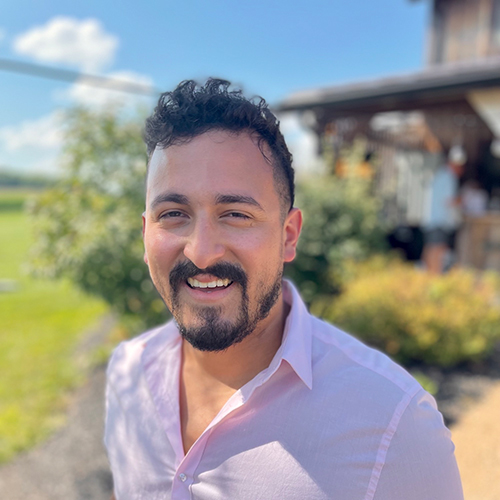
Alvaro Montoya
Ph.D. in chemistry from the University of Florida
EPR Application Scientist, Bruker BioSpin
Alvaro Montoya began his EPR career as a Ph.D. student at the University of Florida after obtaining his B.S. in Chemistry from Susquehanna University. Early in his graduate career, he made use of CW and High Field EPR in studying the catalytic mechanisms of metalloenzymes. He then grew a profound appreciation for FT EPR and expanded his EPR toolbox for his research endeavors. After completing his Ph.D., Alvaro joined Bruker in January of 2023 working as an Applications Scientist.

Dr. Sergey Shilov
Product Manager, Bruker OpticsDr. Sergey V. Shilov is the Product Manager for North America at Bruker Optics. He earned his Ph.D. in physics from the Russian Academy of Sciences. Before joining Bruker in 2000, Dr. Shilov conducted research in Leipzig, Germany, and at Syracuse University in the United States. At Bruker, he leads initiatives to develop and support advanced applications for FTIR and Raman spectroscopy. He has authored over 40 peer-reviewed publications and has been an invited speaker at numerous international conferences. His scientific interests include time-resolved FTIR spectroscopy, surface science, polymer analysis, and applications in life sciences.