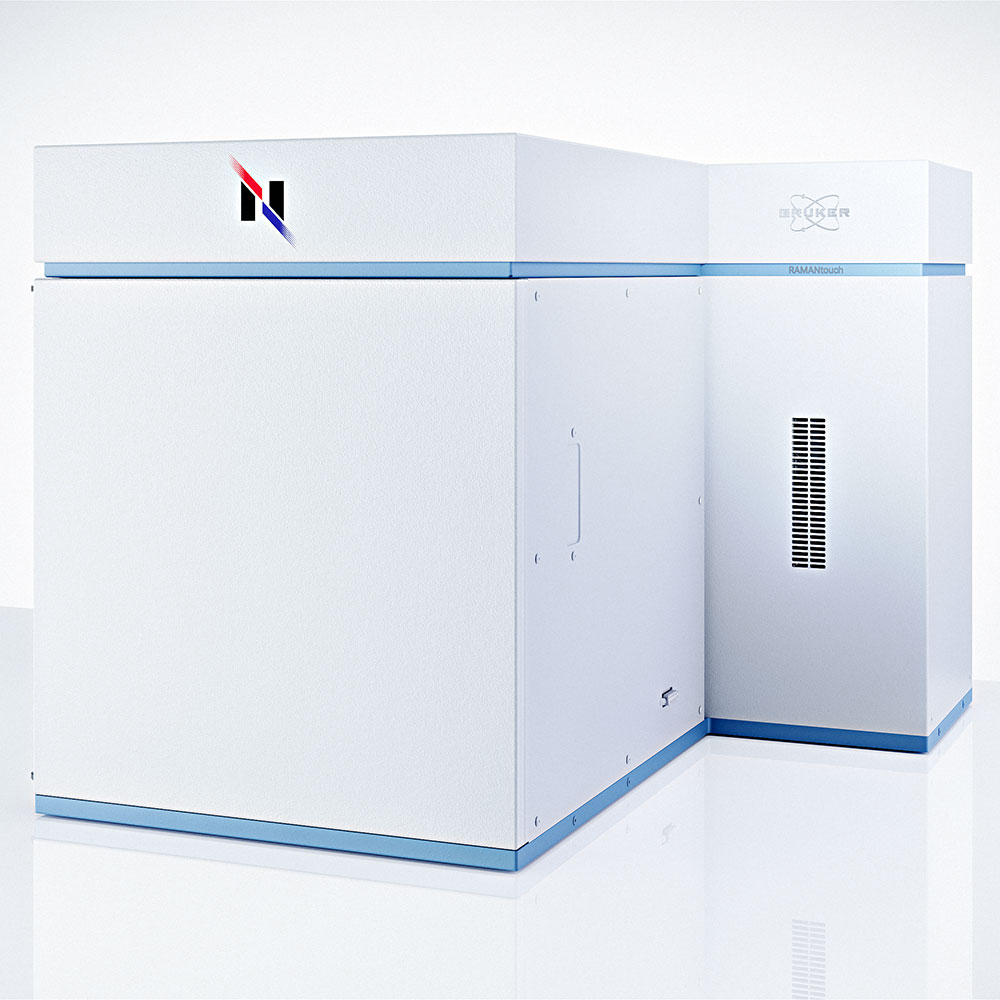

Raman Solutions for Microplastics Analysis
Bruker has helped users build particle-driven microplastics laboratories with FT-IR, IR laser imaging, and Raman. Raman microscopy is the high-spatial-resolution option: laser-based chemical imaging that identifies even very small particles with excellent polymer specificity, delivering detailed particle-level insights with push-button automation for routine microplastics analysis.
Nanometer
Resolution for the smallest particles.
Analyze particles in the few- to sub-micron range and extend your microplastics research beyond the limits of IR microscopy.
Extensive
Particle information beyond polymers.
Characterize fillers, additives, pigments, inorganics, and silica with complementary Raman information for a deeper understanding of particle composition.
Optimal
Spectra from challenging particles.
Take full control of your Raman measurements with fluorescence suppression and beam-steering capabilities to optimize signal quality on every particle.
Rapid
Raman imaging for particles.
Move seamlessly between three dedicated measurement modes and capture detailed chemical images faster than conventional Raman workflows and resolve agglomerates and identify particles in challenging matrices.
How Microplastics are Analyzed by Raman

Advanced scanning
Apply advanced scanning technologies to particle analysis. Sometimes a single point per particle is not enough. Whether you want an average particle spectrum to tackle heterogeneities or high resolution imaging to resolve agglomerates, our mciroscopes offer an automated approach thanks to patented technology.

Integrated evaluation
Integrated tools streamline particle analysis from measurement, identification to statistical breakdown and reporting. Our software distills raw data into presentation ready results.
The Benefits of Raman
- The smallest particles are of greatest concern. Particle analysis in the few- to sub-micron size fraction is challenging, as the diffraction limit narrows the choice of analytical methods. Raman can go where IR cannot follow: expand your microplastics research into the nano domain.
- Fillers, additives, and inorganics pose an analytical challenge. Raman microscopy provides complementary information to characterize these components.
- Raman imaging enables powerful, innovative sampling concepts. Random scanning helps you find particles even in strong matrix environments. Raman line imaging can generate chemical images of extended areas and resolve agglomerates. Smart averaging automatically scans each particle and creates an average spectrum to cope with inhomogeneities.