Edible Oil Analysis

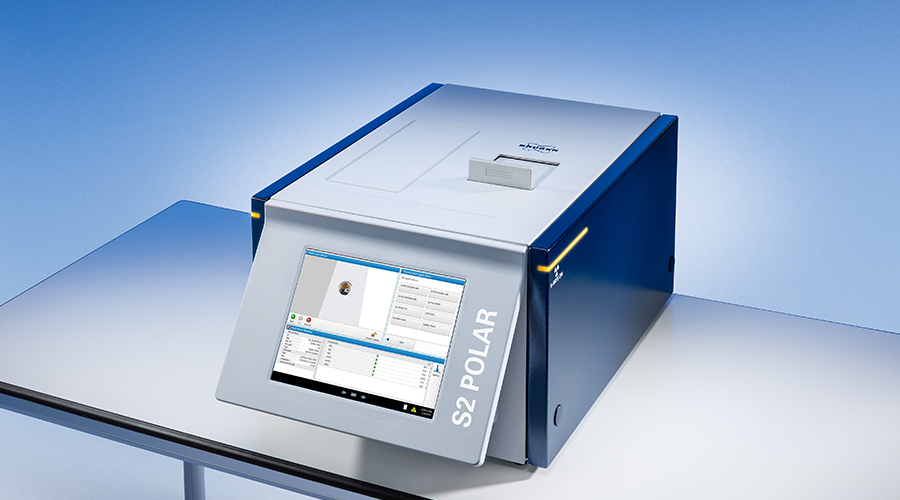
In process control of edible oil refineries and biofuel refineries, when ease-of-use and short time to result is critical, polarized EDXRF analysis with the S2 POLAR is the method of choice.
In such refinery processes, beside Cl and S, P is one of the key elements for proper process control, as phospholipids can have a negative impact at various process steps and on the properties of the final product. In such case, total P is measured to monitor the phospholipids removal accordingly. Other elements of interest such as K, Ca, Fe, Ni, and Cu, can quickly be quantified with the multi-element capability of the S2 POLAR.
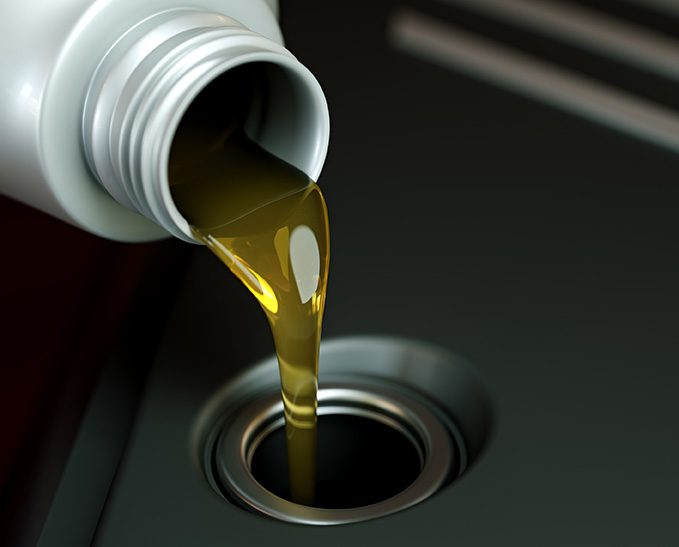
Cooking oil is used in large quantities in fast food chains and restaurants. Later the Used Cooking Oil (UCO) is recycled and further used for biofuel production.
In biofuels, elements such as P, S, and Cl must not exceed certain limits that easily can be monitored with the S2 POLAR.
S2 POLAR advantages:
- Quick and simple sample preparation
- Multi-element capability enables quantification of numerous elements in one go
- Reliable results within minutes
- Low cost of ownership
Learn More about the Edible Oil Analyzer - S2 POLAR
Specification | Benefit | |
| Applications | Elemental analysis of all types of vegetable oils, such as soybean, rapeseed, sunflower, peanut, coconut, olive, and palm oil. Elemental analysis of edible oils or cooking oils, as incoming raw material or at different steps of the refining process. Analysis of Used Cooking Oil (UCO). UCO is often recycled and used as raw material for later use in biodiesel. | Excellent analytical performance for key elements such as P, S, and Cl. Due to the multi-element capability of the S2 POLAR, other elements such as K, Ca, Fe, Ni, Cu can also be analyzed. Also suitable for matrices with higher viscosity |
Frequently Asked Questions
Can XRF determine contaminant levels in used cooking oil (UCO)? Is XRF used for vegetable oil and biodiesel analysis?
Yes, XRF is suitable for the elemental analysis of UCO as well as vegetable oils or biofuels. UCO and sometimes vegetable oil are used often for later biofuel production, and therefore, the same maximum concentration limits of some elements e.g. sulfur (S), apply as for automotive fuels.
Phosphorus (P) is also often monitored as it may negatively impact some engine components. Moreover, XRF is used to monitor vegetable oil refinery processes. For example, the removal of phospholipids during the initial refinery degumming process can be observed by tracking the P content.
The lower limit of detection (LLD or LOD) for P in such matrices with the S2 POLAR is 0.4 ppm P.
Is the measurement of Fe, Cu, As, Pb and other elements in vegetable oils (like refined palm oil) possible? If so, what is the limit of detection?
Yes, almost any element in vegetable oils can be quantified using the S2 POLAR - from sodium (Na) to uranium (U). For iron (Fe), copper (Cu), arsenic (As) and lead (Pb), the detection limit is in the low ppm range.
Does the density of sample impact the quality of XRF results?
That depends mainly on the required accuracy. For the best quality results the sample density should be considered in the method or provided when starting a new analysis. For less demanding applications, the density can be neglected.