
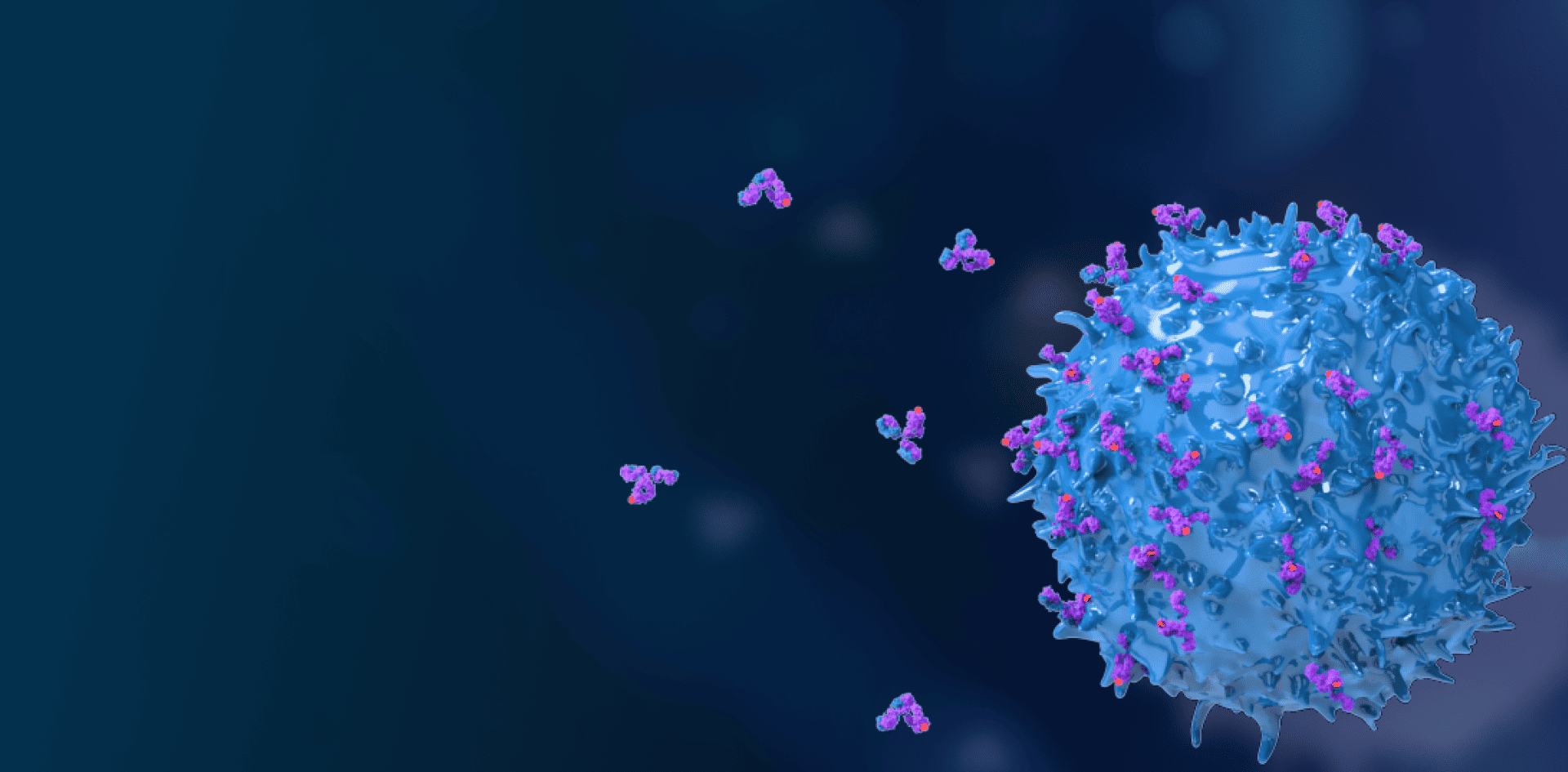
single-cell Interaction Cytometry (scIC)
Biosensor Meets Cytometry
scIC is the technology used by Bruker’s heliXcyto biosensors. Combining biophysical measurement principles with cytometry, the heliXcyto offers an automated analysis of association kinetics, dissociation kinetics, affinities and avidities. Measuring binding kinetics directly on cells preserves the complexity of the biological system:
- Native transmembrane folding and conformational changes
- Native target density
- Target mobility in fluid membrane
- Native co-interactions
A precise characterization of drug candidates in pre-clinical stages will foster higher success rates in the following expensive in vivo studies and clinical trials.

Cell Immobilization

Trapping of any cell type without modification – automated and fast
The unique bio-compatible cell traps on the heliXcyto chips retain any type of eukaryotic cell, adherent or suspension, living or fixed. There is no need for any modifications or the expression of specific surface receptors. The trapping of the cells happens fully automated and within seconds.
Different options for different cells and experimental designs
Choose between different trap sizes to optimally trap your specific cell type. Use heliXcyto chips with one trap for single-cell analyses or with five traps for cell population data and low target expression levels.
Automated regeneration
Reversible flow automatically washes the cells out of the traps after your measurement, thus the chips can be reused many times.
Automated Workflow

The automated workflow in the heliXcyto starts with the immobilization of the cells on the heliXcyto chip. Brightfield microscopy snapshots before and after trapping allow a visual control of the successful immobilization and quality of the cells. Afterwards, labeled analyte is automatically injected.
The association rate constant kon can be derived from the real-time increase of fluorescence on the cell. Next, dissociation kinetics (koff) can be measured by applying a constant buffer flow and monitoring the decrease in fluorescence. Finally, the cell trap is regenerated by reverse buffer flow and the chip can be reused for consecutive measurements.
Applications
Antibodies and Other Biologics
Kinetic rate analyses are crucial to improve the efficacy and safety of therapeutic antibodies. Most common antibody targets (PD-(L)1, CD3, HER2, etc.) are transmembrane proteins and binding kinetics are influenced by their density and mobility within the membrane, their transmembrane domain folding or the presence of coreceptors. Molecular interactions of therapeutic antibodies with their targets should therefore be characterized within their native environment to obtain physiologically relevant kinetic data with high in vivo predictability.


Adoptive Cell Therapies
Cell therapies harness living cells as precision medicines, yet their efficacy and safety are governed by the molecular interactions that drive target recognition. Quantitative understanding of binding kinetics — the association and dissociation rates between receptors and ligands — is critical for optimizing signaling strength, functional persistence, and target selectivity. In engineered T cell therapies such as CAR-T cells and TCR-modified T cells, small differences in on- and off-rates can dramatically influence cytotoxic activity, cytokine release, and therapeutic durability. Fine-tuning these kinetic parameters enables the design of receptors with the optimal balance between sensitivity and specificity — enhancing tumor clearance while minimizing toxicity. Kinetic profiling thus bridges molecular biophysics with translational success, guiding the next generation of cell-based immunotherapies.

New Targets
Transmembrane proteins like GPCRs and ion channels often depend on their native environment and correct transmembrane domain folding in order to exert their functions. Single-cell Interaction Cytometry enables you to measure interactions of molecules with these complex transmembrane targets directly on living cells. That way you can be sure to study a functional protein and can avoid tedious isolation and refolding protocols.




For Research Use Only. Not for use in clinical diagnostic procedures.