EDS Analysis with Tabletop SEMs at Unprecedented Speeds
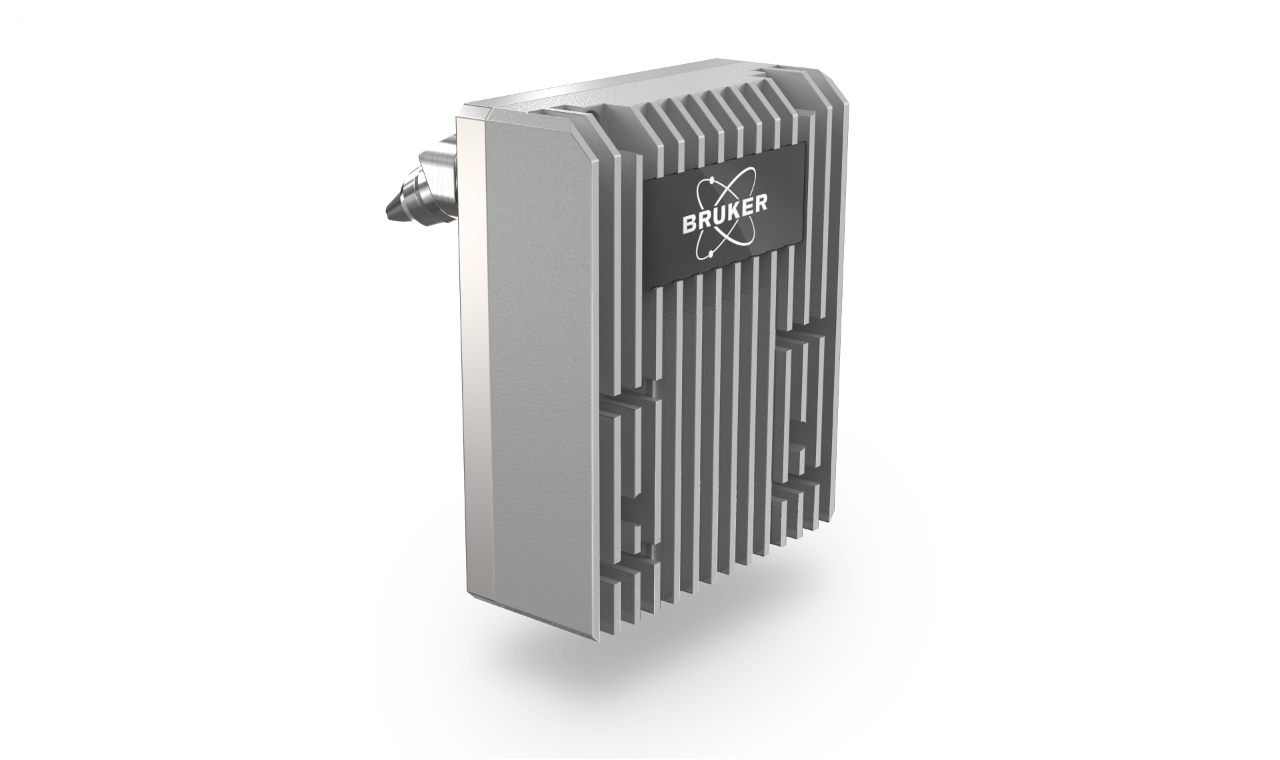
In collaboration with Hitachi High-Tech, Bruker has developed a new Energy Dispersive X-ray Spectroscopy (EDS) solution (QUANTAX 75-60) for rapid elemental analysis and mapping.
Bruker’s 60 mm² active area EDS detector is now compatible with a high-performance pulse processor (up to 600,000 cps) to keep up with high probe currents delivered by Hitachi High-Tech Tabletop Electron Microscopes (TM4000III).
While maintaining low dead times (e.g., below 10%), output count rates of more than 150,000 cps are easily achieved on a wide range of materials. This enables high EDS data acquisition speeds for both qualitative and quantitative measurements (Fig. 1), using a tabletop electron microscope solution.
The EDS data are acquired using ESPRIT Compact, a highly intuitive and easy-to-use software platform that provides a comprehensive suite of tools for elemental analysis, automatic element identification, automatic peak deconvolution with background removal, accurate element quantification and the new ESPRIT LiveMap feature for real-time chemical imaging.

The EDS map data is background-subtracted and displayed without binning/filters.
Over 41 million total counts acquired under 5 minutes at 15 kV with an average of 134 counts/pixel in the particles.

Fig. 2 - Composite elemental map of a mineralogical particle sample embedded in resin.
The EDS map data is background-subtracted and displayed without binning/filters.
Over 41 million total counts acquired under 5 minutes at 15 kV with an average of 134 counts/pixel in the particles.

Frequently Asked Questions
How does this EDS solution improve analysis speed on tabletop SEM?
Now, faster SEM analysis is achieved through high throughput (>150,000 cps) and low dead time, enabling rapid and reliable qualitative and quantitative measurements.
Is the system easy to use for beginners?
Beginners can quickly operate the system thanks to the simplified ESPRIT Compact interface and built-in analysis features, including automatic element identification.