
Improving process efficiency at the University of Warwick with the Bruker Customer Portal
Prof. Brown – University of Warwick
As one of the world’s leading universities, the University of Warwick prides itself on its innovative research and impact on complex global challenges. The university’s purpose is ‘Pointing the way ahead so that together, we can make a better world.’
Founded in 1965, the University of Warwick hosts many leading research centres, including the Millburn House Magnetic Resonance Laboratory. This multi-Principal Investigator (PI) group across the Physics and Chemistry departments has a wide range of solid-state nuclear magnetic resonance research interests including the development of multinuclear NMR methodology with applications in materials science, life science and chemistry.
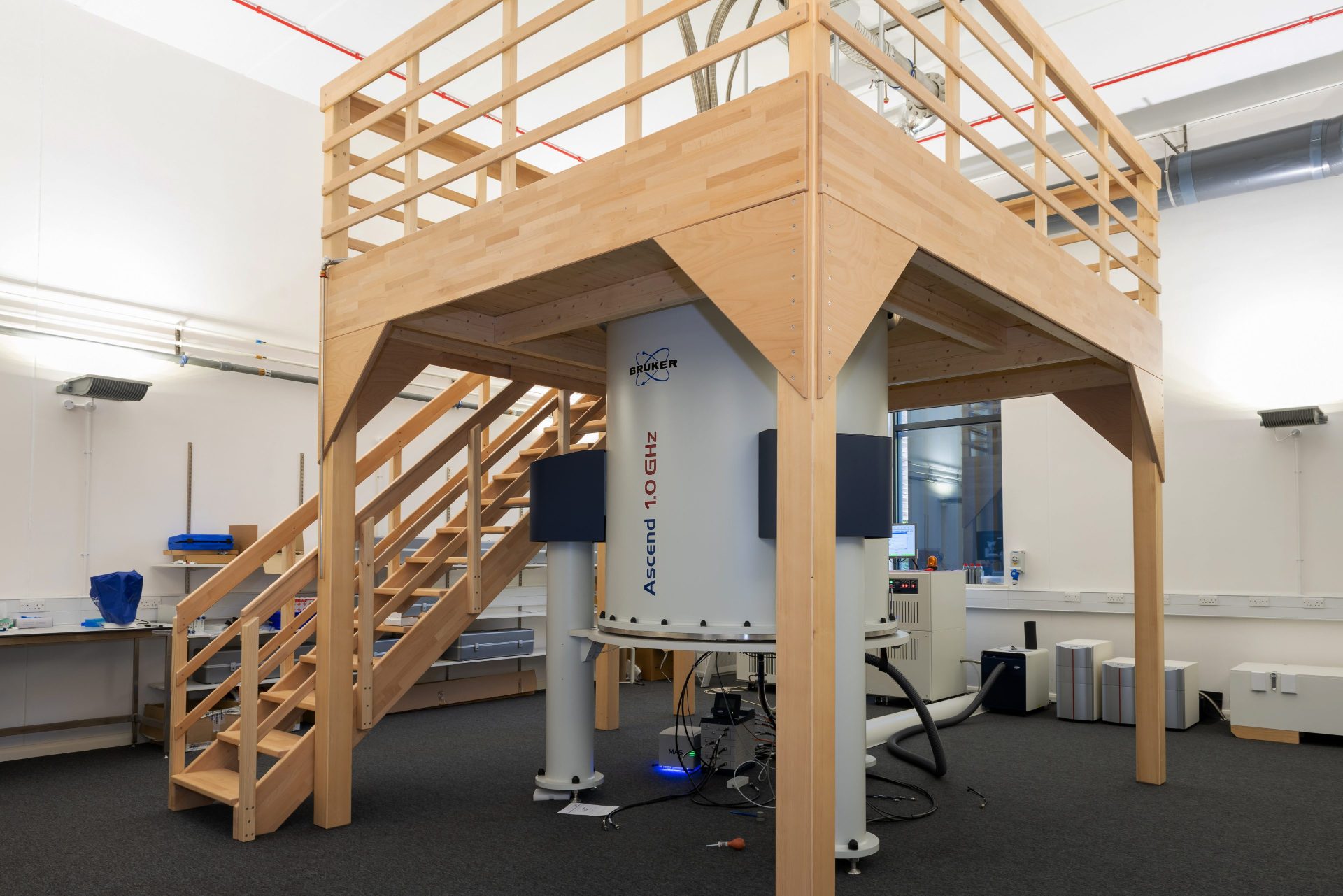
Professor Steven Brown, one of the PIs at the University of Warwick's Solid-State NMR Group, is also the Director of the UK High-Field Solid-State NMR National Research Facility (NRF), hosted at the University of Warwick’s Magnetic Resonance Centre. The centre operates a number of magnets for solid-state NMR, from 2.3 Tesla up to 28.2 Tesla, including the new addition in 2025 of a world-class 1.2 GHz NMR spectrometer, the UK’s most powerful NMR instrument.

Groundbreaking research on the 1.2 GHz NMR spectrometer
To optimize use of the 1.2 GHz NMR spectrometer, Prof. Brown and collaborators from the Facility Executive of the NRF have secured grant funding from the Engineering and Physical Sciences Research Council (EPSRC), the main funding body for engineering and physical sciences research in the UK, for a three-year program which provides an opportunity to learn best practice in high-field solid-state NMR involving a number of partners across Europe and North America.
The addition of the 1.2 GHz instrument brings the total number of spectrometers used by the group to ten, ranging from 100 MHz and 700 MHz at the University of Warwick to 850 MHz, 1.0 and 1.2 GHz at the NRF, plus a large number of probes for magic angle spinning (MAS), as well as for static NMR and double rotation NMR.
Managing the instrument fleet – the Bruker Customer Portal
The array of instruments and equipment located at the university means that it can be time-consuming and complex to keep track of the maintenance or service cases that might arise.
The Bruker Customer Portal, newly available for the university’s NMR Centre, provides a valuable resource for managing the fleet of instruments. Prof. Brown comments: “One advantage of the Customer Portal is it allows us to see the many instruments we have in a single platform, including those that are part of the national research facility and the group's own NMR spectrometers.”
The group’s multiple PIs means that there are several people flagging issues and raising support tickets for instrument management, which used to require extensive liaison with Bruker to schedule service cases between different parties, yielding considerable email inbox traffic and admin time.
“The Bruker Customer Portal is a fantastic support tool. It means that one person initiates contact with Bruker by reporting a service case, but the rest of the group can see all the communication on the portal, even if they didn’t raise the ticket, so can easily access real-time updates on an instrument’s status,” adds Prof. Brown.
Having all the information, such as the purchase order number and the instrument’s serial number, logged in one place provides the PIs, facility managers and post-doctoral researchers working on the instruments with a central location to monitor the latest status and know whether input is required from them to proceed with a specific repair.
Prof. Brown explains: “At our weekly meeting of PIs, we check the portal to see where everything is up to. It’s very convenient to know which probes are out for repair, when we’ve placed an order for consumables or being able to view purchase orders. We have visibility of the whole audit trail. The Customer Portal has made our service case process much more efficient – meaning we can devote more of our time to research rather than admin associated with instrument servicing.”
Full-service transparency using the Customer Portal
For Prof. Brown, the most important feature of the Bruker Customer Portal is the ability to track and view service cases with full transparency of their progress. The portal provides access log files, reports and images associated with any specific service case, accelerating troubleshooting and identification of the most effective solution.
Prof. Brown adds: “Being able to provide different individual access permissions for certain instruments is also a useful feature for us. Not all our PIs access or manage all our spectrometers so only showing the instruments they need to see is beneficial for us.”
The Customer Portal set up was straightforward. Prof. Brown comments: “I had initially hesitated to go through the process of installing the Customer Portal. I’d thought – quite wrongly, it turns out – that it would require a lot of time and effort on our side to install a new portal that is capable of handling so many key tasks. Set up was, however, remarkably easy. We simply told Bruker who should have access and all we then had to do was create an account on the Bruker website and log in. I’m now a big advocate for the portal and am actively sharing our positive experience with other NMR users.”
Constantly improving the portal via customer feedback
Bruker is always looking for ways to improve the Customer Portal and has already implemented feedback from customers. An example of this is the ticket filtering function suggested by Prof. Brown, which enables cases to be sorted by status. He explains: “Understandably, some service cases take longer than others. With our group having many instruments and probes, we’ve raised more than 100 cases over the time that we’ve been using the portal. Being able to see only the open and recent tickets allows us to focus on the ones that are causing bottlenecks.”
Prof. Brown concludes with a comment on the overall service experience with Bruker: “We have regular meetings with UK universities as part of the NRF program and have included contact with Bruker’s UK service and applications team, to share positive feedback or technical issues that have arisen. Being able to problem solve in real-time is improving NRF operational procedure, supporting this critical entity for UK scientific research in the long term.”

Bruker Customer Portal overview
Users can create a service or application case directly on the specific asset page within the portal, which is automatically assigned to a local Bruker expert. The portal also provides 24/7 data access and users can communicate with the Bruker support team within the portal on a specific open service case.
Other available features and benefits of the Bruker Customer Portal include:
- Ability to view all customer assets, including instruments, repairs, probes and accessories
- Download of specific asset files
- View scheduled maintenance appointments
- Review and request changes to customer data
- Access to the Bruker Store to purchase consumables, accessories and software.