
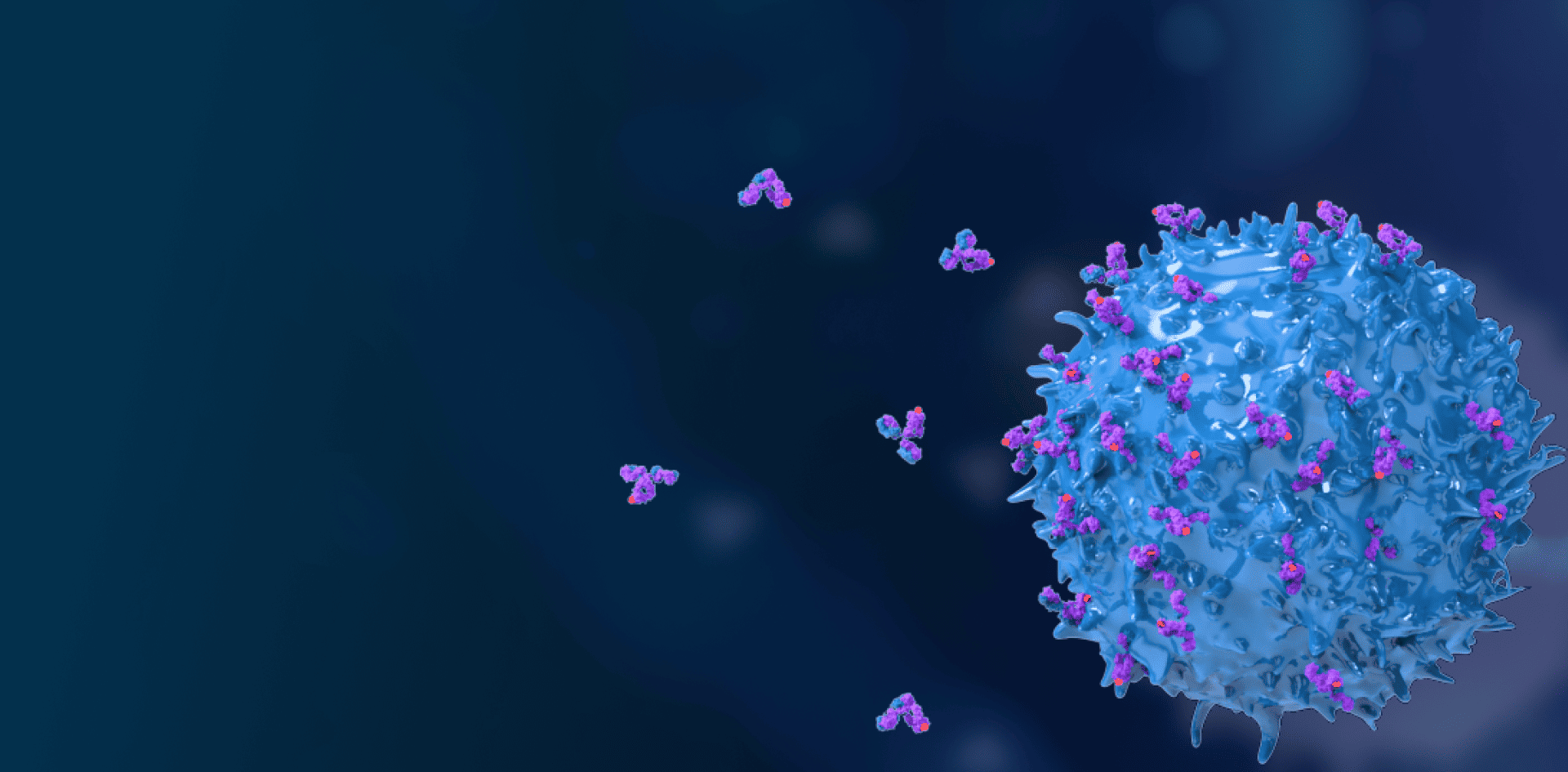
Real-time Binding Kinetics Directly on Living Single Cells
Overview
Understanding how therapeutic antibodies and cell engaging biologics work begins at the cell surface, yet most kinetic data still comes from purified targets in artificial environments.
On living cells, receptors move, cluster, internalize, and exist in heterogeneous populations. These dynamics fundamentally shape binding behavior, but remain invisible to classical in vitro assays.
Binary kinetics in buffer cannot explain functional potency in a cellular context. What matters is how your molecule interacts with its real target in its real environment.
Ignoring cell level behavior is a common reason why antibodies or cell therapies show poor translation between early screening and functional assays.
Single-cell Interaction Cytometry (scIC) measures binding directly on cells and makes this complexity accessible:
- Cell based kinetic measurements capture on-rate, off-rate, and residence time on the native receptor, which better predict e.g. potency, immunotherapy activity, or receptor activation/inhibition and bridges the gap between in vitro screening and in vivo outcomes
- Retaining the physiological environment accounts for expression levels, membrane mobility, receptor microenvironments, and clustering
- scIC enables the characterization of targets which are difficult or impossible to purify, like multi-pass transmembrane receptors, large receptor complexes, unstable membrane proteins, or targets with unknown extracellular domain structure
- Compatible with any cell type, living or fixed, suspension or adherent, cell line or primary cells
- Automated workflow for reduced hands-on time
Explore how integrating cell based biophysics helps you uncover hidden determinants of efficacy and make more confident decisions in antibody and cell therapy development.
Kinetics of Antibody Binding to HLA Class I on Living and Fixed Cells
The determination of association and dissociation kinetics for molecules–such as proteins, hormones, antibodies, or small molecules–interacting with membrane targets remains challenging.
This difficulty arises from the loss of structural integrity and cellular context when membrane proteins are extracted from their native lipid environment for conventional biosensor experiments.
Here, we present a standard single-cell Interaction Cytometry (scIC) kinetics assay for the rapid and reliable determination of association (kon) and dissociation (koff) rate constants of an antibody binding to HLA class I complexes on living and fixed eukaryotic cells. A low nanomolar affinity interaction is reproducibly confirmed across multiple independent experiments.
Importantly, small but significant variations in kon and koff caused by sample state or cell type are resolved with high sensitivity. This robust and easily transferable assay enables automated access to interaction kinetics for membrane targets that have previously been inaccessible to kinetic analysis.
Unlocking Receptor Mobility Contributions to Antibody Avidity on Living Cells
Association and dissociation rate constants are essential characteristics for every drug approval submission. While affinity between a drug and a recombinant target can be measured using a variety of technologies, quantifying the avidity of multivalent drugs such as antibodies remains challenging.
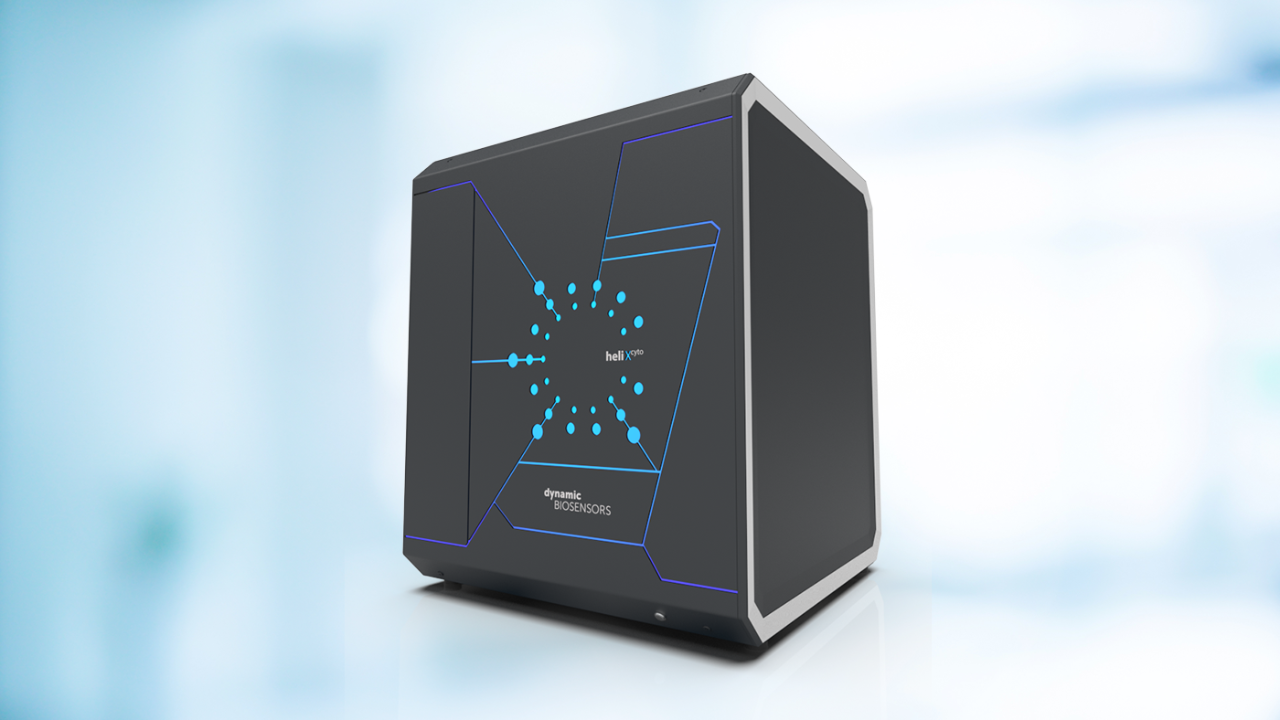
Here, we apply single-cell Interaction Cytometry (scIC) on the automated heliXcyto biosensor to quantify association and dissociation rate constants of Rituximab (RTX) directly on CD20 expressing Raji cells. Bi-exponential fits dissect the contribution of antibody affinity and avidity, and the comparison of fixed and living cells clearly demonstrates the impact of target density and receptor mobility on physiologically relevant binding modes.
To describe multiphasic antibody dissociation in a simple and practical manner, we introduce the concept of a weighted half-life.
Multiplex Profiling of FcR Binding Across Therapeutic Antibodies
Fc receptor (FcR) interactions are key determinants of the efficacy, safety, and pharmacokinetic properties of therapeutic antibodies. In this study, multiplexed kinetic profiling of human Fcγ receptors was performed using surface plasmon resonance on the Triceratops SPR #64.
Eight Fcγ receptors, along with the neonatal Fc receptor (FcRn), were analyzed in parallel against a panel of seven clinically relevant antibodies. The resulting kinetic data reveals receptor specific binding signatures and highlights the effects of Fc subclass, Fc glycoengineering, and Fcγ receptor polymorphisms. In addition, the assay provides mechanistic insight into the pH-dependent interaction with FcRn within a single run.
Overall, these results demonstrate how multiplexed SPR enables rapid and comprehensive characterization of Fc-mediated interactions to support antibody design, optimization, and comparability assessments.

"Until recently I always said, unfortunately we cannot do that on cells, kon and koff. A great answer now is with the heliXcyto we can. I like that a lot. Because this is really new and gives us new information."
Prof. Harald Kolmar, Professor, Kolmar Group, TU Darmstadt, Darmstadt, Germany
Data Download
Want more details?
Download the quick guide with methodological details and a slide deck with detailed application data examples.
*仅供研究使用,不能用于临床诊断程序。