
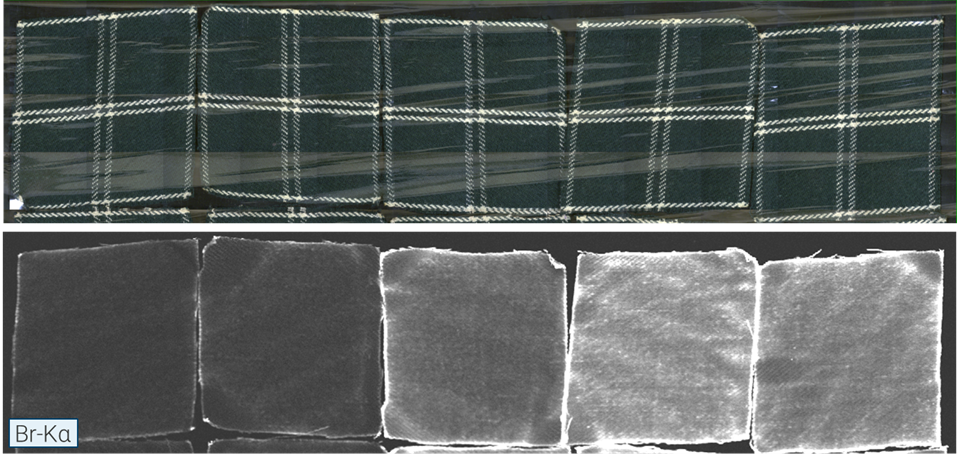
Quantifying Historic Pesticide Residues on Collections: Practical Approaches with micro-XRF
Throughout the 19th and 20th centuries, pesticides containing heavy metals such as arsenic, lead, mercury, and bromine were widely applied to protect museum collections. Today, these residues remain on objects, creating both health and conservation challenges -particularly for museum workers or items now subject to repatriation initiatives.
Micro- and also handheld X-ray fluorescence (XRF) spectroscopy is commonly used to study such substances, and qualitative identification often suffice. However, situations such as risk assessment, treatment planning, or collection surveys require quantitative data. Reliable concentration analysis is difficult because quantitative XRF analysis assumes homogenous samples, while pesticide residues usually form thin, uneven surface layers. Rather than a limitation, this can be addressed through adapted data interpretation.
This webinar will present practical approaches to quantifying residues in terms of mass deposition, supported by case studies on organic materials. The method combines standard addition with safe, self-made mock-ups mimicking pesticide deposits, enabling validation across diverse objects. By outlining best practices, limitations, and transferable workflows, this contribution provides conservators and heritage scientists new tools to extend XRF analysis beyond detection toward meaningful quantification.
Who should watch?
- Heritage and Conservation Scientists
- Collection care
- M4 TORNADO, M6 JETSTREAM, CRONO, and ELIO and IRIS users


Speakers

Dr. Mareike Gerken
Application Scientist, Bruker AXS

Dr. Roald Tagle
Global Manager Application Science, Bruker AXS
Watch this On-Demand Webinar
Please enter your details below to gain on-demand access to this webinar.