
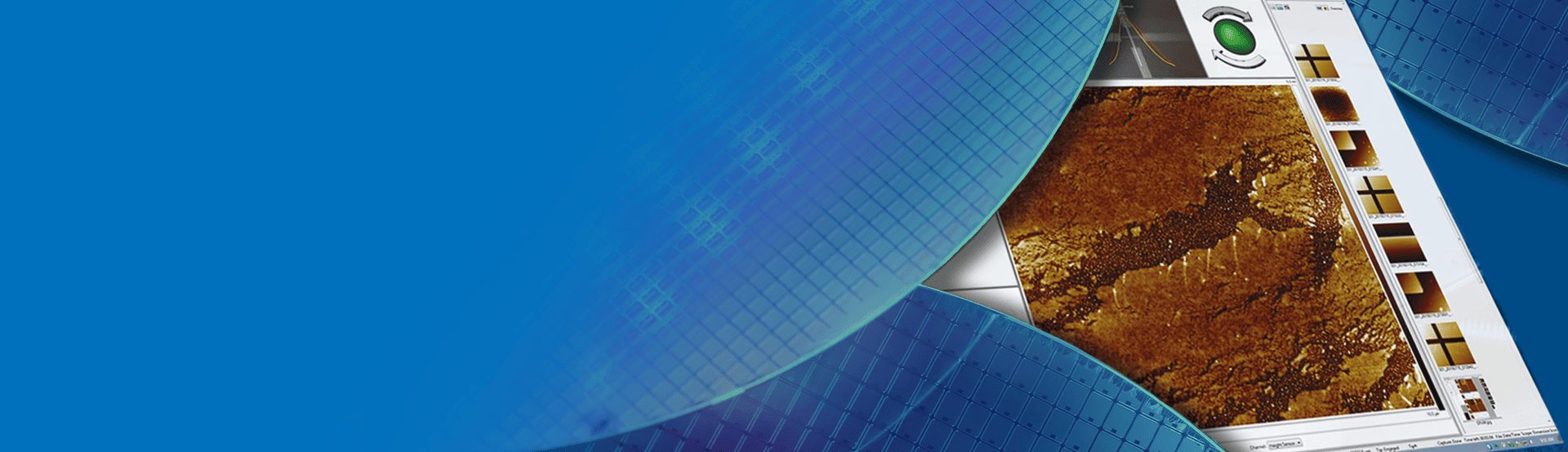
Advancing Industrial Metrology Automation with Bruker's Dimension AFMs
Evolving AFM Automation for Industrial Metrology
Automated AFM metrology plays a central role in meeting yield and precision requirements in advanced manufacturing.
This webinar will explore how Dimension AFM platforms support increasing levels of automation, from scripted measurements to data-driven control. The presenters will outline practical approaches that align automation capabilities with real metrology needs.
Join us for this webinar to learn about:
- Programmed multi-site AFM measurements for efficient data collection
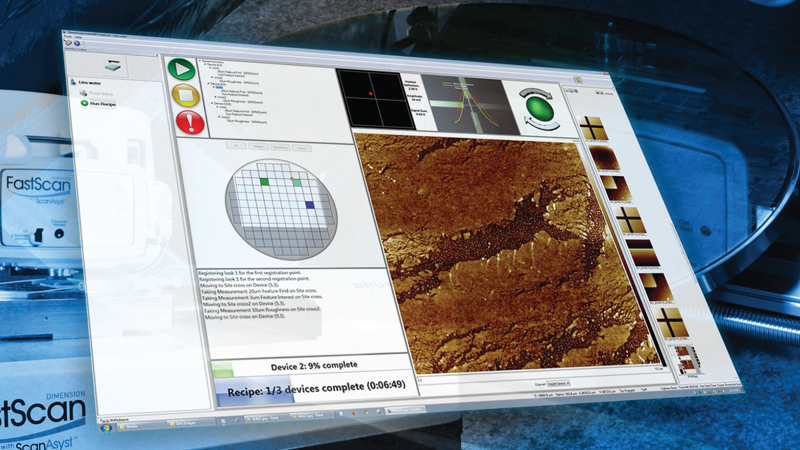
- Recipe-based automation using graphical, zero-programming tools
- Python-enabled interfaces for real-time control and data integration
Webinar Summary
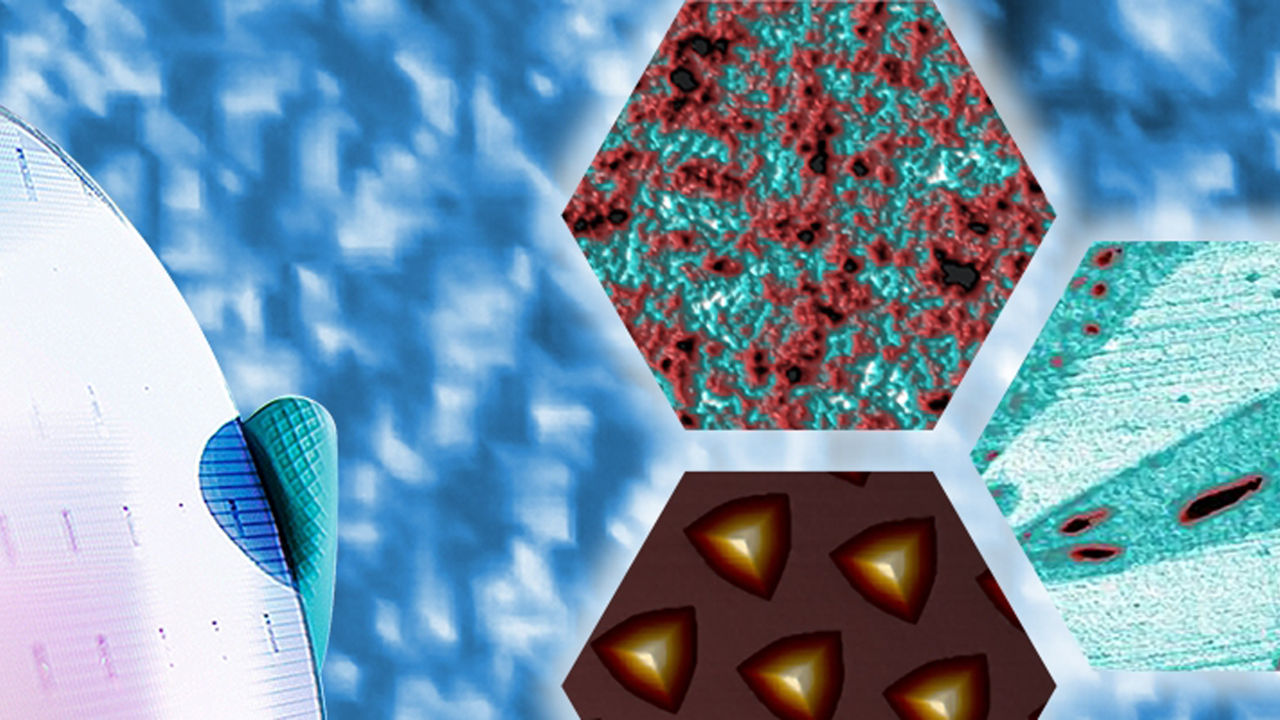
As semiconductor manufacturing demands higher yields and nanometer-scale precision, automated AFM metrology has become an industry standard. This webinar explores how the Bruker Dimension AFM platforms drive this transition through a multi-tiered software evolution, moving from basic automation to AI-powered intelligence.
We will cover three key levels of automation for metrology applications in semiconductors and other industries:
- The fundamental Programmed Move for high-efficiency, multi-site automated measurements.
- Bruker’s widely adopted AutoMET software, which utilizes a graphical, "zero-programming" recipe creator to reduce operational barriers and enhance measurement repeatability.
- A new Python-based real-time control interface. Built on the Microsoft COM standard, this interface enables seamless integration between AFM hardware and modern data science environments, opening new possibilities for AI-driven defect recognition and closed-loop control.
Find out more about the technology featured in this webinar or our other solutions for atomic force microscopy:

Bruker Speakers

Senli Guo, Ph.D., NA Applications Manager, Bruker
Senli earned his Ph.D. in physical chemistry from Duke University (2009) and spent two years in the Center for Nanophase Materials Sciences (CNMS) at Oak Ridge National Lab as a postdoc before joining Bruker as an applications scientist in 2011. All of Senli’s research is about AFM-based methodology developments to address various nanoscience research, ranging from single-molecule interactions to lithium-ion battery electrode properties.

John Thornton,
Senior Applications Scientist, BrukerJohn Thornton is a Senior Applications Engineer at Bruker Nano Surfaces with 25+ years of experience in the field of Atomic Force Microscopy (AFM). He learned AFM at North Carolina State University in the 1990s, and then joined Digital Instruments, a pioneering company in early AFM development, and continued with the company through acquisitions by Veeco Instruments, and then Bruker. John has co-authored many scientific publications and developed scanning probe microscopy training courses. Currently, John spends a significant amount of time running AFMs and educating others on techniques. He currently works from his home in Virginia, and from the Bruker AFM applications lab in Billerica, MA.

Ming Ye, Ph.D., Applications Scientist, Bruker
Dr. Ming brings over 20 years of extensive experience in the field of Atomic Force Microscopy (AFM) and microanalysis, currently serving as an Application Scientist within the Bruker North America team. After earning a Ph.D. from the Chinese Academy of Sciences in 2010, Dr. Ming conducted advanced postdoctoral research at the Max Planck Institute. The journey into the commercial AFM sector began in 2013 in Berlin, where Dr. Ming joined JPK Instruments AG—the predecessor to Bruker BioAFM. Prior to the current role at Bruker NA, Dr. Ming served as the Principal Scientist for Microanalysis at BASF Asia Pacific, bridging the gap between fundamental research and large-scale industrial solutions.