Operando Battery Measurements
Operando Analysis of a NMC622 Pouch Cell at Various Temperatures
The increased penetration of high-energy X-rays enables diffraction experiments under operando conditions.
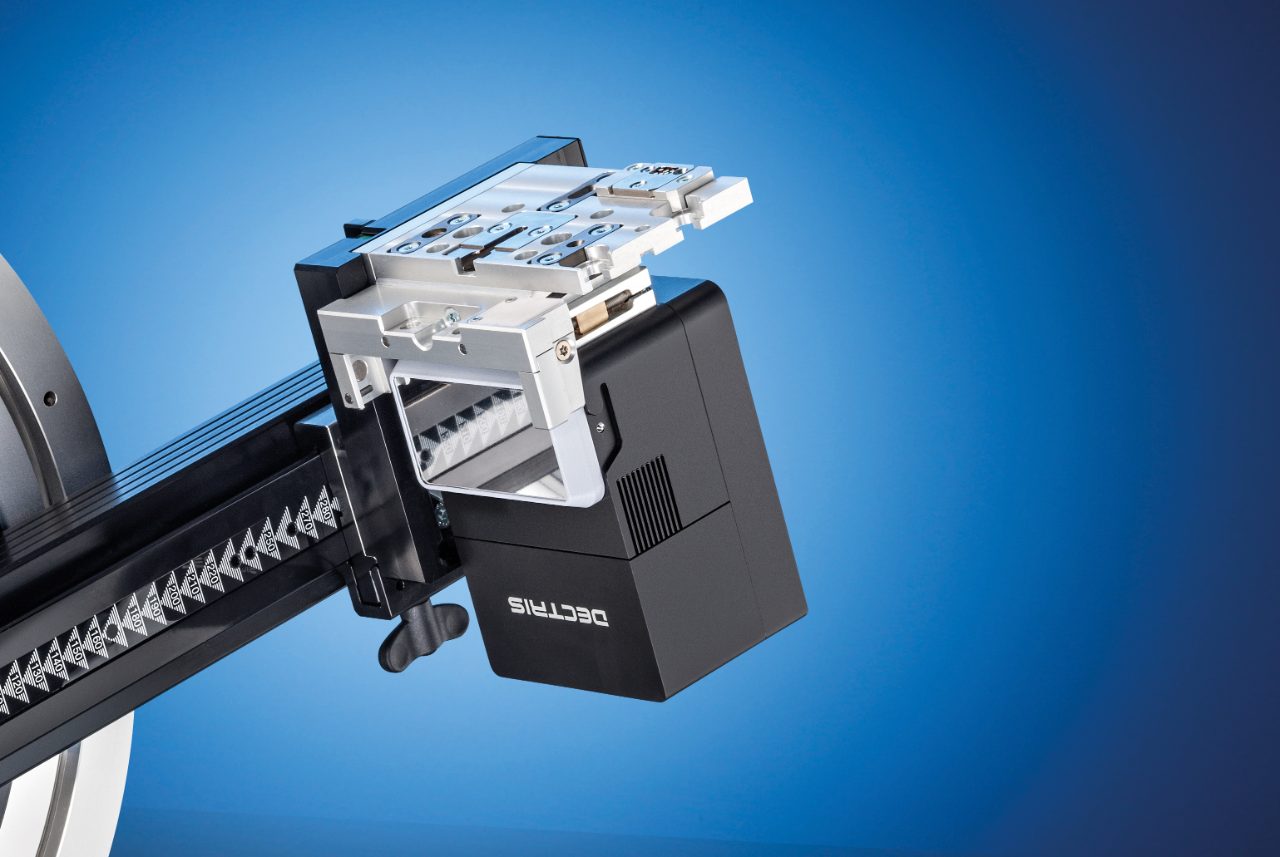
The D8 DISCOVER HE, equipped with a Mo X-ray source and the large area EIGER2 R 500K detector, provides an ideal platform to investigate structural changes in a battery while applying a current or voltage. High-energy X-rays more easily penetrate current collectors and housings, providing information about the entire battery cell. Additionally, the compressed diffraction pattern means more data is collected in a single snapshot, which enables rapid and continuous data collection for following small changes in the battery.
Investigating Charge-Discharge Behavior of Li-ion Batteries at Controlled Temperatures
Operando studies – combining XRD with the charging and discharging process in Li-ion batteries – allow to correlate the crystallographic changes inside the battery with its performance. Typically, this performance is tied to the charging and discharging speed, but also the temperature of the battery.
Ideally, the temperature of the battery stays constant during an operando experiment, however, the temperature of the cell usually only corresponds roughly to room temperature, or the temperature inside the enclosure of the diffraction setup, while it may even rise when a voltage or current is applied. Additionally, the charge and discharge behavior may drastically change with temperatures which are far above or below room temperature.
To investigate the performance and crystallographic changes in a battery at constant and well-defined temperatures over a large range, a dedicated temperature chamber for pouch cells has been used.
Method, Results & Discussion
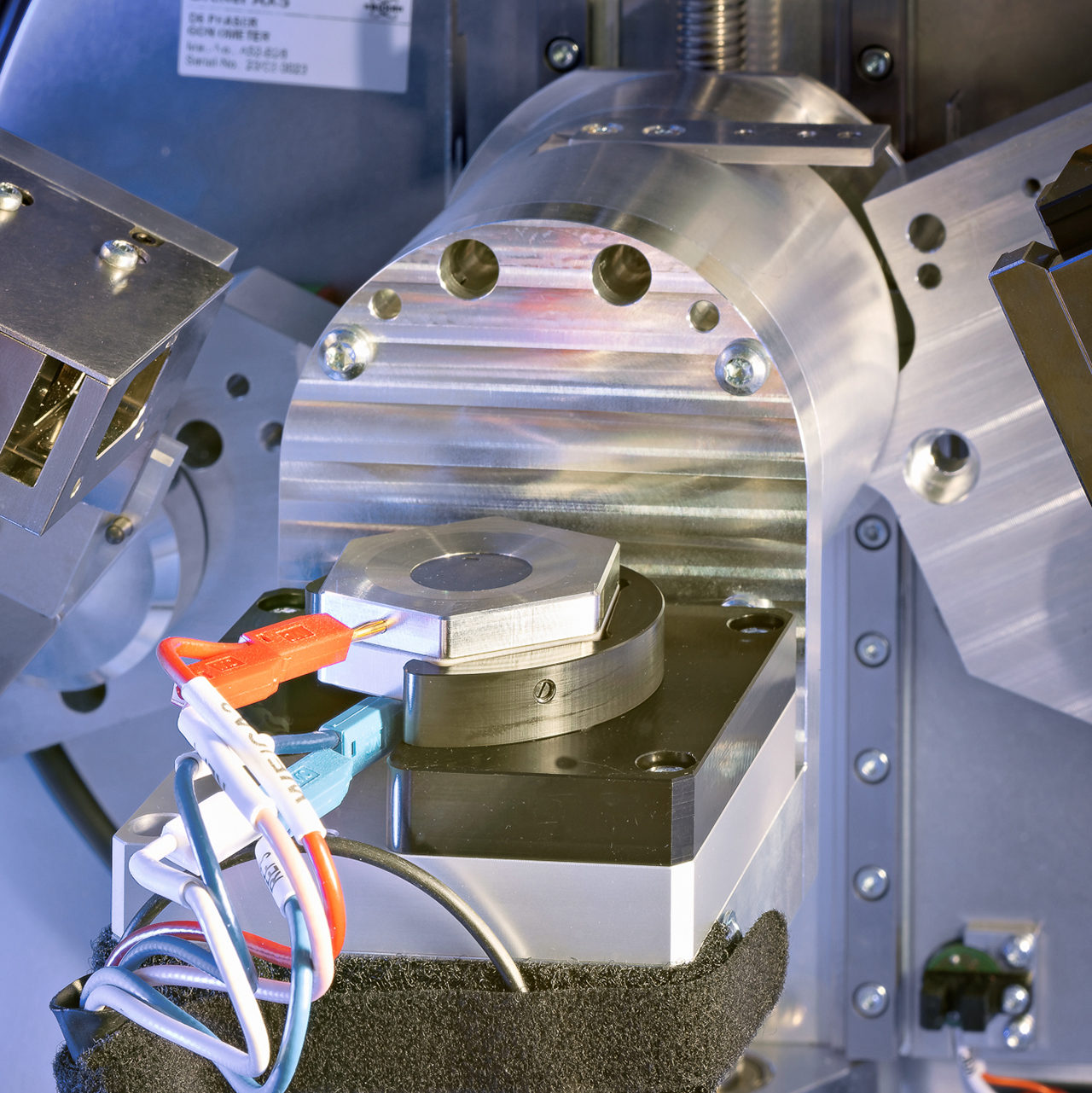
The battery cell used in this investigation was a pouch cell consisting of a single layered NMC622 cathode (coated on Al foil) and a single layered graphite anode (coated on Cu foil). The experiment was carried out on a D8 DISCOVER HE diffractometer configured with a Mo X-ray tube, focusing Göbel mirror optic, and EIGER2 R 500K detector. The cell was mounted in the TC POUCH operando chamber, which enables operando experiments on pouch cells at various temperatures. The battery cell was cycled with a C/2-rate at temperatures of 0 °C, 25 °C and 50 °C. During cycling, XRD patterns with a duration of 20 seconds were continuously collected, totaling to around 600 XRD scans per temperature.
At low temperatures, the battery cell discharges more quickly than at room temperature, preventing access to the full capacity, as illustrated in Figure 3. There is also a voltage dip observed during discharge, which is not ideal for electronics requiring a constant voltage.
A 2D plot of the diffraction patterns at various temperatures allows a closer investigation into the chemistry happening inside the cell. Figure 4 shows a zoomed region of the corresponding 2D plots of the XRD data, as well as the voltage curve of the battery at different temperatures. At 25 °C and 50 °C, the evolution of the different anode phases is clearly observed, including the formation of the fully-lithiated LiC6 phase. The growth of this phase is a necessary step for a fully charged NMC battery. At 0 °C, however, this phase is not observed, explaining the lower capacity at low temperatures.