High-Energy X-ray Diffractometers
Pushing Beyond the Limits of Conventional X-ray Diffraction
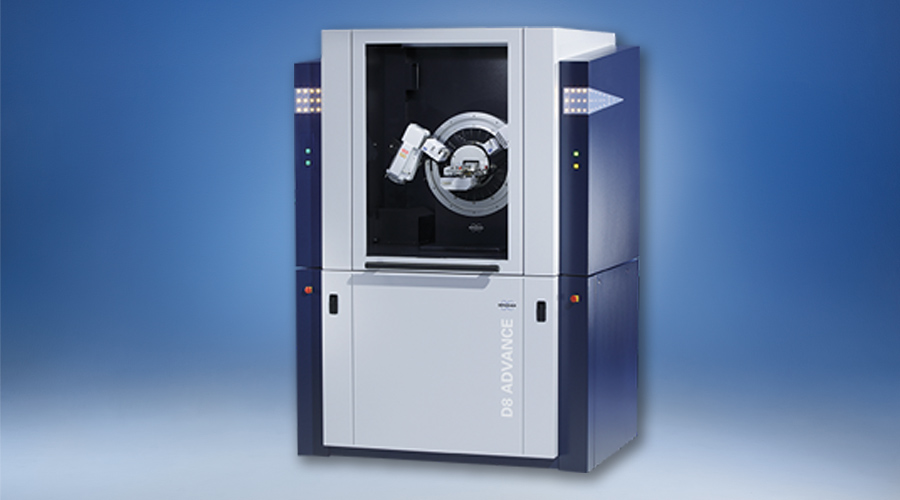
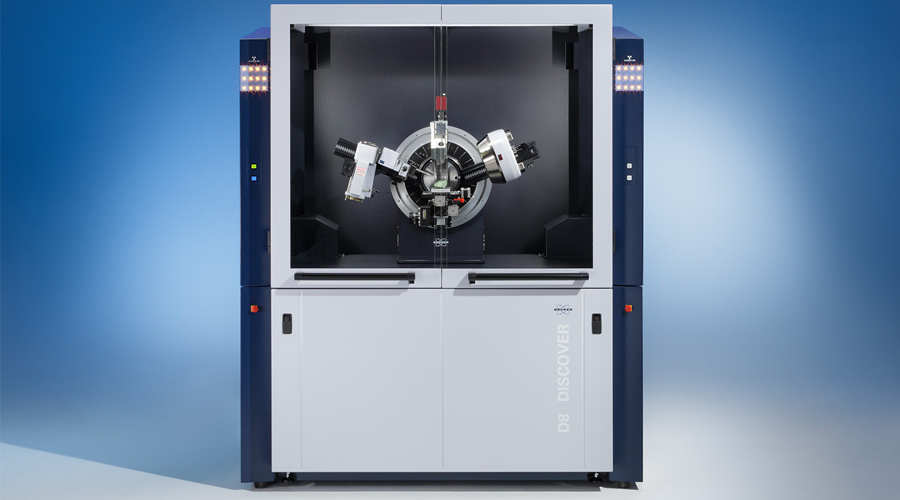
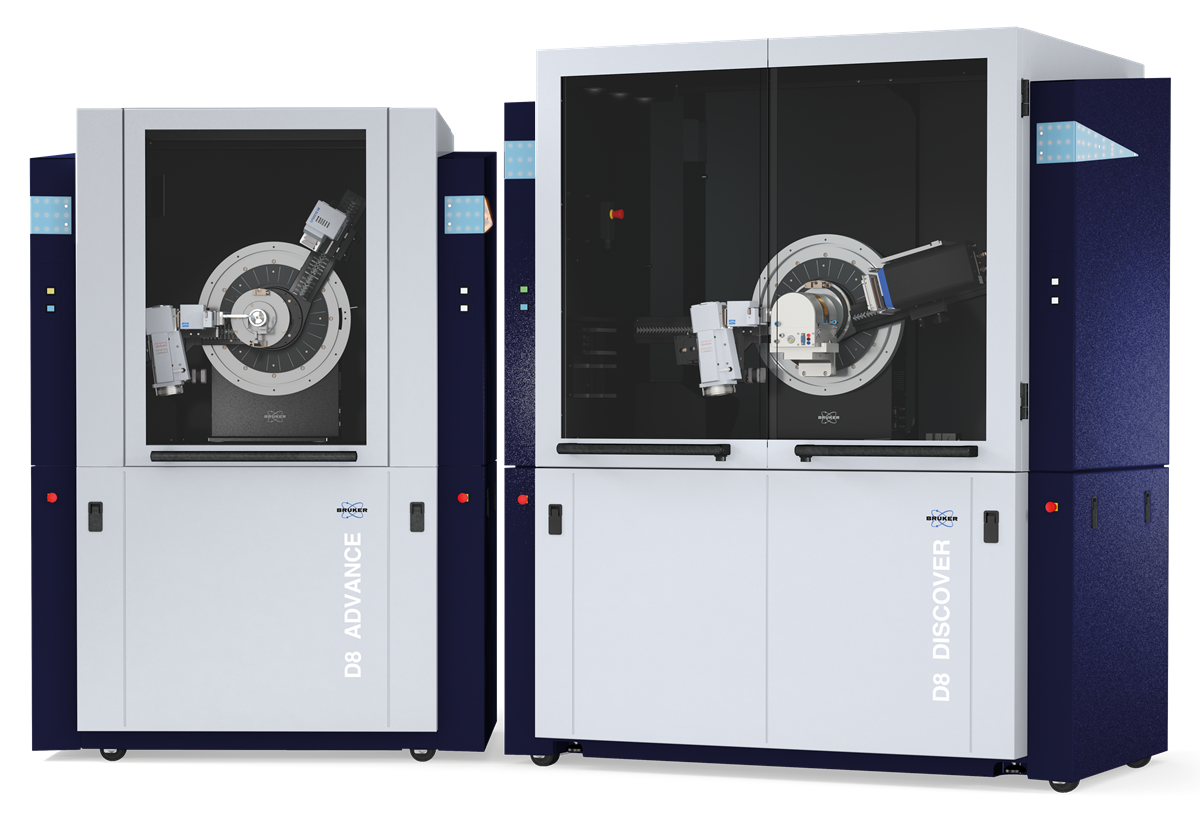
D8 ADVANCE HE and D8 DISCOVER HE take our well-established D8 family X-ray diffractometers into the high-energy range.
Equipped with either a molybdenum (Mo) or silver (Ag) X-ray source, dedicated optics, and top-of-the-line detectors, our high-energy diffraction solutions will take you far beyond the limits of conventional X-Ray Diffraction (XRD) for more precise data and the analysis of complex materials and structures.
High-Energy XRD: See More. Do More. Understand More.
See More
- Perform non-destructive analysis of samples in realistic environments such as full battery cells or heterogeneous catalysis setups.
- Analyze local structure of amorphous, nanostructured, or disordered materials with PDF analysis.
Do More
- Collect more data faster thanks to ultra-efficient CdTe detectors.
- Conduct highly accurate non-ambient, in-situ, and operando experiments including battery cycling at different temperatures.
- Work efficiently with virtually any sample using a wide range of easily exchangeable sample stages.
Understand More
- Plan, measure, then analyze using our comprehensive DIFFRAC.SUITE software.
Optimized for Advanced Structural Analysis
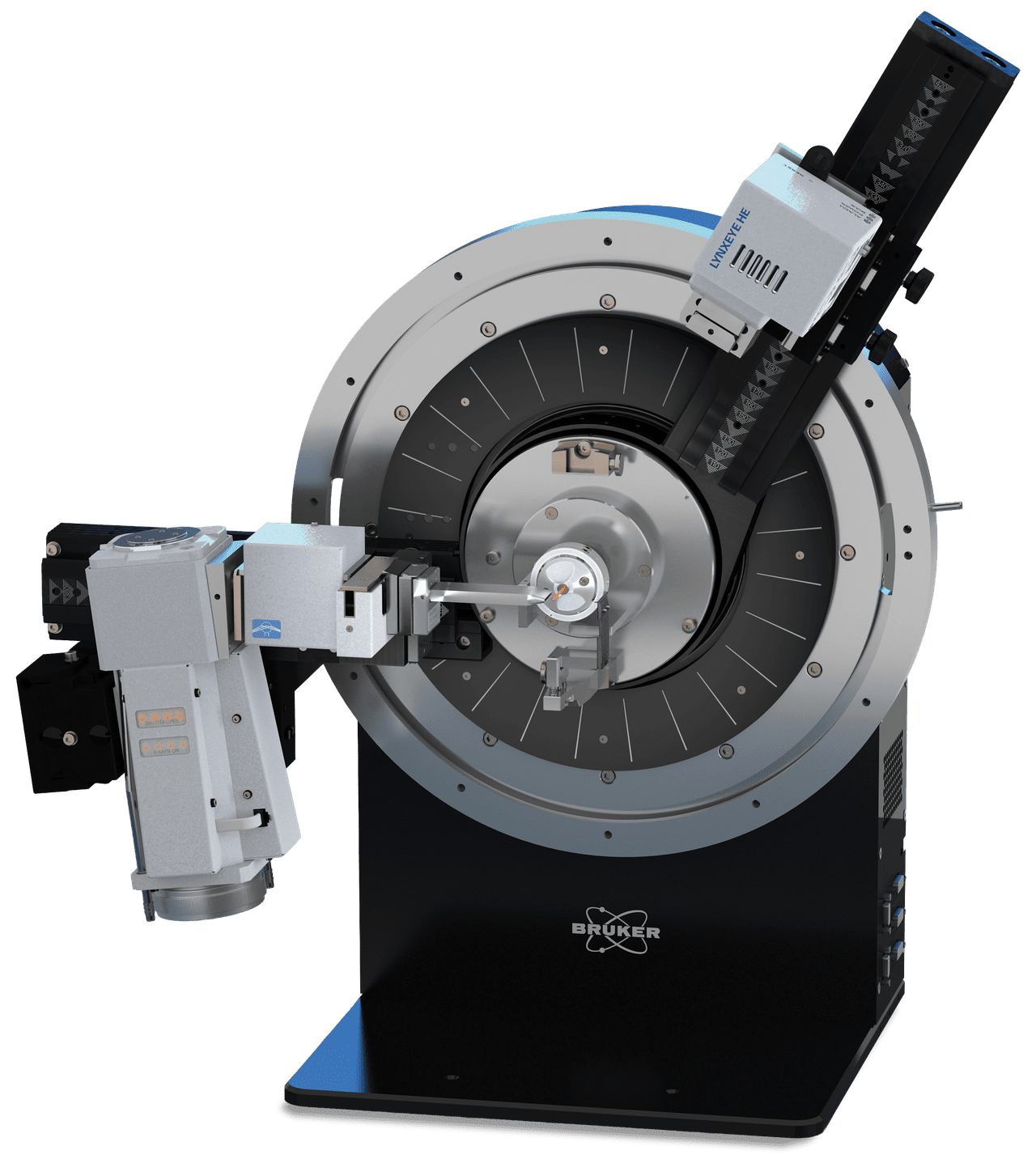
Engineered around high-energy X-ray sources and advanced detector technology, our high-energy diffraction solutions extend the limits of conventional XRD by combining higher real-space resolution, deeper penetration, and improved counting statistics
High-Energy Mo or Ag Radiation: Expand Your Vision
The D8 ADVANCE HE and D8 DISCOVER HE are equipped with either a high-energy Mo or Ag X-ray source, which enable the collection of an extended total scattering range compared to Cu sources used in standard XRD.
This means that with high-energy source, data can be collected to Q values well beyond 8 A-1, enabling local structure peaks to be better resolved by Pair Distribution Function (PDF) analysis.
The shorter wavelength of these sources also translates to smaller uncertainties in atomic positions and displacements – resulting in a more detailed structural determination.

XRD Analysis of Complex Samples
The higher energy of Mo and Ag sources means they penetrate further through complex sample environments, enabling high-resolution XRD analysis of samples in applications where conventional XRD setups would struggle.
With the D8 ADVANCE HE and D8 DISCOVER HE the analysis of complex systems and intact devices is possible, such as operando measurements of Li-ion batteries under real working conditions.

Ultra-Efficient CdTe Detectors: Make Every Photon Count
The D8 ADVANCE HE and D8 DISCOVER HE are available with cadmium telluride (CdTe)-based detectors - the LYNXEYE HE and EIGER2 R CdTe 500K.
These detectors exhibit an unrivalled stopping power for high-energy X-rays, resulting in high signal absorption across the spectrum from copper to silver.


Smart Sample Handling
The D8 ADVANCE HE and D8 DISCOVER HE can be equipped with a wide range of sample stages and sample environments, enabling analysis of virtually any type of sample.
3 Sample Stages in One
The 3-in-1 capillary stage supports measurements in capillary, reflection, and foil transmission geometries. High-precision magnetic components ensure quick swapping and easy handling, while the included capillary alignment tool (CAT) enables alignment-free capillary mounting.


High-Throughput Sample Changers
- UMC 150 HTS-3: High-throughput screening of 3 well plates and 288 samples.
- AUTOCHANGER: Up to 6 exchangeable towers for total capacity of 90 samples

Battery Research
- Electrochemical cell designed by battery experts.
- Flexible pouch cell holder for various sizes.
- Fully software integrated potentiostat.

Non-Ambient Solutions
- Capillary furnace: Room temp up to +1000 °C.
- Pouch cells: Electrochemistry -10 to +110 °C.
- Modular temperature chambers: -180 to +2000 °C.
Learn More About the Power of High-Energy XRD
If you want to learn more about the power of high-energy XRD download the brochure or contact a Bruker expert.
Accessing Structural Information Beyond Conventional XRD
By extending the capabilities of XRD analysis, high-energy diffractometers help to reveal structural detail in samples that typically challenge conventional methods, such as highly disordered materials or complex layered systems, whilst still providing enhanced performance for established applications.


All-in-One Software: Plan. Measure. Analyze
Data acquisition and evaluation take place all in one dedicated software platform - DIFFRAC.SUITE.
DIFFRAC.SUITE supports seamless analysis from experiment setup to the analysis of results, ensuring consistent and reproducible data evaluation. In addition, automated workflows can be orchestrated at scale in the software using the DIFFRAC.BBE (Black Box Evaluation) module.
DIFFRAC.EVA: Versatile XRD software for fast and reliable evaluation of 0D, 1D and 2D diffraction data.
DIFFRAC.TOPAS: The most popular Rietveld refinement software for both academia and industry for the integration of all types of diffraction and scattering data.

Watch the Launch Webinar: High-Energy X-ray Diffraction

Discover the power of high-energy XRD in our upcoming launch webinar for the D8 ADVANCE HE and D8 DISCOVER HE.
In this webinar we demonstrate how high-energy XRD enables the collection of richer structural data, the performance of total scattering experiments and material analysis in advanced sample environments, with real-world applications and live instrument demos.
Watch now to find out how high-energy XRD can take your research further.
Resources
Discover the D8 ADVANCE Family and D8 DISCOVER Family
Learn more about our advanced solutions for X-ray diffraction on the XRD homepage and using the links below.