
Lead Discovery and Optimization
with NMR Workflows
Move from validated hits to optimized leads in one integrated, automated workflow.
What is Lead Discovery and Optimization?
Lead discovery is the stage of drug discovery in which scientists identify and confirm chemical starting points (“hits”) that bind a validated biological target, then advance the most promising of them into “leads” worth optimizing. It sits between target identification and lead optimization in the discovery pipeline and directly determines the quality of every molecule that follows.
In hit-to-lead, confirmed hits are triaged and matured into lead series using structure-activity relationships (SAR). In lead optimization, those leads are iteratively refined to improve potency, selectivity, and developability, including ADME/DMPK and safety properties, until a candidate is ready for preclinical study. Higher-confidence binding and structural data at this stage reduces costly late-stage attrition.
NMR spectroscopy supports this journey end to end: it confirms which fragments truly bind, measures how tightly (Kd), reveals where and how they bind, and resolves the 3D conformation a ligand adopts in solution - information medicinal chemists use to design better molecules.

Why Fragment-based Screening by NMR?
Fragment-based screening (FBS) by NMR is a trusted foundation of modern drug discovery, used in more than half of fragment screening campaigns. It detects weak binders, confirms compound identity, and reveals how and where a fragment binds, guiding progression from hit identification through hit-to-lead and lead optimization. Bruker integrates instrumentation, automation, and software into one workflow, removing the manual data handling that traditionally slows screening.
Features
An End-to-End NMR Workflow for Lead Discovery
Bruker connects every step of the NMR-based lead discovery in near-physiolicical conditions workflow within a single integrated environment: from library definition and library Quality Check to automated acquisition, screening, hit detection, binding validation, structural analysis, and project-level data management. All NMR measurements are performed under near-physiological conditions, ensuring biologically relevant insights throughout the workflow. This eliminates manual data transfer between disconnected tools and helps modern discovery teams move from fragment library preparation to validated structural insights.
- Library Definition, Quality Control, and Data Management
Confidence starts with the library. Mnova Gears, Verify, and qNMR, check the identity, purity, and solubility of every fragment, so screening effort is spent only on trustworthy compounds.
These solutions are also available together as the Bruker Chemist Suite, providing an integrated workflow for compound verification and quality assessment.
Mnova MixDesign then assembles optimized cocktails, allowing many fragments to be screened together without ambiguity.
Mnova DB supports library and screening-data management by storing fragment spectra, screening results, and project-related information in one environment. This enables comprehensive project tracking and provides an audit trail for screening campaigns.
- Automated Acquisition and Library Screening
Automated acquisition with automation Software and SampleJet enables unattended measurement of fragment libraries using standard and customizable NMR screening experiments. Typical experiments include 1D 1H with buffer and water suppression, STD, waterLOGSY, T2/T1ρ, and 19F experiments with decoupling.
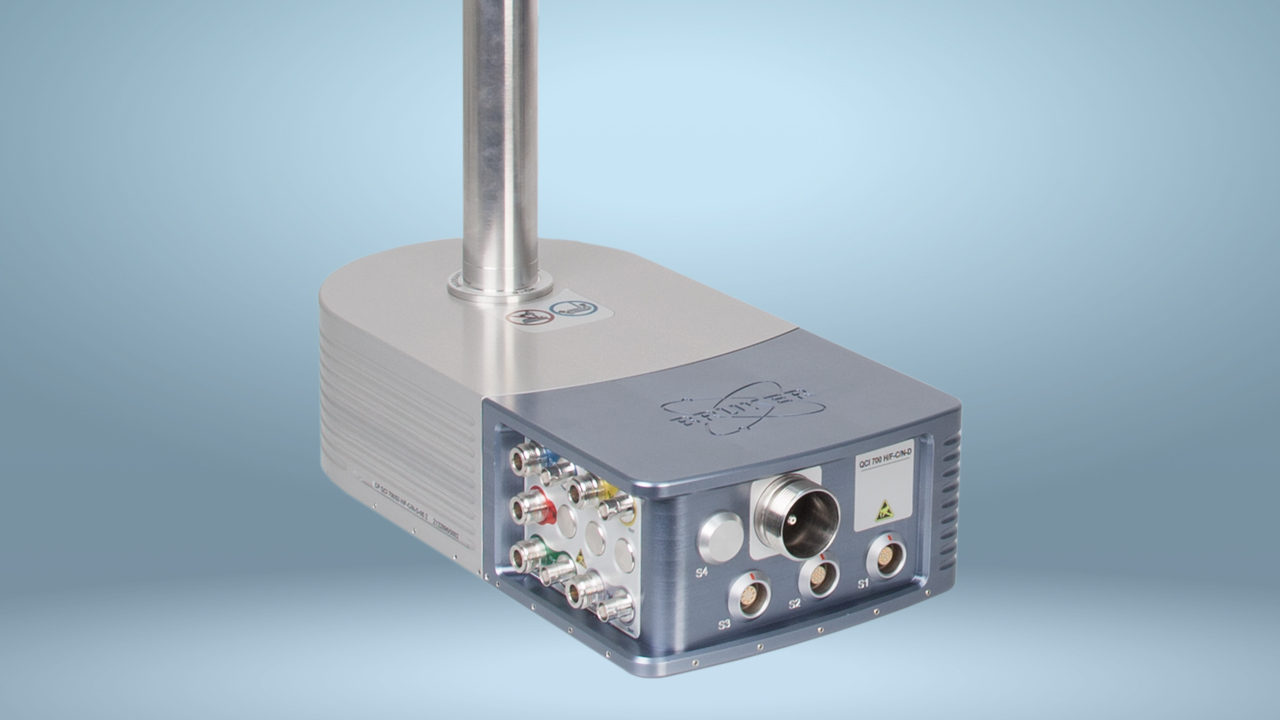
High-sensitivity QCIF CryoProbes support efficient acquisition for both 1H and 19F screening. Because 19F signals are highly selective and well dispersed, with no fluorine background in protein samples, a single mixture can contain up to 30 fragments.
- Acquisition-to-Analysis and Automated Hit Detection
For ligand-observed 1D NMR 1H and 19F experiments, TopSpin’s fragment-based-screening functionality bridges acquisition and analysis by transferring spectra into Mnova Screen , for automated analysis and hit detection. Additionally, Mnova Screen 2D evaluates chemical shift perturbations (CSPs) from single-point 2D-NMR titrations to enable rapid ligand ranking and hit identification. The workflow also supports PowerPoint-style reporting to help teams communicate screening outcomes efficiently.
- Binding Validation and Structural Biology
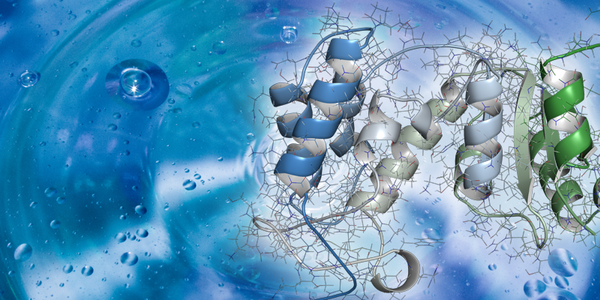
Confirmed hits are characterized by protein-observed 2D NMR. Mnova Binding processes protein-ligand HSQC titrations, visualizes chemical-shift perturbations, and calculates Kd values across multiple peaks. This combines affinity measurement and binding-site mapping in a single experiment, without requiring a crystal structure.
- Lead Optimization and 3D Conformational Analysis
The 3D conformation that a free ligand adopts in solution influences how well it binds its target, making this understanding valuable for optimization. Mnova StereoFitter calculates the most probable 3D conformational populations from experimental NMR constraints, including NOEs, residual dipolar couplings, J-couplings, and chemical shifts. This provides medicinal chemists with direct experimental structural guidance for the next round of design.


Benefits
- Biologically relevant insights. Near-physiological solution-state measurements capture interactions under conditions closer to the native environment, supporting more informed lead discovery decisions.
- Accelerated screening to validated hits. Automated acquisition-to-report and high-throughput handling move teams from screening to validated hits in days, not weeks.
- Unique insight for better decisions. One workflow combines binding detection, binding-site mapping, and structural insight, including dynamics inaccessible to crystallography alone.
- Confidence through reliable data. Sensitivity matched to the µM–mM fragment range plus integrated Quality Check and solution-state measurement reduce false positives.
- End-to-end workflow integration. Library Quality Check, screening, binding, and 3D analysis in one environment; no manual data transfer; traceable, reproducible results.
- Scalable, automated discovery. Automation across acquisition, analysis, and reporting supports growing libraries and multi-team campaigns.
- The 19F advantage. Up to 30 fragments per mixture, strong T2 sensitivity, no background fluorine in proteins, commercial 19F libraries.
Use Cases
- Primary fragment screening including difficult targets. When high-throughput screening yields no hits, automated 19F NMR screening with mixtures can identify validated hits and confirm target druggability.
- Turnkey screening for CROs. Where in-house NMR expertise is limited, an automated, workflow enables rapid service deployment and multi-purpose use of the instrument.
- Hit validation and optimization without crystallography. When binding-site and affinity data are needed quickly, automated 2D NMR with Kd extraction delivers them, supporting faster SAR cycles and decisions.
- Orthogonal validation of screening hits. Where other methods return high false-positive rates, ligand-observed NMR confirmation narrows the hit list to high-confidence candidates.
How NMR Complements Other Methods
NMR is the only screening approach that combines Quality Check, binding detection, and structural insight in one workflow. It operates in solution without immobilization, avoiding artifacts common to surface-based assays, and offers leading sensitivity for weak binders. By contrast, SPR lacks structural insight and struggles with weak binders, and X-ray crystallography requires crystals and does not provide affinity data, so NMR is frequently used to validate and enrich hits from both.


Instrumentation, Probes, and Software
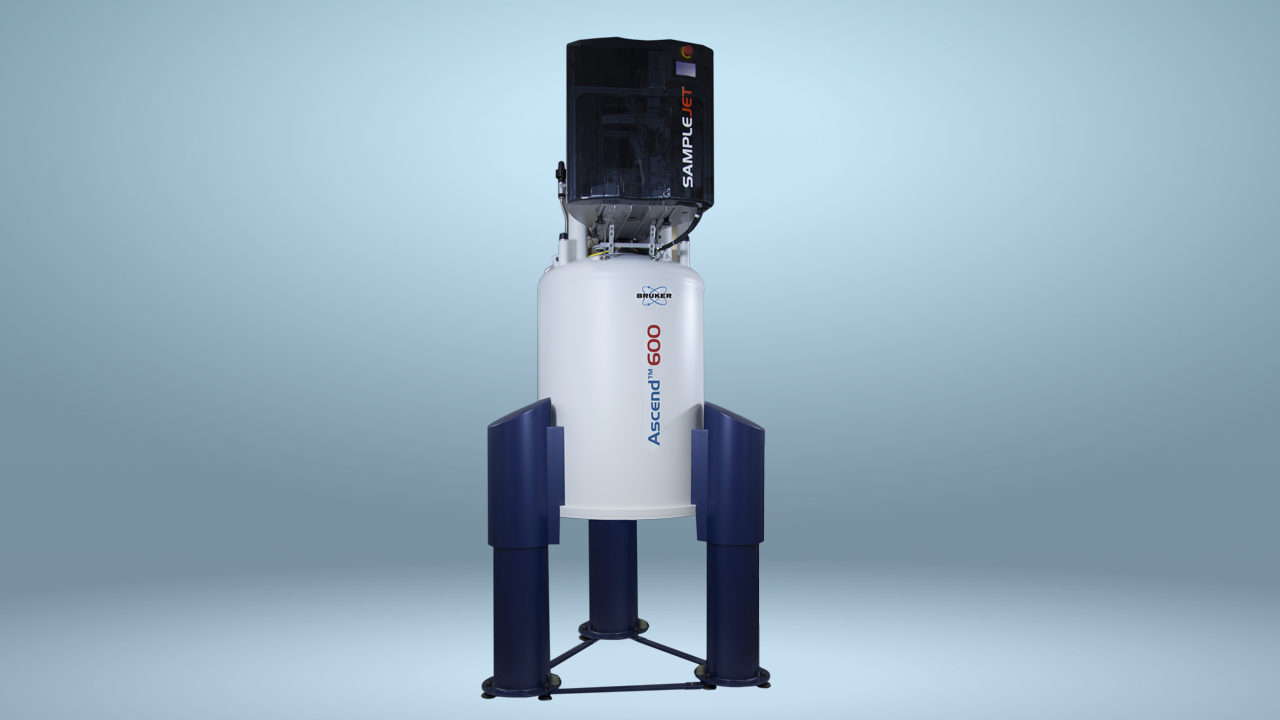
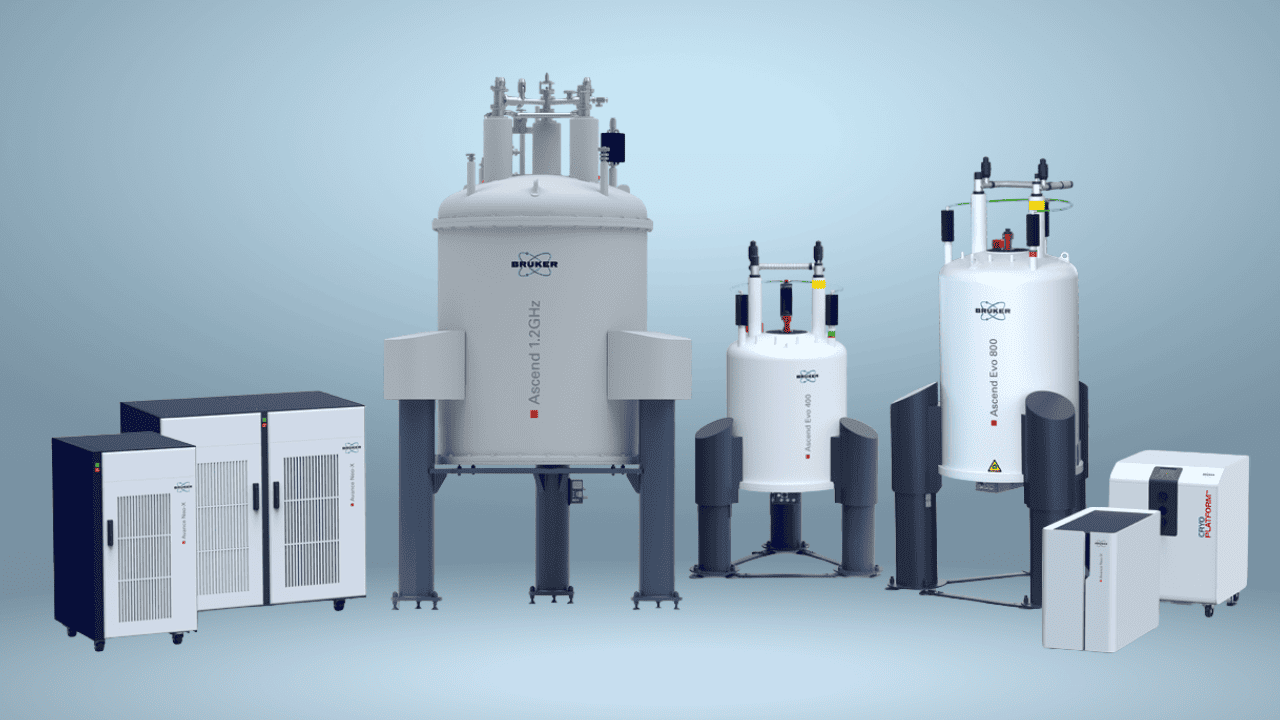
The solutions pair high-field NMR with automation and a connected software stack. A preferred configuration combines an Ascend 600 MHz magnet with a Versatile Quadruple-Resonance CryoProbe (QCIF) for 19F and triple-resonance bio-NMR, and the SampleJet Versatile Sample Changer for unattended, high-throughput runs.

LabScape
Service & Life Cycle Support for Magnetic Resonance and Preclinical Imaging
Bruker’s commitment to provide customers with unparalleled help throughout the buying cycle, from initial inquiry to evaluation, installation, and the lifetime of the instrument is now characterized by the LabScape service concept.
LabScape Maintenance Agreements, On-Site On-Demand and Enhance Your Lab are designed to offer a new approach to maintenance and service for the modern laboratory