
LYNXEYE detectors
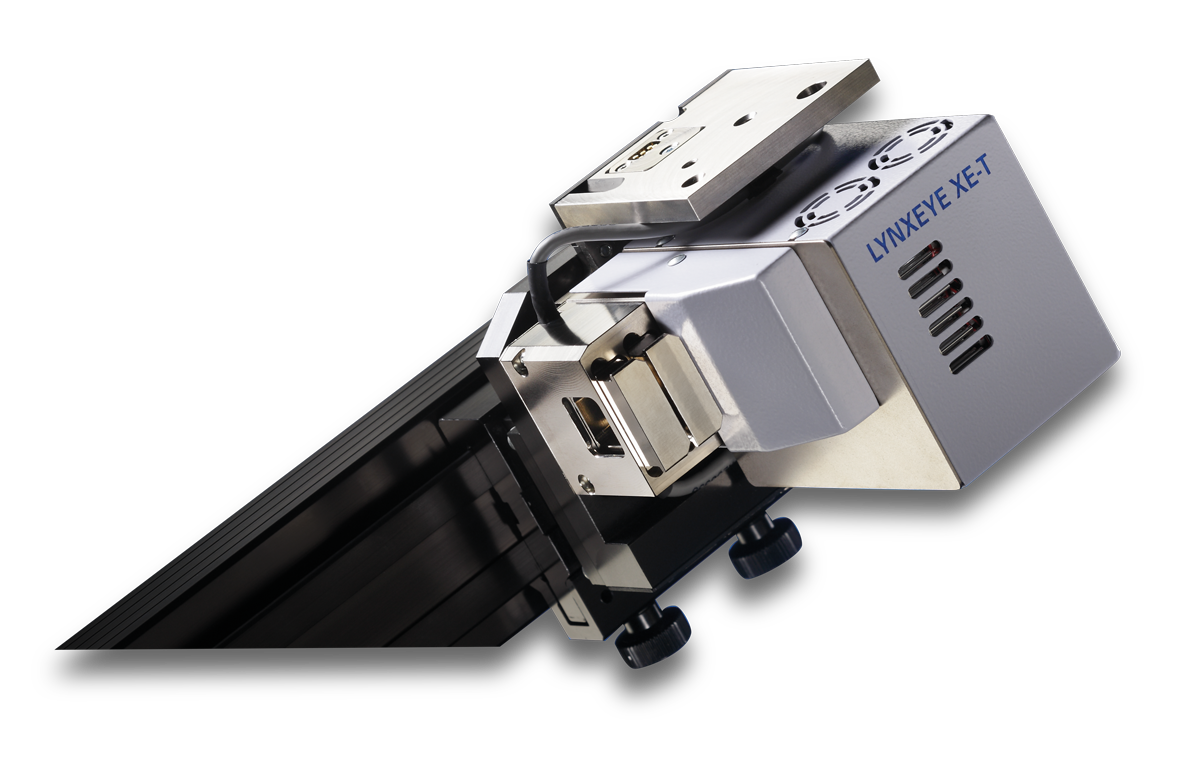
The LYNXEYE Family – Highest Data Quality for Any Application

The LYNXEYE family of detectors represents the height of performance in compound strip detection for all X-ray diffraction and scattering applications.
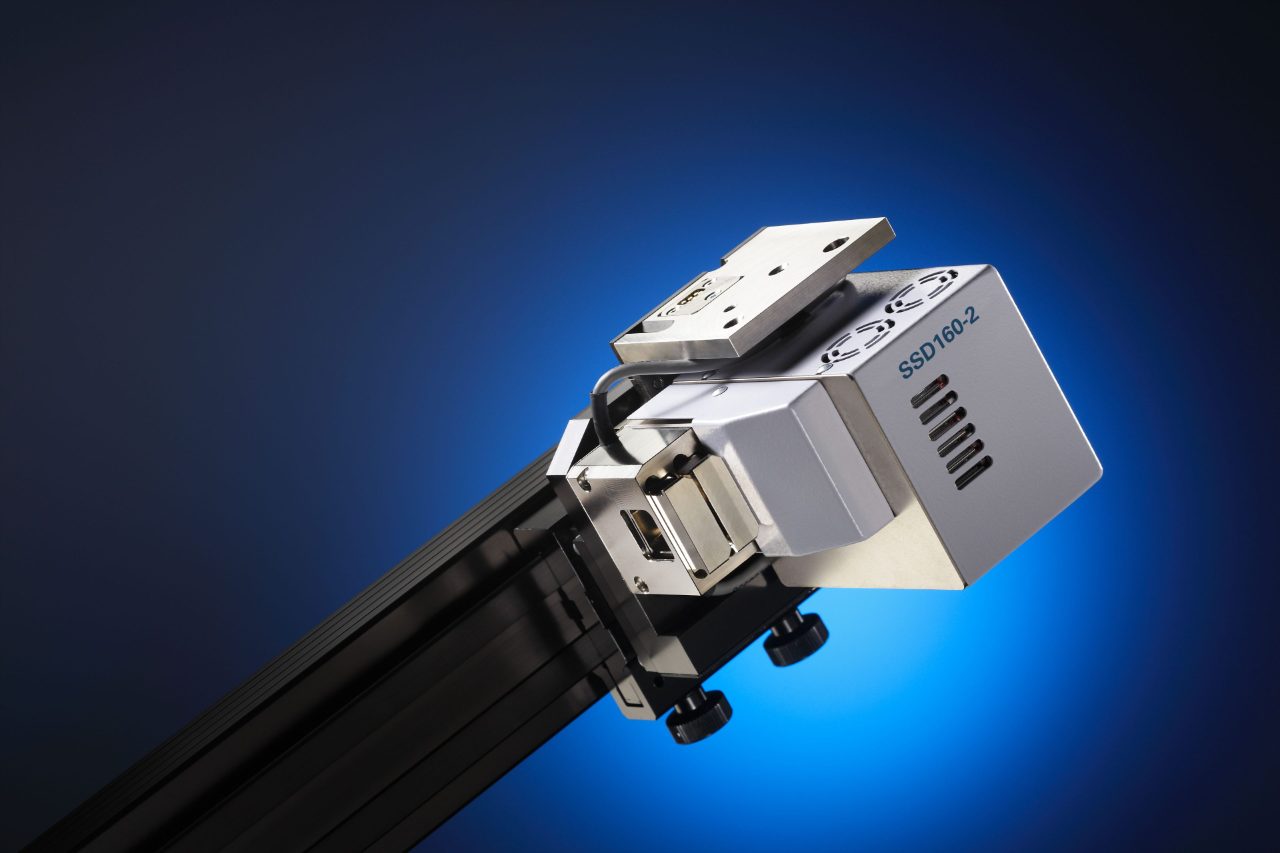
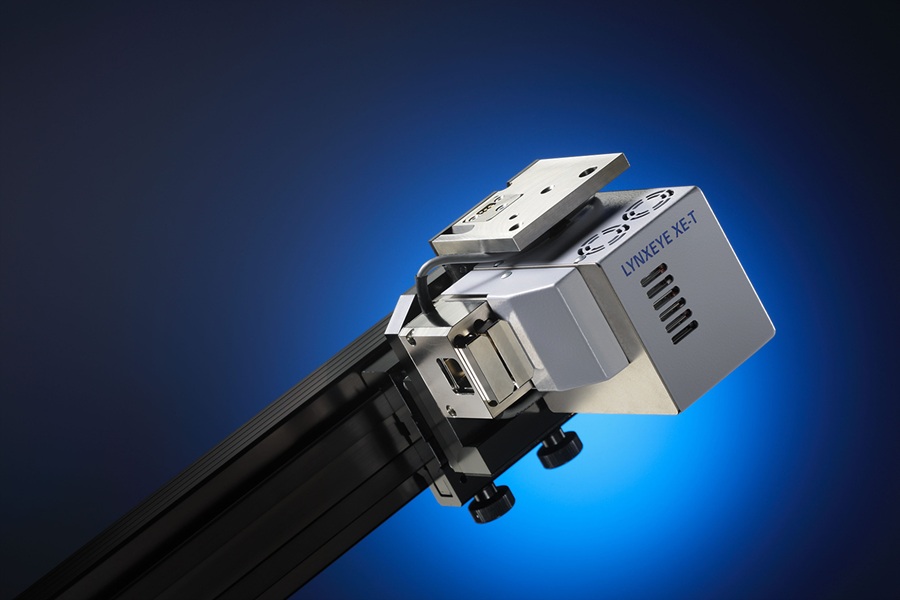
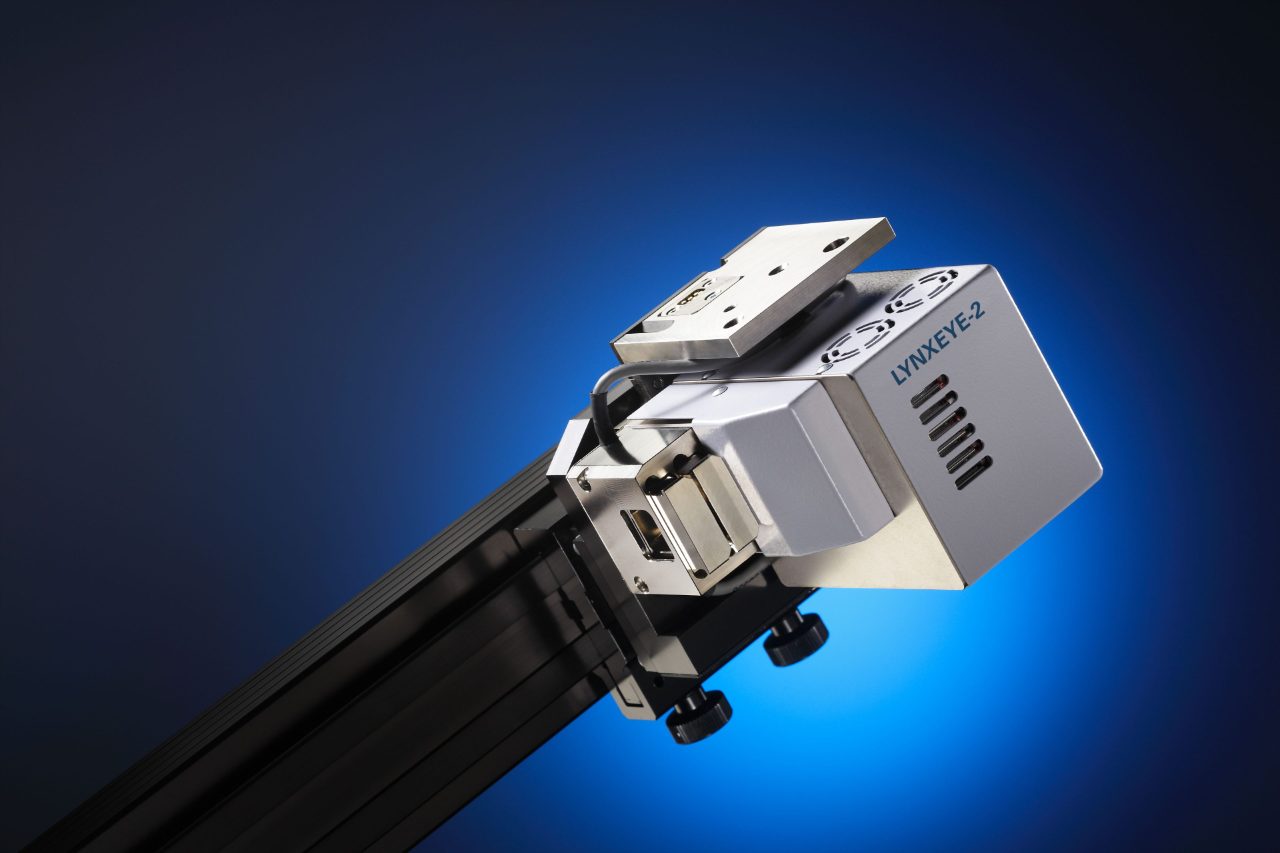
The SSD160-2, LYNXEYE-2, and LYNXEYE XE-T feature advanced 500 µm silicon strip sensors, compatible with all common X-raywavelengths - from Cr to Ag - and are fully integrated with all of Bruker’s X-ray diffractometers.
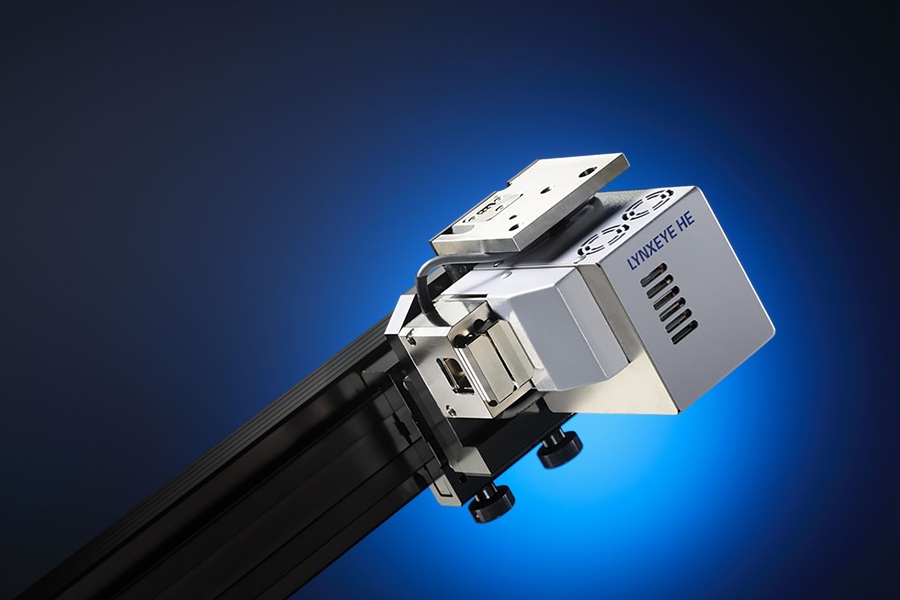
The LYNXEYE HE, for the D8 ADVANCE and D8 DISCOVER, offers an air-cooled CdTe sensor optimized for applications requiring Mo or Ag radiation, like pair distribution function (PDF) analysis or operando studies on battery cells.
All LYNXEYE detectors are engineered to meet the highest standards in technical precision, manufacturing quality, and system/software integration - ensuring unmatched versatility, reliability, and data quality across all applications.
Key Features
Unmatched Fluorescence and Kβ Filtering

The LYNXEYE XE-T delivers the most effective suppression of unwanted diffraction signals available in a detector today. Combining an energy resolution better than 380 eV with a unique third discriminator that rejects charge sharing events, the detector removes 100% of Fe fluorescence excited by Cu radiation and suppresses Cu Kβ radiation to less than 0.1% of the Cu Kα intensity. The result is exceptionally clean diffraction data free from artifacts like absorption edges and unparalleled sensitivity for trace and minor phases.
2D scanning and BRAGG2D

A common challenge encountered during powder X-ray diffraction experiments is ensuring the specimen consists of randomly oriented crystallites with appropriate dimensions. 2D X-ray diffraction is a convenient way to visualize deviations from this ideal powder condition. It is also useful to enhance the phase-identification process by correlating line profiles and to increase quantification reliability.
All detectors of the LYNXEYE family support two ways of collecting 2D data:
On D8 ADVANCE and D8 DISCOVER diffractometers equipped with Bruker’s patented 0/90° mount, 2D data is collected in the 90° orientation using a conventional 2θ scan. With BRAGG2D, included on all diffractometers, data is measured in parafocusing beam geometry and processed with a new 2D data processing algorithm. This allows the illumination of a large specimen area with the full X-ray beam, resulting in rapid assessment of sample preparation.
Fast measurements and high dynamic range

With its high dynamic range, high count rate and fast readout times, the LYNXEYE detector family is a great choice for all applications, including materials research.
Reciprocal Space Maps (RSM) are important to characterize the structure of epitaxial multilayers and evaluate film properties – such as strain, composition and domain effects.
Using the rapidRSM™ technology, available for all LYNXEYE family detectors, RSMs are collected as a series of 1D snapshots with essentially no dead time. This dramatically reduced the required scan time to minutes or even seconds, increasing sample throughput.
For X-ray reflectometry (XRR) and high resolution XRD (HRXRD) measurements, the signal intensity varies by several orders of magnitude over the measured range. Consequently, a high dynamic range is a key detector parameter. By switching to the 90° orientation of any LYNXEYE family detector, the dynamic range increases by almost 200x, eliminating the need for absorbers – gaining speed and improving data quality.
LYNXEYE Detector Specifications
Specification | Benefit | |
SSD160-2 | Number of Channels: 160 (up to 2400 subchannels) Energy Resolution: < 1000 eV FWHM (<426 eV Sigma) at 8keV Active Window: 12 x 16 mm²; 2.5° coverage at 250 mm radius No. defective channels: max. 1 (<1%) Max. global count rate: 125,000,000 cps | Up to 125x faster than conventional detector systems Superb filtering of fluorescence Large dynamic range, e.g. for 0D applications |
LYNXEYE-2 | Number of Channels: 192 (up to 2880 subchannels) Energy Resolution: < 1000 eV FWHM (<426 eV Sigma) at 8keV Active Window: 14.4 x 16 mm²; 3° coverage at 250 mm radius No. defective channels: 0 Max. global count rate: 150,000,000 cps | Up to 150x faster than conventional detector systems Superb filtering of fluorescence Large dynamic range, e.g. for 0D applications All strips guaranteed to work at delivery time |
LYNXEYE XE-T | Number of Channels: 192 (up to 2880 subchannels) Energy Resolution: < 380 eV FWHM (<160 eV Sigma) at 8keV Active Window: 14.4 x 16 mm²; 3° coverage at 250 mm radius No. defective channels: 0 Max. global count rate: 150,000,000 cps | Up to 150x faster than conventional detector systems in high-intensity mode; 450x faster in high energy-resolution mode Large dynamic range, e.g. for 0D applications All strips guaranteed to work at delivery time No need for Kß filters and secondary monochromators 100% filtering of Fe-fluorescense with Cu radiation |
Spatial resolution | 75 µm | |
Background noise | < 0.05 cps for whole detector | Excellent signal-to-noise data |
Wavelengths | Cr, Co, Cu, Mo and Ag | One detector for all wavelengths |
Sensor thickness | 500 µm | > 99% Cr, Co, Cu; 50% Mo; 30% Ag sensor efficiencey |
Scan modes | 0D: scanning 0D mode 1D: scanning or fixed mode, rapidRSM™ and rapidNon-Ambient 2D: Scanning 2D mode and BRAGG2D | Extremely large dynamic range in 90° rotated orientation Rapid 1D measurements BRAGG2D: Collect 2D data with a divergent primary line beam |
Operating Media | None | No maintenance and no additional cost for consumables |
Applications | XRR, HRXRD; phase identification, quantification, Structure refinement, residual stress, texture |
LYNXEYE Detectors Resources
Flyers & Application Notes


Service & Support
- Helpdesk for technical issues with hardware, software, and applications support using web based and advanced remote service tools.
- LabScape Maintenance Service Agreements
- On-site, on-demand support
- Installation and operational qualification as well as performance verification
- Site planning, relocation, and consultation
- Replacement and spare parts, consumables, and in-person and online training
- Software updates, manuals, and LabScape MSA management (↗brukersupport.com)