

Episode 1: Introduction to Light-Sheet Microscopy: The Technology Behind the Microscopes
Episode 1: Introduction to Light-Sheet Microscopy: The Technology Behind the Microscopes
In Episode 1 of The Light-Sheet Chronicles Podcast, host Dr. Elisabeth Kugler speaks with Bruker light-sheet microscopy expert Dr. Malte Wachsmuth and special guests Dr. Johanna Perens and Dr. Jacob Hecksher-Sørensen (Gubra) about the advancement and advantages of light-sheet microscope technology.
They explore how light-sheet fluorescence microscopy (LSFM) works, light-sheet system geometries, and how light-sheet microscopes are being used in applications, such as whole-brain imaging for drug discovery. The episode also explores data analysis challenges and how to overcome them, as well as hot topics, including research with organoids.
Listen to this episode or scroll down to read more about the topics discussed.
Introduction to Light-Sheet Microscopy: The Technology Behind the Microscopes
In 2014, Nature Methods named light-sheet fluorescence microscopy, also known as single-plane illumination microscopy (SPIM), Method of the Year. The award recognized the technology’s unique ability to image delicate biological samples in 3D, capture cellular and subcellular dynamics, and do so over extended periods with minimal phototoxicity.1
Fast-forward to 2025, and light-sheet microscopy has become an indispensable tool in biomedical research, preclinical drug discovery, and advanced imaging analysis. From revealing how drugs distribute in the brain to enabling long-term organoid studies, this technology has transformed how scientists explore biology.2, 3
In this first episode of The Light-Sheet Chronicles, Dr. Elisabeth Kugler spoke with three world-leading experts:
- Dr. Johanna Perens, specialist in 3D imaging and computational analysis, who worked at the time of the interview at Gubra.
- Dr. Jacob Hecksher-Sørensen, specialist in imaging innovations, who worked at the time of the interview at Gubra.
- Dr. Malte Wachsmuth, Managing Director of Luxendo, the light-sheet division of Bruker.
Together, they explore the technology, science, and applications of light-sheet microscopy.
What is Light-Sheet Microscopy?
To really understand the impact of light-sheet microscopy on the life sciences, it helps to compare it with established techniques, such as confocal microscopy or two-photon microscopy.
- In confocal microscopy, a laser scans a sample point-by-point, building an image basically line by line. While powerful, it is slow and requires a lot of light, which can be phototoxic, limiting long-term imaging.
- Two-photon microscopy uses infrared lasers to penetrate deeper into tissue, but it is also sequential and time-intensive.

Light-sheet microscopy takes a different approach: it illuminates the sample with a thin sheet of light (thus, “light sheet microscopy”), while the data are captured with an uncoupled objective, often perpendicular to the illumination (there are several different geometries 4, 5).
This means entire planes are imaged at once, rather than point by point.
The result?
- Speed: datasets can be collected in minutes instead of hours.
- Gentleness: reduced photodamage allows long-term live imaging.
- Scalability: from tiny embryos to entire cleared mice.
This makes light-sheet microscopy an ideal method for imaging large samples in 3D or for observing fast biological processes over time.
From Zebrafish Embryos to Cleared Mouse Brains
LSFM was originally developed around imaging challenges of developmental biology, with Drosophila and zebrafish as its primary model systems. Their optical transparency and rapid embryonic development made them ideal for visualizing morphogenesis, cellular migration, and tissue patterning.
While imaging of development in Drosophila and zebrafish remains one of the main in vivo LSFM applications, one of the most exciting developments in recent years has been the application of light-sheet microscopy to tissue-cleared samples. Tissue clearing renders organs optically transparent, allowing researchers to image entire structures at single-cell resolution.
At Gubra, the team uses Bruker’s LCS SPIM system, designed for large cleared samples with applications such as:
- Whole-brain imaging to map drug biodistribution
- CNS research on the impact of obesity drugs on neuronal activity
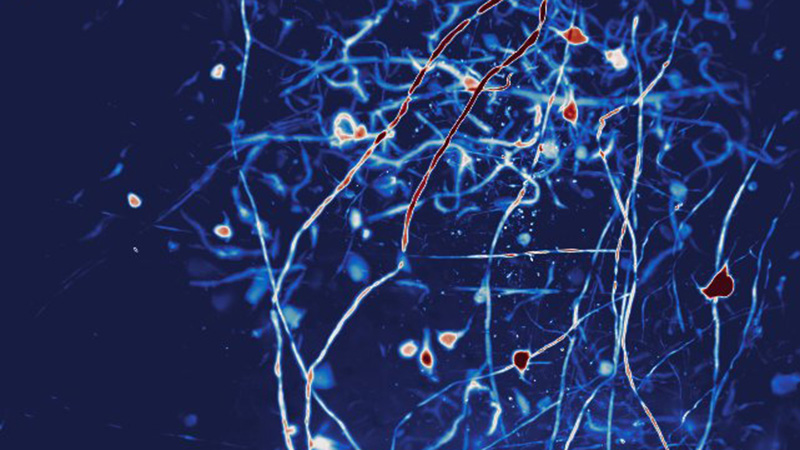
- Neurodegeneration studies tracking alpha-synuclein distribution in Parkinson’s models
As discussed in this episode: “By combining tissue clearing, antibody labelling, and light-sheet imaging, we can see where drugs act inside the brain at single-cell resolution.”
This approach provides a powerful alternative to classical radioactive tracers, enabling precise visualization of drug effects, which is critical for preclinical drug development.

LEARN MORE ABOUT LSFM IN NEUROSCIENCE:
Handling the Big Data Challenge
LSFM is renowned for generating large amounts of data. For example, a single experiment can easily generate hundreds of gigabytes to multiple terabytes. While image analysts love data, without a proper data infrastructure, the sheer amount of data created with light-sheet microscopy can grind research to a halt, and data size can become the Achilles' heel of research projects.6
Dr. Johanna Perens, who specializes in biomedical image analysis, explained how Gubra tackles this challenge: “Instead of loading entire terabyte-sized volumes into memory, we work with sub-volumes. This makes it feasible to apply AI models, segmentation tools, and batch-processing workflows at scale.”
- Automated pipelines move and process data continuously.
- Optimised scanning parameters reduce file sizes while retaining biological relevance.
- AI-driven segmentation extracts meaningful features from complex 3D datasets.
Another step towards handling data effectively is reducing data transfer, working on centralized versions, and processing the data where it is. This approach to centralized data storage and computing is realized through the Bruker Aquifer HIVE, a dedicated data hub offering up to a petabyte of storage alongside powerful processing capabilities. This centralized solution helps labs without in-house IT infrastructure keep up with the ever-growing datasets.
Organoids and the Future of 3D Imaging
Another hot topic in the life sciences is organoid research. Organoids are miniature, simplified versions of organs, often grown from stem cells or patient biopsies. They capture much of the complexity of real organs, but in a more accessible, higher-throughput, and ethically favorable format.7, 8
Our guest experts note: "Organoids are changing the way we model disease. Light-sheet microscopy enables us to follow their growth, differentiation, and response to treatments in real time over days."
Systems such as Bruker’s TruLive3D Imager are specifically designed to image delicate living organoids under incubated conditions. This opens new avenues for studying disease mechanisms, personalized medicine, and drug testing.

LEARN MORE ABOUT ORGANOID IMAGING WITH LSFM:
Why Light-Sheet Microscopy Matters
More than a decade after its recognition as Method of the Year, light-sheet fluorescence microscopy continues to reshape science by enabling applications, including:
- Drug discovery: mapping drug penetration, biodistribution, and target engagement.
- Neuroscience: helping to understand diseases like Parkinson’s and Alzheimer’s.
- Developmental biology: tracking embryonic growth in zebrafish or Drosophila.
- Organoid research: bridging the gap between cell culture and animal studies.
Conclusion
Light-sheet microscopy has evolved far beyond a “niche technique” into a cornerstone of biomedical imaging. With advances in tissue clearing, antibody labeling, AI-driven analysis, and dedicated data infrastructure, the technology is poised to play an even bigger role in shaping the future of science and medicine.
As we continue The Light-Sheet Chronicles, we’ll explore more on imaging geometries, computational pipelines, and real-world case studies from drug discovery to organoid biology.


References
[1] “Method of the Year 2014,” Nat Methods, vol. 12, no. 1, pp. 1–1, Jan. 2015, doi: 10.1038/nmeth.3251.
[2] S. Daetwyler and R. P. Fiolka, “Light-sheets and smart microscopy, an exciting future is dawning,” Commun Biol, vol. 6, no. 1, Art. no. 1, May 2023, doi: 10.1038/s42003-023-04857-4.
[3] E. H. K. Stelzer et al., “Light sheet fluorescence microscopy,” Nat Rev Methods Primers, vol. 1, no. 1, p. 73, Nov. 2021, doi: 10.1038/s43586-021-00069-4.
[4] R. Strack, “Single-objective light sheet microscopy,” Nat Methods, vol. 18, no. 1, pp. 28–28, Jan. 2021, doi: 10.1038/s41592-020-01027-w.
[5] D. Kromm, “Pushing Light-Sheet Microscopy to Greater Depths [Unpublished doctoral dissertation],” Doctoral Thesis, Heidelberg University, Heidelberg, Germany, 2021.
[6] N. Bagheri, A. E. Carpenter, E. Lundberg, A. L. Plant, and R. Horwitz, “The new era of quantitative cell imaging—challenges and opportunities,” Mol Cell, vol. 82, no. 2, pp. 241–247, Jan. 2022, doi: 10.1016/j.molcel.2021.12.024.
[7] F. Schutgens and H. Clevers, “Human Organoids: Tools for Understanding Biology and Treating Diseases,” Annual Review of Pathology: Mechanisms of Disease, vol. 15, no. 1, pp. 211–234, 2020, doi: 10.1146/annurev-pathmechdis-012419-032611.
[8] X.-Y. Tang et al., “Human organoids in basic research and clinical applications,” Sig Transduct Target Ther, vol. 7, no. 1, pp. 1–17, May 2022, doi: 10.1038/s41392-022-01024-9.


