
Research Highlight: Cristina Flors, Ph.D.
Combining Microscopy Methods to Expand Nanoscale Research
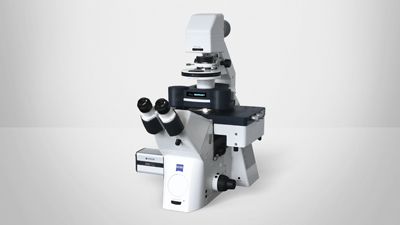
In this research highlight, Cristina Flors, Ph.D., explains how her team uses correlative microscopy to investigate biological and material systems at the nanoscale. Their work uses atomic force microscopy (AFM) to quantify bacterial nanomechanics and develop mechanobactericidal materials. The group also combines AFM with super-resolution microscopy to study structures such as chromatin, amyloids, and engineered biomaterials. By bringing complementary techniques and collaborators together, Cristina creates useful approaches to complex research questions.

Value lies in quantifying the mechanical properties of bacteria, and we were able to measure the force that is needed to kill a single bacterium. It was 20 nanonewtons, which is actually quite high. This finding made other researchers reassess what the mechanisms were for bacterial death by these surfaces.
Cristina Flors, Ph.D.
Senior Research Professor and Associate Director at the Madrid Institute for Advanced Studies in Nanoscience (IMDEA Nanociencia)
ABOUT THE RESEARCHER:
Cristina Flors, Ph.D., is a Senior Research Professor and Associate Director at the Madrid Institute for Advanced Studies in Nanoscience (IMDEA Nanociencia) where she leads the Advanced Fluorescence Nanoscopy group.
FIELD OF STUDY:
Professor Cristina Flors’s work at the IMDEA Nanociencia focuses on the development and application of advanced microscopy and nanoscopy techniques to study biology and biomaterials at the nanoscale. Her work has contributed to the fields of photophysics and photochemistry, fluorescence microscopy, biophysics, and materials science.
LEARN MORE ABOUT THIS RESEARCH:
- LAB WEBSITE: Advanced Fluorescence Nanoscopy Lab
- RECENT PUBLICATION: Vadillo-Rodríguez, Virginia, Patricia Pedraz, and Cristina Flors. “How Much Force Is Needed to Kill a Single Bacterium?" Small 21, no. 3 (2025): 2407990.
- RECENT PUBLICATION: Flors, Cristina, et al. “Mechanically Induced Bacterial Death Imaged in Real Time: A Simultaneous Nanoindentation and Fluorescence Microscopy Study." ACS Applied Materials & Interfaces 12, no. 28 (2020).