Devices for Non-Ambient Crystallography
Single-Crystal X-ray Diffraction (SC-XRD) at Non-Ambient Conditions
Non‑ambient crystallography empowers scientists to observe how crystal structures behave or evolve at steady or changing non-ambient conditions.
By extending SC‑XRD beyond ambient conditions, researchers gain a more complete understanding of their sample's structural dynamics, helping connect material properties to real‑world behavior.
Low‑temperature conditions facilitate high-resolution data collection as well as the study of sensitive or metastable species, high‑temperature environments reveal structural stability under thermal stress, and high‑pressure experiments allows researchers to track structural evolution under extreme compression.
Single‑Crystal XRD in Cryogenic, High Temperature or High Pressure Conditions
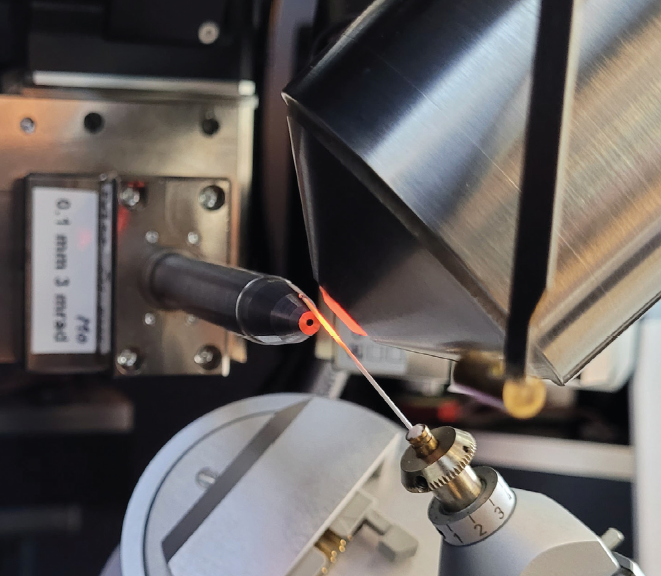
Bruker's dedicated range of non‑ambient SC‑XRD solutions is engineered to support precise structural studies from 28 K up to 1250 K, enabling cryogenic and high‑temperature crystallogaphy, as well as high pressure studies.
These devices are designed for seamless integration into Bruker's single‑crystal diffractometers, ensuring stable operation and full compatibility with the system’s geometry and software.
Alongside Bruker’s high‑performance X‑ray sources and advanced detectors our non-ambient devices deliver precise and reproducible non‑ambient single-crystal XRD across a wide range of temperatures and pressures.
Low and Ultra-Low Temperature Single-Crystal XRD
Low temperature crystallography has long been valued by the scientific community. Experiments at low temperatures enable the collection of higher resolution data (lower Debye-Waller factors), due to reduced thermal motion in the crystal's atoms, as well as the analysis of otherwise unstable species.
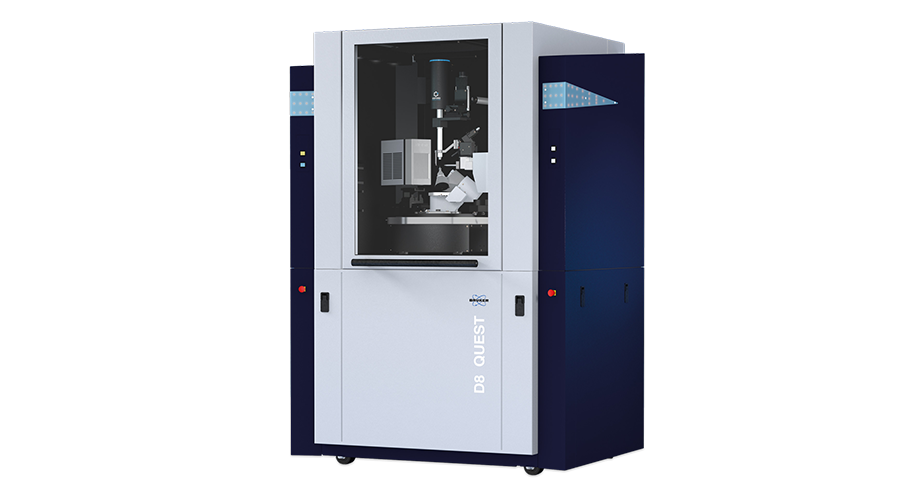
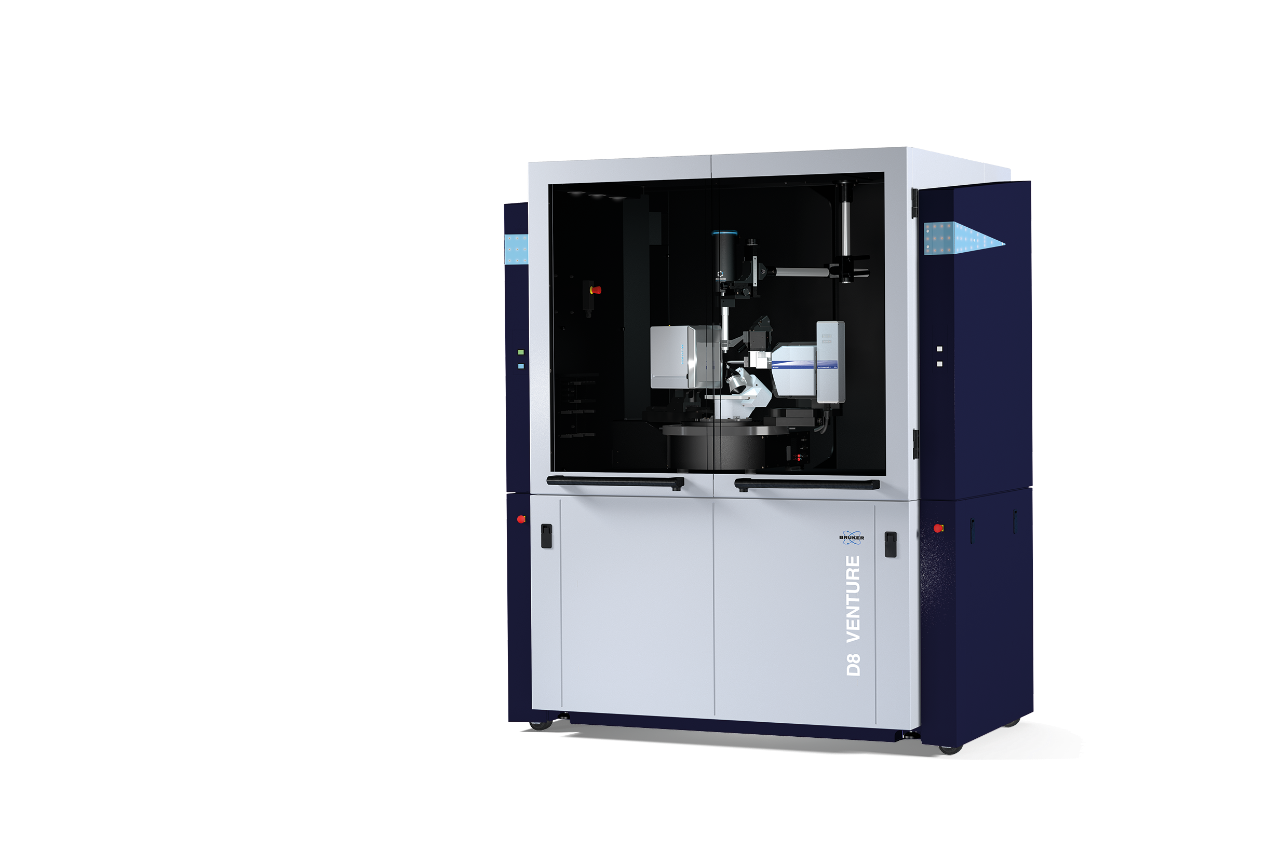
The D8 QUEST and D8 VENTURE can be equipped with the following non-ambient devices from Oxford Cryosystems. These devices can all be fully-integrated with no restriction on the goniometer and full X-ray safety.
Cryostream 1000 and 1000 Plus: 80 - 500 K
Low temperature devices that use liquid nitrogen and can be used to both cool and heat samples.
They provide fast cool down and low liquid nitrogen consumption.
- Cryostream 1000: 80 K - 400 K
- Cyrostream 1000 Plus: 80 K - 500 K
Cobra 1000 and 1000 Plus - From 80 - 500 K
Liquid nitrogen free low temperature devices that can both heat and cool samples, with fast cooling to 100 K in just 40 minutes.
- Cobra 1000: 80 K - 400 K
- Cobra 1000 Plus: 80 K - 500 K
N-HELIX: From 28 - 300 K
An ultra-low temperature device that uses a combination of liquid nitrogen and helium to cool to temperatures approaching absolute zero.
Using an efficient dual-gas system N-HELIX cools samples to 28 K in just 75 minutes.

High Temperature Single-Crystal XRD
High temperature crystallography gives researchers the power to investigate how materials behave far beyond ambient conditions, enabling researchers to track phase transitions and thermal resilience.
HTD: High Temperature Device - Temperatures up to 1250 K
The HTD is a fully integrated extension for the D8 VENTURE for high temperature crystallography.
The HTD brings precise, reliable high‑temperature control directly to your crystallography workflow without interfering with the system goniometer.
- Enables high temperature SC‑XRD measurements up to 1250 K, ideal for studying phases, ion migration, and thermally activated processes.
- Ensures safe and seamless integration through automatic hardware‑limit recognition, full detector protection, and LED safety indicators.
- Offers easy installation thanks to its bayonet‑mount design and dedicated parking bay for secure storage.
- Supports multi‑temperature measurements without user intervention, fully controlled in APEX for familiar and efficient workflows.
- Maintains maximum experimental flexibility, retaining KAPPA and FIXED‑CHI configurations and full compatibility with single‑ or dual‑wavelength systems.

High-Pressure Single-Crystal XRD
High-pressure single-crystal X-ray diffraction enables the examination of crystal structure, bonding, and material properties under extreme environmental conditions
High-Pressure Kit: High-Pressure Crystallography with a Diamond Anvil Cell
The High‑Pressure Kit is a fully integrated extension for the D8 QUEST, D8 QUEST ECO and D8 VENTURE.
The kit includes a Diamond Anvil Cell (DAC) for single‑crystal X‑ray diffraction under high-pressure conditions.
- Enables high‑pressure SC‑XRD experiments for studying structural changes, bonding, and material properties under extreme conditions.
- Highly compatible with most commercially available DACs.
- Enables rapid switching between standard and high‑pressure modes without complex reconfiguration.
- Ensures secure DAC positioning and collision‑safe operation through integrated path planning and hardware recognition.