
Webinar Overview
Industrial laboratories are under increasing pressure to deliver reliable and operator-independent analytical results faster, with fewer manual steps and across globally distributed sites. Meeting these demands requires not only high‑performance instruments but also fully integrated, automated, and traceable analytical workflows.
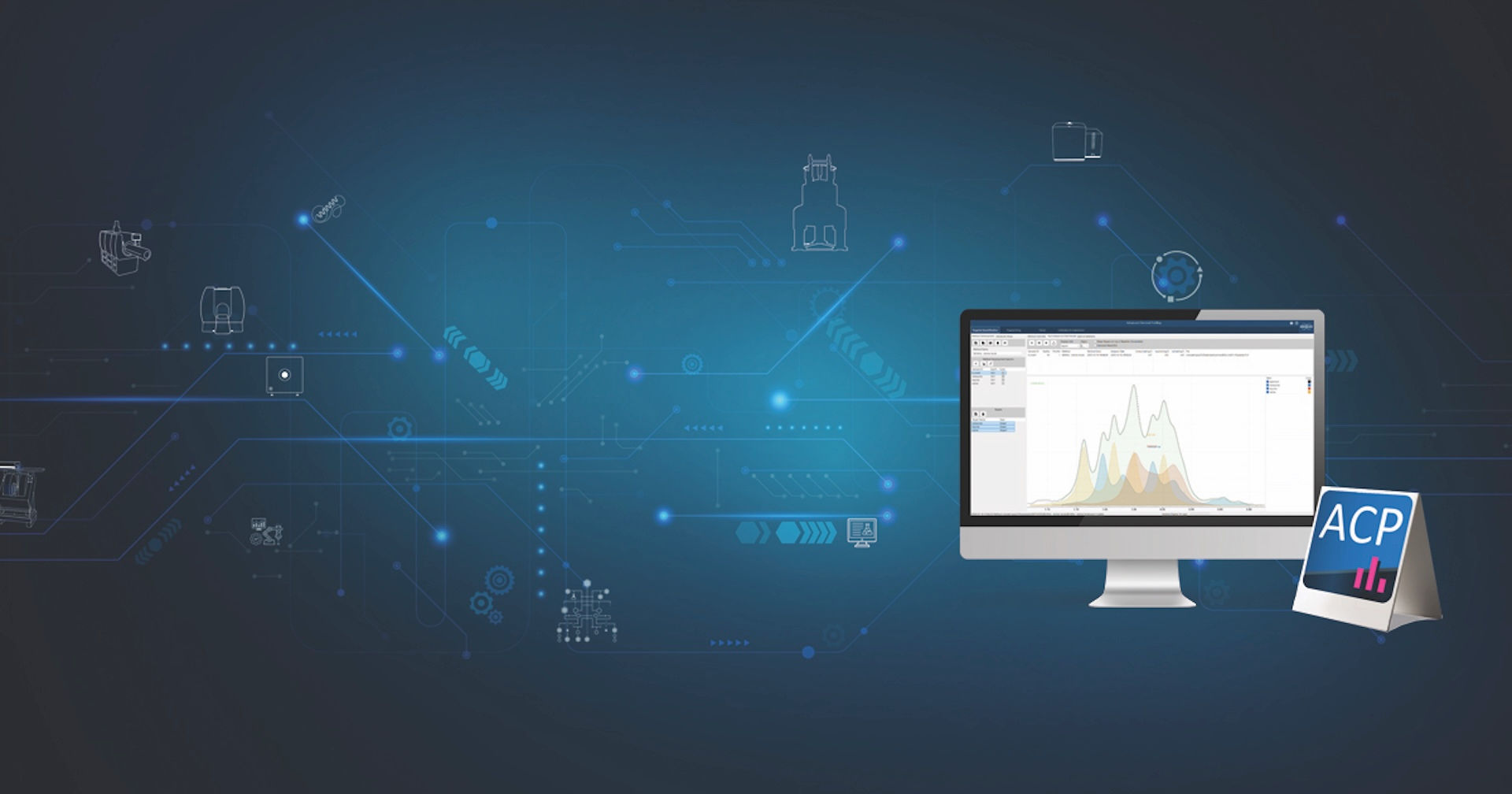
In this webinar, we present Bruker’s latest compact, high‑field spectrometers, advanced solid-state probes, TopSpin 5 control software and Advanced Chemical Profiling (ACP) 2.0. These advancements enable NMR‑augmented laboratory workflows, combining next‑generation NMR hardware with intelligent software to seamlessly embed NMR into modern laboratory operations.
The session demonstrates how automated acquisition, data processing, quantitative analysis, and reporting can be executed reproducibly by both experts and non‑experts, while delivering audit‑ready results and direct integration into LIMS, ELN, dashboards, and reporting environments. Practical examples illustrate how benchtop and high‑field NMR systems can be deployed close to production, support quality control and formulation studies, and ensure consistent decision‑making across R&D and manufacturing.
Together with Bruker’s service and lifecycle offerings, these solutions reduce manual workload, increase uptime, and allow analytical teams to focus on innovation rather than routine operation.
Tuesday, April 21 2026
8 AM PDT, 11 AM EDT, 5 PM CEST
Key Learning Points
- Integrate NMR into industrial lab workflows
Learn how compact magnets, modular system design, and simplified installation enable rapid deployment of NMR from R&D labs to production‑adjacent environments. - Establish reproducible workflows for multi-site laboratories
Understand how stable hardware platforms, controlled software workflows, and audit‑ready documentation support reliable method transfer and lab‑to‑lab harmonization. - Empower every user with workflow-driven automation
Discover how guided workflows, single‑button execution, and operator‑independent analysis with ACP 2.0 automate quantitative NMR workflows from acquisition to report.
Speakers

Dr. Joerg Koehler
Head of Business Unit Industrial, Bruker BioSpin, Ettlingen, Germany
Dr. Joerg Koehler studied physics and holds a doctoral degree from the Institute of Biophysics and Physical Biochemistry of the University of Regensburg. After several positions in sales, sales management, and business administration he joined Bruker as Head of Business Unit Industrial. Today Dr. Joerg Koehler is accountable for Bruker’s global activities in magnetic resonance in various industrial market segments including forensics.

Dr. Markus Hecht
Solution Portfolio Manager BPA, Bruker BioSpin
Markus Hecht holds a doctoral degree in chemistry from the Julius-Maximilians-University of Würzburg. He later joined BASF and Sun Chemical to lead research laboratories in the development of new products and manufacturing processes in the field of organic pigments. At Bruker, Markus is responsible for providing value-adding solutions to customers in the chemical industry and in commercial & governmental testing laboratories.