Magnetic Resonance Solutions for Advanced PAT Monitoring
NMR for Process Analytical Technology
NMR provides a powerful foundation for (bio)Process Analytical Technology by delivering structural insight, high selectivity, and quantitative information directly from the process stream. Its ability to acquire continuous, real-time spectral data enables precise monitoring and deeper process understanding throughout process development and optimization. With both high- and low-field configurations and flow-compatible solutions, NMR integrates seamlessly into PAT workflows to support data-driven decision making, enhance reproducibility, and facilitate the transfer of knowledge from laboratory studies to larger-scale operations.
Benefits
- Direct, calibration free quantification for fast, reliable, and traceable decision making.
- Deep structural and mechanistic insight enabling rapid understanding of reactions, impurities, and process deviations.
- Multi attribute monitoring in one measurement, capturing identity, kinetics, conversion, and impurities simultaneously.
- Robust performance in complex or changing matrices, supporting consistent real-time monitoring throughout process development and scale-up.
EPR for Process Analytical Technology
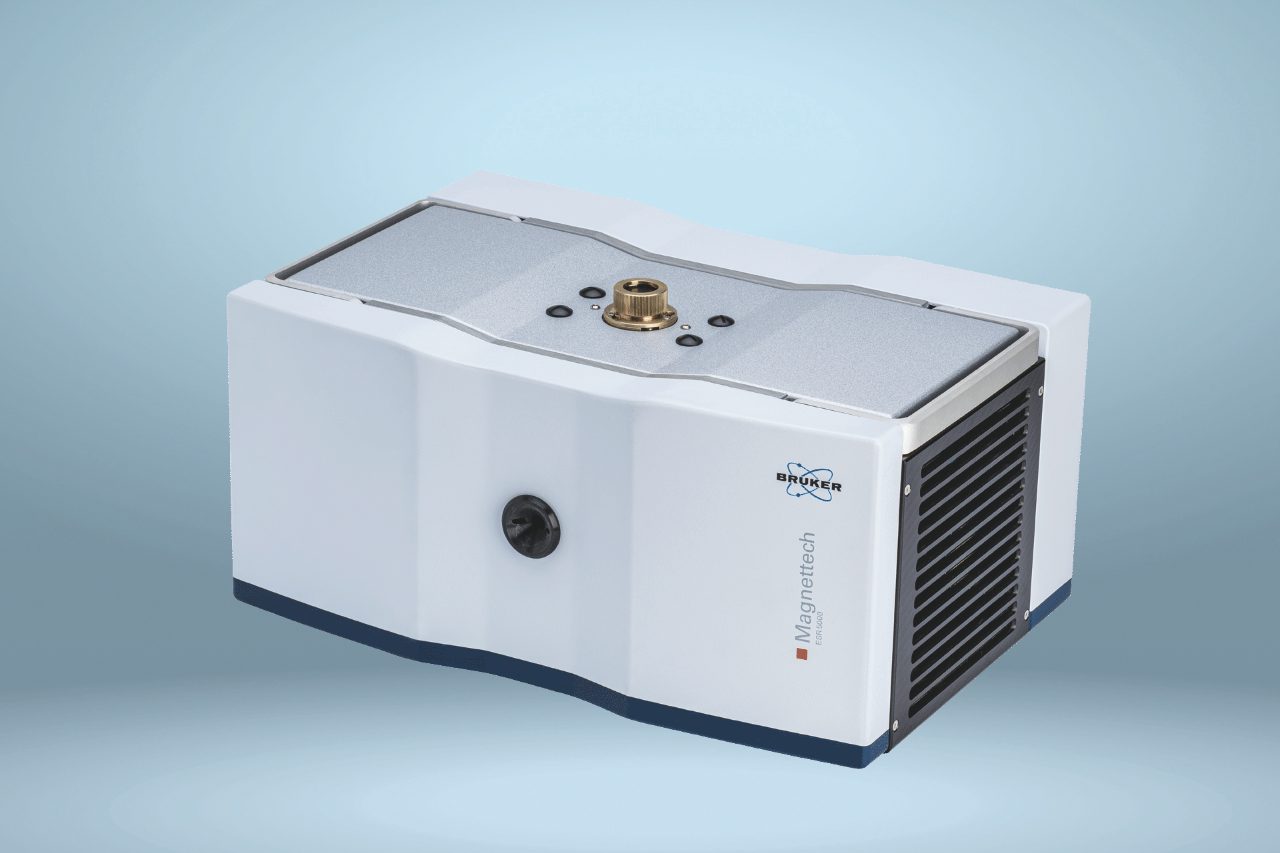
EPR provides real time, non destructive detection of paramagnetic species, making it a powerful tool for Process Analytical Technology in monitoring reactions involving radicals, transition metal catalysts, or redox active intermediates. By delivering direct molecular information under actual process conditions, EPR enables improved process control, enhanced product consistency, and faster optimization in chemical and pharmaceutical development.
Benefits
- Real time detection of short lived radicals and redox species, providing reaction insights that other PAT tools often miss.
- Non destructive, in situ monitoring under real process conditions without altering the chemistry.
- Improves process control and consistency by directly tracking oxidation, catalysis, and impurity related quality attributes.
- Enables early detection of radicals, catalyst degradation, or unwanted oxygen entry to reduce risks of batch failures and safety issues.
- Supports faster process optimization and smoother scale-up from laboratory to pilot-scale operations.