
QC5-R
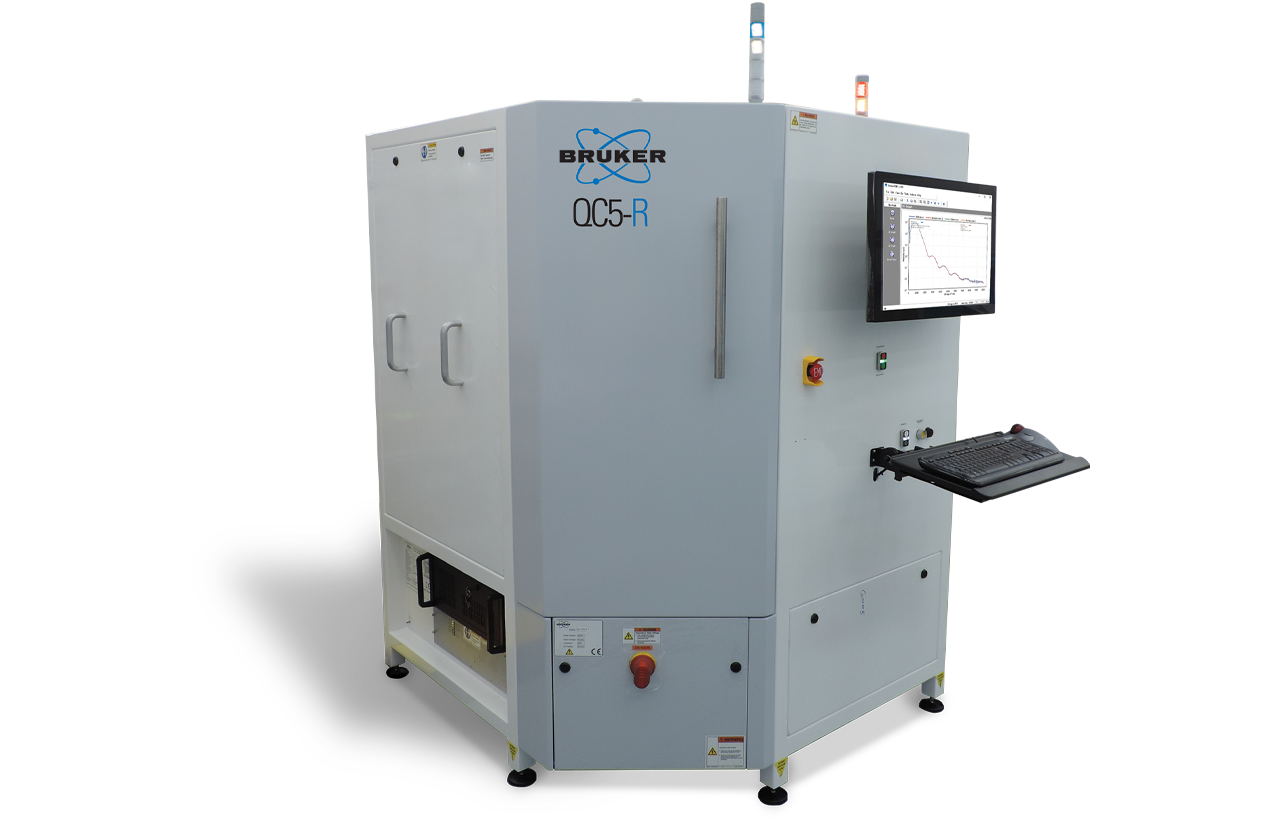
QC5-R
The next-gen QC5-R semiconductor metrology system provides automated high-resolution X-ray diffraction (HRXRD) and X-ray reflectivity (XRR) characterization for manually loaded wafers. This system enables rapid, precise measurements of epilayers with automatic technique switching between HRXRD and XRR, as well as automated parameter calculations and reporting with Bruker’s industry-leading RADS and REFS software. From streamlined measurements to comprehensive analyses, QC5-R is a high-precision instrument delivering reliable control over epilayer thickness and composition for process optimization.
Precision Metrology for Epilayer Quality Control

QC5-R provides automated epilayer measurements for manually loaded wafers, delivering detailed information on properties, including composition, thickness, and uniformity.
QC5-R provides:
- High-throughput X-ray metrology for compound semiconductor manufacturing.
- Automatic switching between HRXRD and XRR for complex epitaxial structures.
- Industry-leading simulation software for reliable analyses and automatic data reporting.
High-Throughput, Reliable Performance
QC5-R’s reliable metrology data is automatically analyzed and reported using Bruker’s industry-leading data analysis software. Essential features are integrated, including batch fitting functionality for offline data analysis, automated wafer reports with pass/fail criteria, and automatic reporting.
By providing fast feedback on epilayer quality, QC5-R allows for rapid adjustments to the manufacturing process, maintaining high quality standards and improving overall yield.

面向化合物半导体的X射线综合量测方案

摇摆曲线(Twist 与 Tilt 测量)
GaN对称晶面(002)摇摆曲线的半高宽(FWHM)与非对称晶面(102)摇摆曲线的半高宽(FWHM)的结合使用,可测量和评估 GaN 沟道材料的扭折(twist)与马赛克倾斜(tilt)特征。

Omega-2Theta扫描(组分与厚度测量)
针对阶梯式渐变缓冲层结构,采用三轴模式的Omega-2Theta扫描可测定 AlGaN 缓冲层的Al组分、GaN cap层厚度及 AlGaN 器件层厚度。针对超晶格结构,则可通过该扫描技术测定超晶格的周期厚度与组分。

器件层与盖帽层的 X 射线反射测量(XRR)
XRR技术可精确测量AlGaN器件层与GaN盖帽层的厚度、密度及表面粗糙度,为薄膜质量评估提供关键数据。布鲁克的多阶REFS建模方法可实现对这些外延层的精准表征。

Qz 扫描(器件层组分测量)
在Omega-2Theta 扫描中,缓冲层峰通常会掩盖器件层峰。布鲁克的Qz扫描技术通过在倒易空间 L 方向对 GaN 层进行直接扫描,解决了这一难题。该方法可在最小化缓冲层干扰的前提下,精准测量 AlGaN 器件层,且易于集成至日常工艺监控测量中。

倒易空间图(RSM)全结构分析
半导体器件中器件层与缓冲层的组分与弛豫度测定虽然复杂,但对于失效分析工作、器件可靠性提升等目标十分重要。布鲁克的非对称RSM解决方案通过高精度测量、高亮度1D探测器实现快速数据采集,并结合PeakSplit软件进行自动化分析,可高效地应对此挑战。

HRXRD与XRR的联用分析
HRXRD技术可测量外延层的晶体质量、应变、弛豫度及厚度,而XRR技术则可确定外延层的厚度、密度及表面粗糙度。
强大的自动化分析与报告软件
QCVelox-HR配备布鲁克一整套成熟可靠的软件套组:
- RADS:用于HRXRD数据分析,并依设定可生成组分、厚度、弛豫度报告
- REFS:用于XRR数据分析,并依设定可生成厚度、密度、粗糙度报告
- PeakFitting:用于FWHM计算与多峰拟合,可分析复杂结构中器件层组分
- PeakSplit:用于倒易空间图谱的自动化二维拟合,支持离线弛豫度与倾斜度分析
- QuickGraph:离线数据分析与基础分析工具

Support

How Can We Help?
Bruker partners with our customers to solve real-world application issues. We develop next-generation technologies and help customers select the right system and accessories. This partnership continues through training and extended service, long after the tools are sold.
Our highly trained team of support engineers, application scientists and subject-matter experts are wholly dedicated to maximizing your productivity with system service and upgrades, as well as application support and training.