
Chaperone Compounds for Organic Molecule Co-crystallization
Enabling the Structural Determination of Difficult-to-Crystallize Organic Molecules
A large number of small or flexible organic molecules remain difficult to crystallize even when using modern methods.
For such cases chaperone-assisted co-crystallization is an alternative that delivers crystals of high-enough quality for analysis via single-crystal X-ray diffraction (SC-XRD).
Co-Crystallization using Chaperone Compounds
Many small organic molecules of interest are difficult to crystallize due to properties such as a high conformational flexibility, low symmetry or low polarity.
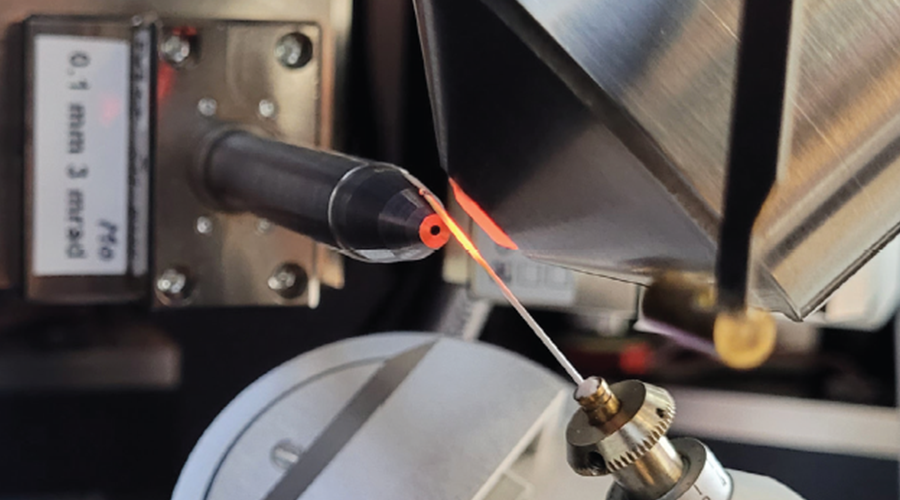
This crystallization challenge can prevent the application of SC-XRD analysis on such compounds, despite it being a strong technique for structural determination that delivers high-quality 3D structures in less than an hour.
Chaperone compounds form stable complexes with small organic molecules, enabling the growth of ordered crystal lattices that meet the quality requirements for SC-XRD. This approach allows the crystallographic analysis and absolute structure determination of molecules that are otherwise resistant to crystallization using conventional methods.

Chaperone Compound Kits
Bruker's Chaperone Compound Kits are ready-to-use solutions for the co-crystallization of small organic molecules. Our kits simplify the crystallization process and enable the crystallographic analysis of even difficult-to-crystallize compounds.
Available Chaperone Compounds
- 1,3,5,7-Tetrakis(2,4-diethoxyphenyl)adamantane (TEO) P/N A30D250
- 1,3,5,7-Tetrakis(2,4-dimethoxyphenyl)adamantane (TDA) P/N A30D251
- 1,3,5,7-Tetrakis(2-bromo-4-methoxyphenyl)adamantane (TBro) P/N A30D252
- 1,3,5,7-tetrakis(2-fluoro-4-methoxyphenyl)adamantane (TFM) P/N A30D253
What Does Each Kit Contain?
- Selected chaperone compound
- 30 crystallization vials
- Instruction set on memory stick
- Reference publications
The Benefits of Using Chaperone Compounds
Our chaperone compound kits are a powerful method for chemist's and crystallographers's toolboxes.
- Chaperone compounds are fast and easy to use.
- Chaperone compounds are highly stable.
- Produces crystals of excellent quality.
- 100% analyte occupancy in the crystal guarantees reliable determination of the absolute configuration
- Co-crystallization enables absolute structure determination via SC-XRD, delivering in-depth data in often less than an hour.
- Only small quantities of analyte are required.
The crystals produced via co-crystallization are of a high quality.
In a sample screening of 52 small organic compounds in 88% of cases diffraction-quality crystals were produced and in 77% of cases high-resolution 3D structure determination was achieved.
Bibliography
- F. Rami, J. Nowak, F. Krupp, W. Frey, C. Richert, Co-Crystallization of an organic solid and a tetraaryladamantane at room temperature. Beilstein J. Org. Chem. 2021, 17, 1476-1480.
- F. Krupp, M.-I. Picher, W. Frey, B. Plietker, C. Richert, Determining the Relative Configuration of Propargyl Cyclopropanes by Co-Crystallization. Synlett 2021, 32, 350-353.
- M. E. Casco, F. Krupp, S. Grätz, A. Schwenger, V. Damakoudi, C. Richert, W. Frey, L. Borchardt, Non-porous organic crystals and their interaction with guest molecules from the gas phase. Adsorption 2020, 26, 1323-1333.
- F. Krupp, W. Frey, C. Richert, Absolute Configuration of Small Molecules by Co-Crystallization. Angew. Chem. 2020, 132, 16009-16013; Angew. Chem. Int. Ed. 2020, 59, 15875-15879.
- F. Krupp, S. He, W. Frey, C. Richert, A crystalline ready-to-use form of cyclopentadiene. Synlett 2018, 29, 1707-1710.
- P.-E. Alexandre, A. Schwenger, W. Frey, C. Richert, High loading crystals of tetraaryladamantanes and the uptake and release of aromatic hydrocarbons from the gas phase. Chem. Eur. J. 2017, 23, 9018-9021.
- C. Richert, F. Krupp, Encapsulating organic crystals (EnOCs). Synlett 2017, 28, 1763-1766.
- A. Schwenger, W. Frey, C. Richert, Reagents with a crystalline coat. Angew. Chem. 2016, 128, 13910-13913; Angew. Chem. Int. Ed. 2016, 55, 13706-13709.
- A. Schwenger, W. Frey, C. Richert, Tetrakis(dimethoxyphenyl)adamantane (TDA) and its inclusion complexes in the crystalline state: A versatile carrier for small molecules. Chem. Eur. J. 2015, 21, 8781-8789.