Thermal Barrier Coating on Ni Superalloy Characterized with Simultaneous EBSD and EDS Analysis
Nickel-based superalloys are known for their excellent mechanical strength, resistance to thermal creep deformation, fatigue, corrosion or oxidation. Therefore, they are often the material of choice for high-temperature structural applications with gas-turbine and aero-engine. Characterization of their microstructure is crucial to control with respect to the mechanical properties. In addition, solid solution and precipitation strengthening from secondary phase precipitates (ɣ’, nitrides, carbides) is necessary to achieve high temperature strength; hence the importance to determine unknown precipitates formed during the strengthening process.
In this application example, we reveal the importance of EDS assisted EBSD measurement in successfully identifying and indexing the different phases, including fine precipitates. The measured area is visible on the phase contrast image in figure 1 (acquired with the ARGUS™ BSE detectors). The presence of numerous fine precipitates (carbides) and 3 other different phases can be inferred from the ARGUS image. Combined EBSD/EDS measurement was done with a spatial resolution of 50 nm step size in order to resolve the carbides. EBSD results are presented in Figure 2, 5 and 6. Four phases were identified using combined EDS and EBSD measurements: nickel (the matrix), nickel aluminum, nickel tungsten and tantalum carbide.
The challenge in this analysis is to successfully distinguish the carbide from the nickel matrix phase. Both have cubic fcc structure and therefore produce very similar diffraction pattern (see figures 3 and 4). To this aim, the map was corrected offline by EDS assisted EBSD indexing. The results are presented in figure 5.


Simultaneous EBSD and EDS Mapping with eWARP
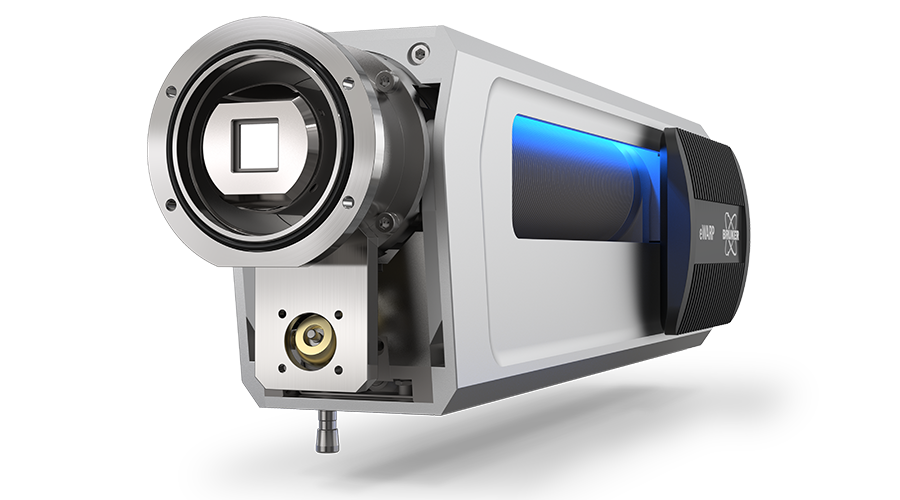
This webnote discusses simultaneous EBSD and EDS mapping using our legacy EBSD detector, eFlash FS, which has now been replaced by our next-generation eWARP detector for ultra-fast, high-resolution EBSD.
Due to eWARP's outstanding signal efficiency, datasets combining simultaneously acquired EBSD and EDS information provide higher data integrity, allowing for more reliable phase discrimination of nanometer-sized grains.