Two-Photon Imaging Predicts Stress-Induced Anhedonia
See how neural dynamics reveal susceptibility to chronic stress
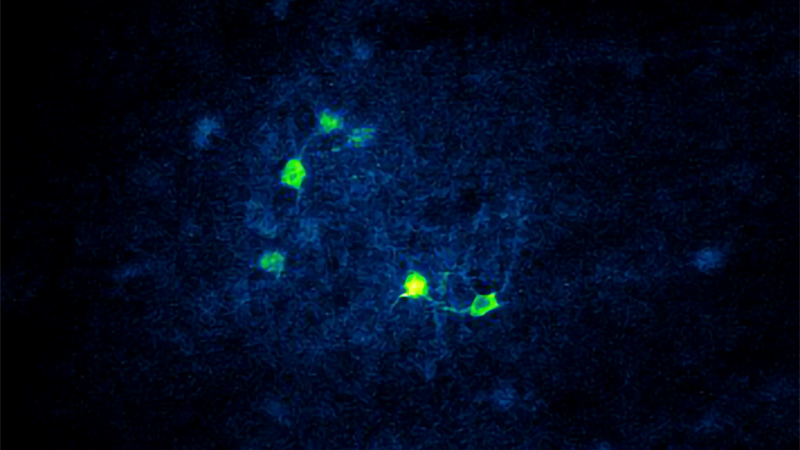
In this presentation, Austin Coley, Ph.D., (UCLA) discusses his research using in vivo two-photon calcium imaging, behavioral tracking, and computational analysis to investigate stress-induced anhedonia. Through longitudinal recordings, his team examines how chronic stress changes prefrontal cortex activity and behavior, whether these changes differ between susceptible and resilient subjects, and how they respond to ketamine.
Topics covered include:
- Longitudinal two-photon imaging of prefrontal cortex dynamics
- Computational approaches for predicting stress susceptibility
- Neural responses to chronic stress and ketamine treatment
- Optogenetic and holographic approaches to circuit manipulation
Two-Photon Imaging Predicts Stress-Induced Anhedonia
The mental health field lacks granularity in diagnostic practices, which may contribute to the variability in efficacy of existing treatments. Anhedonia, a condition identified in multiple neuropsychiatric disorders, is described as the inability to experience pleasure and is linked to anomalous medial prefrontal cortex (mPFC) activity. The mPFC is responsible for higher order functions, such as valence processing; however, it remains unknown how mPFC valence-specific neuronal population activity is affected during anhedonic conditions. To test this, we implemented the unpredictable chronic mild stress (CMS) protocol in mice and examined hedonic behaviors following stress and ketamine treatment. We performed in vivo 2-photon calcium imaging to longitudinally track mPFC valence-specific neuronal population activity and dynamics during Pavlovian conditioning tasks. Also, we utilized behavioral pose-estimation tracking systems to predict anhedonia based on facial features during Pavlovian conditioning tasks. Lastly, we applied a linear classifier to test whether we can decode susceptibility to chronic mild stress based on mPFC valence-encoding properties prior to stress-exposure and behavioral expression of susceptibility. These results indicate that mPFC valence encoding properties are predictive of anhedonic states. Altogether, these experiments point to the need for increased granularity in the measurement of both behavior and neural activity, as these factors can predict the induction conditions of stress-induced anhedonia.
Featured Technologies:
Contact:
Find out more about the technology featured in this webinar or our other solutions for multiphoton microscopy:
Speaker

Austin Coley, Ph.D.
Assistant Professor, Dept. of Neurobiology, Brain Research Institute, Integrative Center for Learning and Memory, University of California - Los Angeles