

Where XRF fits in your battery workflow
Raw Materials (RM) & Precursors (P)
Control composition, impurities and consistency from incoming materials to cathode production.
Mixed Hydroxide Precipitate (MHP)
Mixed Hydroxide Precipitate (MHP), also referred to as nickel-cobalt hydroxide, is an important intermediate product in the battery materials supply chain. It typically contains:
- Nickel (Ni): 25–55 wt%
- Cobalt (Co): 1–20 wt%
Trace impurities originating from ore, reagents, or the hydrometallurgical process can be monitored and quantified easily by XRF. Accurate analysis relies on matrix-matched calibrations and appropriate sample preparation.

- Grind the sample to a homogeneous particle size (<75 µm recommended).
- Prepare a pressed pellet using a suitable binder for optimum precision.
- For rapid process monitoring, a loose powder sample cup may be used, with some compromise in analytical precision.
- Ni: 25–55 wt%
- Co: 1–20 wt%
- Excellent precision (<0.1% RSD)
- Fe, Mn < 10,000 ppm
- Ca, Mg, K < 5000 ppm
- Control of residuals such as Na, S
- Control of contamination and impurities Al, Si, Cl


Best suited for
- Incoming material inspection
- Major element determination (Ni, Co) and impurity analysis
Advantages
- Rapid analysis with minimal sample preparation
- Simultaneous multi-element measurement
- Low operating cost
- Complementary to ICP techniques
- Ideal for high-throughput production environments
NMC Powder
Nickel Manganese Cobalt (NMC) cathode powders are among the most widely used cathode active materials (CAM) for lithium-ion batteries in electric vehicles and energy storage systems. Depending on the application, different nickel-to-manganese-to-cobalt ratios are produced, such as NMC111, NMC532, NMC622, NMC811, etc.
XRF can be adopted in the manufacturing process to verify elemental composition, monitor impurities, and ensure batch-to-batch consistency from precursor production through calcination to the finished cathode material.

- Homogenize the sample to ensure representative analysis.
- Prepare a pressed pellet using a suitable binder for optimum analytical precision
- Matrix-matched calibrations are recommended for different NMC chemistries, but a fused bead preparation is recommended for best precision.
- Ni, Mn, Co cathode composition control
- Al, Mg < 2000 ppm
- Trace analysis Fe, Cu, Cr, Zn, Ca, Na, S, Cl
- Control of Ti, Zr, W < 500 ppm
Best suited for
- Incoming raw material inspection
- Verification of Ni:Mn:Co ratios
- Routine impurity monitoring
- Production batch release
Advantages
- Rapid, simultaneous multi-element analysis
- High sample throughput
- Non-destructive measurement
- Excellent precision for major element composition
Lithium Iron Phosphate (LFP)
Lithium Iron Phosphate batteries are gaining traction dues to lower costs and also better resistant to thermal runaway. They have longer charge cycles compared to NMC batteries, but at the same time are heavier and bulkier for the same amount of power. this makes LFP batteries dominant in stationary energy storage and budget EVs.
Elemental composition and impurity control by XRF are critical to achieving the desired electrochemical performance, cycle life, and safety of the final LFP cathode.

- Phosphoric acid-derived precursors can be prepared in liquid sample cups for measurement in helium purging.
- Matrix-matched calibrations are recommended to account for differences in solution and precursor chemistry.
- Fe:P Ratio is strictly monitored for precursor quality and reaction control
- Limits for Fe:P = 1: 1
- Difference between Maximum and minimum of 4 measurements should not exceed the following: P < 0.015%, Fe < 0.03%
- Residual trace control Na, S, Cl < 500 ppm

Best suited for
- Incoming raw material inspection
- Routine process monitoring, e.g Fe:P ratio verification
- Impurity screening
Advantages
- Direct measurement of material with minimal sample preparation
- Short measurement time
- Complementary technique to ICP
Copper Foil
Copper foil is a critical current collector used in lithium-ion batteries, flexible electronics, and semiconductor applications. Battery-grade copper foil typically has a purity exceeding 99.9 wt%, with trace metallic impurities tightly controlled to ensure electrical conductivity, mechanical performance, and electrochemical stability.
Common impurities originate from: Electrolytic refining process; Rolling and annealing operations; Surface treatment or coating processes; Cross-contamination during handling and manufacturing can easily be screened by XRF.

- Analyze the foil directly, as-is.
- Ensure the surface is clean, dry, and free from oil, fingerprints, and dust. Use a flat, wrinkle-free sample to maintain a consistent measurement geometry.
- For thin foils (<20 µm), use a suitable backing to achieve "infinite thickness" for improved analytical precision.
- Fe, Ni, Cr, Zn, Sn, Mn, Co < 50 ppm
- S, Cl < 100 ppm
- Passivation layer thickness by calibration
Best suited for
- High-purity battery copper foil
- Ultra-trace impurity determination
- Rapid, non-destructive analysis
Advantages
- Excellent spectral resolution
- Lower detection limits for trace metallic impurities
- Reduced spectral overlap in complex trace analysis
Graphite Anode Material
High-purity graphite is essential to maximize battery capacity, cycle life, and safety. Metallic impurities can catalyze unwanted side reactions, while mineral contaminants can affect electrochemical performance and manufacturing yield.
Common impurities originate from: ore beneficiation, purification processes, milling and spheroidization equipment, coating and blending operations, or cross-contamination during production. These impurities and contamination can be quickly monitored using high power WDXRF or total-reflection XRF (TXRF).

- Dry the powder to remove adsorbed moisture.
- Grind or homogenize the sample if necessary to ensure representative analysis.
- Prepare a pressed pellet using non-carbon based binder for optimum analytical precision.
- All impurity elements needs to be controlled. Na, Mg, Al, Si, S, K, Ca, Ti, V, Cr, Mn, Fe, Co, Ni, Cu, Zn, Mo, Cd

Best suited for
- Battery-grade graphite inspection
- Ultra-low metallic impurity determination
- Light element analysis (Mg, Al, Si, S)
Advantages
- Excellent spectral resolution
- Lower detection limits for trace impurities
- Complementary technique to ICP-AES
Recycling
Black Mass
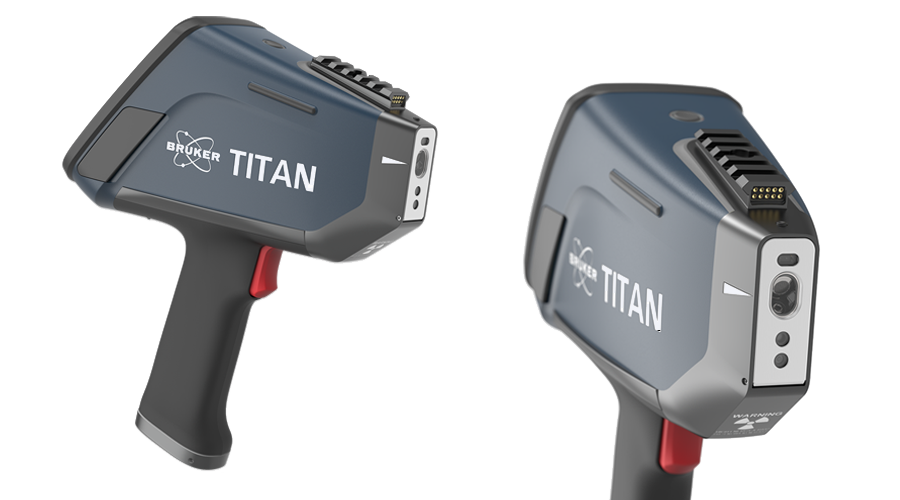
The composition of black mass varies depending on the battery chemistry and recycling process but typically includes: Cathode active materials (NMC, NCA, LCO, LMO, LFP), graphite anode material, residual electrolyte and binder, fine copper and aluminum particles, transition metals and lithium compounds. Due to its heterogeneous nature, representative sampling and proper homogenization are essential for reproducible XRF analysis. The portable and benchtop XRF solution provides effortless screening across the periodic table

- Dry the sample to remove residual moisture and volatile electrolyte components.
- Grind and homogenize the material to achieve a uniform particle size (<75 µm recommended).
- Prepare a pressed pellet using a suitable binder for optimum analytical precision.
- Loose powder sample cups may be used for portable device to provide quick major elements determination.
- Major elements: Ni. Co, Mn, Fe, Cu, Al, P for valuable metal recovery
- Traces: Cr, Pb, S, Cl, Br for environmental compliance
Best suited for
- Incoming black mass inspection
- Feedstock classification
- Cu/Al separation monitoring
Advantages
- Rapid multi-element analysis
- Minimal sample preparation
- High sample throughput for process control in recycling plants
Ready to evaluate with your own data?
Private evaluation. No data sharing. No commitment.