Imaging Subcellular and Ensemble Activity in the Hippocampus During Memory Behaviors
See the latest research on how neural activity supports learning and memory
In this presentation, Jayeeta Basu, Ph.D. (NYU) discusses how multiphoton imaging, circuit manipulation, behavioral paradigms, and computational analysis reveal hippocampal activity during spatial and contextual learning.
Topics discussed include:
- How memories and reliable recall emerge despite representational drift in hippocampal place cells
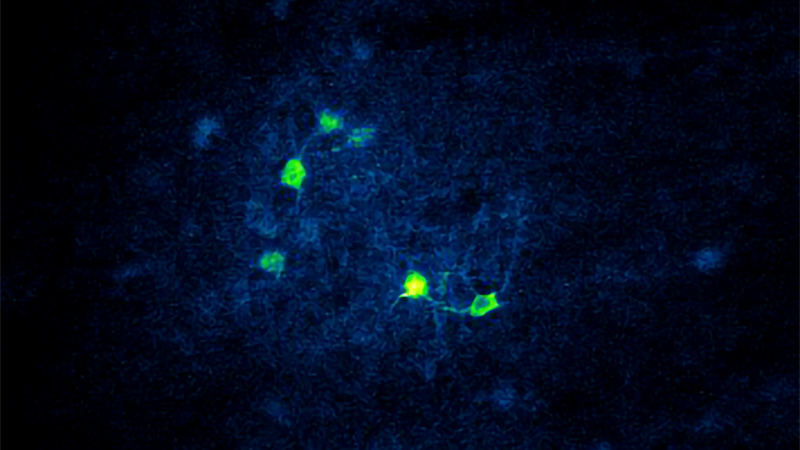
- High-resolution multiphoton imaging of entorhinal axons, CA3 soma and dendrites, and hippocampal neuronal ensembles
- Automated segmentation and demixing of calcium imaging data from densely labeled neuronal compartments
- Dual-color optogenetic circuit mapping of glutamatergic/GABAergic LEC inputs to CA3 microcircuits
- Behavioral and CA1 imaging findings linking LEC inputs to learning, remapping, and CA3 ensemble stability
Imaging Subcellular and Ensemble Activity in the Hippocampus During Memory Behaviors
Using state-of-the-art high-resolution two-photon imaging combined with chemogenetic and optogenetic circuit manipulations, head-fixed behavioral paradigms for spatial and contextual learning, and analytical approaches including automated ROI segmentation and ML-based image processing approaches, we are studying behaviorally driven compartment-specific dynamics in synapses, axons, dendrites, soma, cell types, and ensembles in the cortico-hippocampal circuit. First, we found that the activity dynamics and temporal stability of spatial representations in soma versus dendrites of hippocampal pyramidal neurons differ (Moore et al., Nature Communications, 2025) and may be modulated by GABAergic microcircuit dynamics. Finally, we found that entorhinal cortex axonal projections to the hippocampus convey both contextually salient and spatially tuned input and are modulated by hippocampal feedback projections to the entorhinal cortex (Butola et al., Nature Neuroscience, 2025). Glutamatergic and GABAergic input from both LEC to CA1 (Basu et al . Science 2016; Bilash et al., Cell Reports 2023, Hernandez Frausto in preparation) versus CA3 (Robert et al., Science 2025) targets different interneuron microcircuits to differentially modulate excitatory output in a compartment and pathway-specific manner and play distinct functional roles in learning vs. recall of memory behaviors. The Glutamatergic and GABAergic LEC inputs conjunctively modulate learning and context-driven stability and remapping of place maps in CA3 (Robert et al., Science 2025), whereas glutamatergic input from LEC is crucial for supporting memory recall and stability of task-selective place ensembles during a high-demand goal-oriented learning task (Hopkins et al., 2026 bioRxiv; Zemla et al., Cell Reports, 2022).
Featured Technologies:
Contact:
Find out more about the technology featured in this webinar or our other solutions for multiphoton microscopy:
Speaker

Jayeeta Basu, Ph.D.
Associate Professor, Department of Neuroscience, Department of Psychiatry, NYU Grossman School of Medicine
Dr. Basu is an Assistant Professor in the Neuroscience Institute and the Co-Director of the MD/PhD program at New York University Langone Health. Dr. Basu earned her Bachelors degree in Physiology (B.Sc. Hon.’s) from Presidency College in Calcutta, India. In 2002, Jayeeta received a Masters degree in Neuroscience at the International Max Planck Research School, Georg August University in Göttingen, Germany for her research with Dr. Christian Rosenmund and Dr. Erwin Neher on the kinetics of neurotransmitter release. She then completed her Ph.D. at Baylor College of Medicine, where her thesis focused on molecular mechanisms of synaptic vesicle release and short-term plasticity in hippocampal cultured neurons. In 2007, Dr. Basu joined Dr. Steven Siegelbaum’s laboratory at Columbia University for her post-doctoral training. She examined how excitatory and inhibitory circuits interact to shape dendritic integration, timing-dependent plasticity, and learning behavior in the hippocampus. Dr. Basu founded her own lab at New York University Neuroscience Institute in 2015. In her own lab, Dr. Basu aims to identify synaptic and behavioral correlates of learning-related activity in genetically defined circuits of the mammalian hippocampus and entorhinal cortex. Her research combines mouse genetics with electrophysiology, two-photon imaging, and behavior to parse out the synaptic, cellular, and circuit mechanisms of learning.