Application Note: In-Situ TEM nanoTribology of Hard Disc Drives
Probing HDD Durability at the Nanoscale
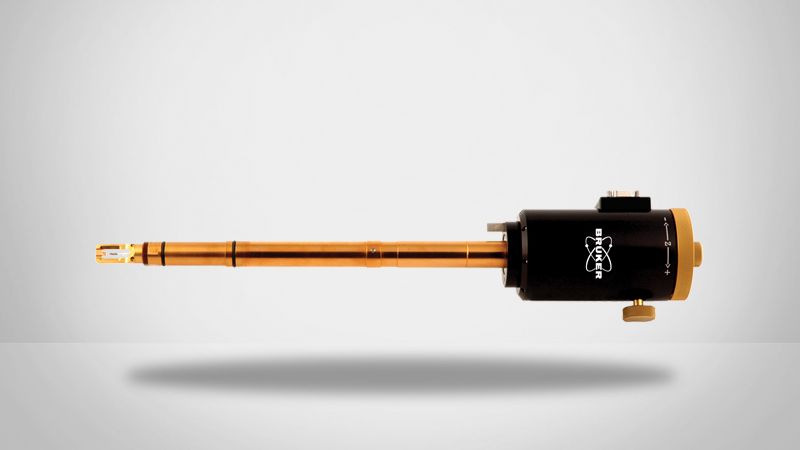
Perpendicular magnetic recording (PMR) hard disc drives (HDDs) are ubiquitous technology in modern society. They see widespread use as the ideal choice for stable and economical long term data storage. As such, these devices are highly engineered to optimize their performance. For instance, the flying height of the head is only a few nanometers above the platter to allow for high-density data storage. This only allows limited protective material for the storage media in the platter, thus, thin (2-4 nm) diamond-like carbon (DLC) films are utilized in this role. Since the magnetic moment of the storage layer is oriented perpendicular to the plane of the disc, only subtle amounts of plastic deformation are required to reorient the grains in the film and effectively render the stored data unreadable.1 Evaluating the mechanical performance of a thin film stack where the layers are on the order of 1-10 nm is challenging and requires advanced nanomechanical testing tools. This application note discusses a newly developed 2D MEMS-based transducer designed to operate with the Hysitron® PI 95 TEM PicoIndenter® to test PMR HDD film stacks in-situ under scratch loading conditions. This technology enables high-precision µN-level tests to evaluate the performance of the material under loading conditions much closer to a head-disc collision than previously possible, all while simultaneously visualizing the deformation mechanisms with high-resolution TEM imaging.

Experimental Procedure
HDD device films were deposited onto a silicon wedge substrate for in-situ scratch testing. These substrates, fabricated by wet etching of silicon, are used for in-situ TEM experiments, since they provide an electron transparent region at the apex of the wedge, and also a stable substrate for mechanical experiments. The substrates are also elevated several microns above the rest of the silicon wafer, preventing shadowing of the region of interest due to mistilt. The deposited films possessed a radius of curvature around 300 nm, as measured by scanning probe microscopy with a Hysitron TI 950 TriboIndenter®. The film stack is composed of three primary layers: a 2-3 nm protective DLC layer, a 5 nm metallic orientation layer, and a 12 nm recording layer, which is a stoichiometrically equivalent oxide of the orientation layer. Below this are a variety of seed layers that control the films grain size and other properties. This results in a film composed of columnar grains 5-15 nm in diameter, which were then scratched with the Hysitron PI 95 equipped with a wedge-shaped diamond probe.

Results
For the scratch tests, a constant normal force was applied. The lateral axis is actuated by a piezoelectric element, and the resulting normal displacement and lateral forces are recorded. A variety of normal forces from 1-20 µN were applied, resulting in different scratch depths and correspondingly, different deformation behaviors. At low applied normal forces, the indenter underwent stick-slip motion, during which the DLC was debonded from the substrate (as evidenced by the buckling of the film in advance of the tip) and the rounded tops of the columnar grains were plastically deformed and flattened. This is shown by an example 1 µN normal force scratch in Figure 1. Here, the lateral force maintains a relatively constant average value once a fully buckled mound of DLC is formed in front of the tip, but there are numerous load drops as the tip passes by each individual asperity in the recording layer grains below.
At higher normal forces, the tip penetrated past the depth of the grain asperities and the deformation mechanism changed. Here, the tip plastically ploughed deeper into the material and forced the grains to bend and/or rotate as the tip passed. An example 10 µN normal force test shows this secondary deformation behavior. Here, the lateral force is more consistent but continues to increase with increasing lateral displacement, as the tip ploughs further in the wedge structure of the deposited film and the contact area grows.
Based upon the measured results, a transition between the two deformation regimes occurs at approximately 10 µN normal force. In the second regime, data loss in the device may occur due to bending of the grains in the recording layer (see Hintsala et al for more detailed analysis).2

Conclusions
The 2D MEMS transducer is a powerful tool for exploring a variety of mechanical phenomena in-situ TEM when coupled with the Hysitron PI 95. In this case, different applied normal forces allowed for different depths and, correspondingly, different deformation mechanisms to be explored in a complex industrial multilayer. Other potential applications include in-situ shearing of particles or nanostructures and studies of friction and adhesion.
References
- S.C. Lee, S.Y. Hong, N.Y. Kim, J. Ferber, X. Che, and B.D. Strom, J. Tribol. 131, 011904 (2009).
- E.D. Hintsala, D.D. Stauffer, Y. Oh, S.S. Asif, JOM 69, 51-56 (2017).
Hysitron, Performech, PicoIndenter, TriboIndenter, and Tribo are trademarks of Bruker Corporation. All other trademarks are the property of their respective companies. © 2022 Bruker Corporation. All rights reserved. AN1506, Rev. B0