


Rapid Elemental Analysis & Heavy Metal Testing in Food Materials
Fast & Accurate Food Compliance Testing with XRF
The determination of heavy metals and other elemental contaminants in food products, raw materials and additives is made easy with X-Ray Fluorescence (XRF) spectrometry.
Ensure Food Safety & Avoid Product Recall
Food safety regulations worldwide provide strict limits on the allowed levels of heavy metals and other toxic elements in food products. Compliance with these regulations protects both your customers and your business.
The presence of toxic elements in food put consumer health at risk and expose food manufacturers to regulatory penalties, costly product recalls, and reputational damage. Toxic elements such as lead (Pb), chromium (Cr), arsenic (As), or bromine (Br) can enter the supply chain via many different sources, including colorants, pesticides or raw materials.
XRF is a fast and reliable method for efficient at-line elemental analysis along the food production chain, from incoming goods screening to process monitoring and the quality control of final products.

Why XRF for Food Safety Testing and Quality Control?
All Materials, Minimal Sample Preparation
A wide range of foodstuff samples, including powders, grains, liquids and slurries, can be measured as-is or after minimal preparation - XRF delivers fast and reliable results within minutes.
XRF is an Established Method for Food Safety Testing
Food manufacturers can use XRF analysis with confidence. For many analytical tasks in food production the technique is a recognized alternative to popular methods like Inductively Coupled Plasma Optical Emission Spectroscopy (ICP-OES) and Atomic Absorption Spectroscopy (AAS).
XRF is Easier and More Cost-Efficient than ICP-OES and AAS
XRF is a cost‑effective alternative to ICP-OES and AAS, offering key advantages that reduce analysis time, costs and operator effort.
- No or very minimal sample preparation
- No expensive or hazardous consumables
- No daily re-calibration necessary
- Easy to operate with only minimal training
- Enabling at-line process and quality control
- Ready for fully automated analysis

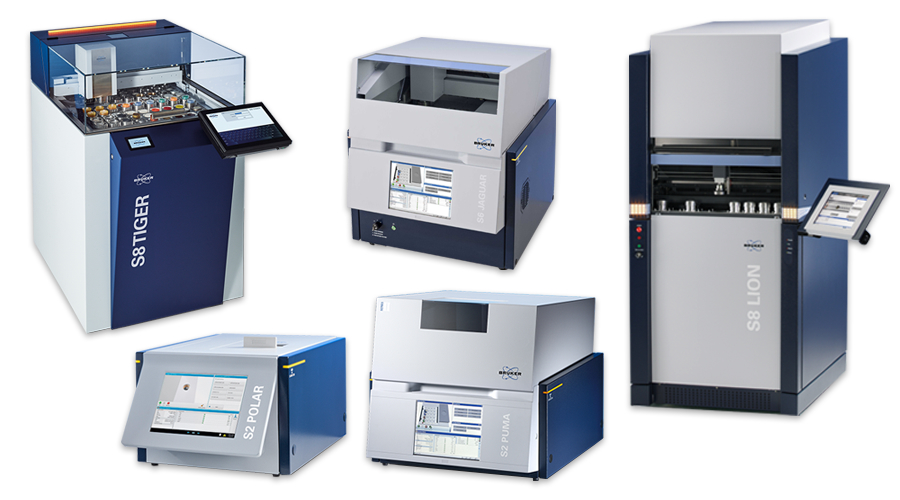
Bruker’s XRF solutions, like the S2 PUMA benchtop ED-XRF, enable food manufacturers, processors, and testing laboratories to screen for heavy metals, verify mineral fortification, and monitor elemental contaminants across the production workflow.
Learn more by downloading the S2 PUMA Food Brochure.
Detecting Metals in Foodstuffs with XRF
XRF enables the analysis of fluorine (F) to uranium (U) in all food related materials and additives. Detection limits for heavy metals range from (sub-) ppm with benchtop EDXRF and down to ppb levels with TXRF.
Analytical tasks include:
Arsenic (As), lead (Pb), mercury (Hg) and more in color additives (FDA 21 CFR Part 73)
Arsenic (As) and cadmium (Cd) in rice, cereals, and baby food
Lead (Pb) and cadmium (Cd) in cacao, meat, seafood, and animal feed
Mercury (Hg) screening in fish and supplements
Verification of mineral fortification (e.g., Ca, Fe, Zn, Se)
From Screening to Trace Analysis: Bruker's XRF Portfolio for Food Safety
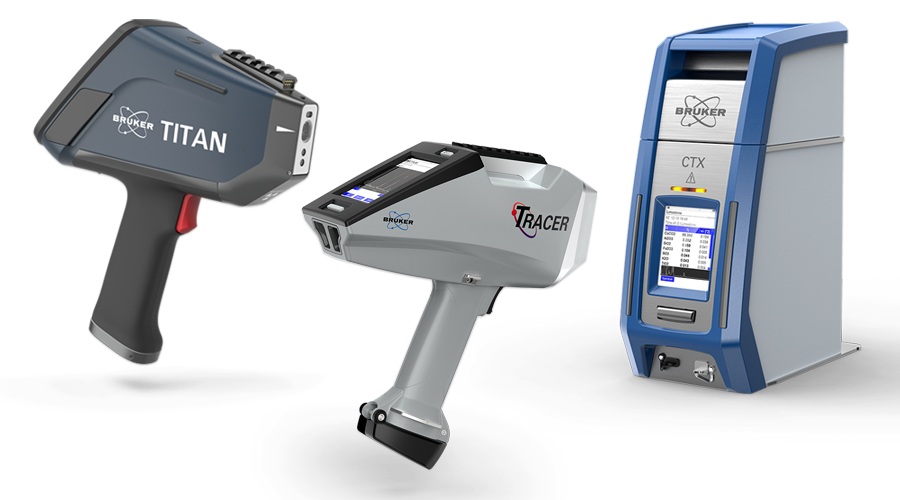
Handheld XRF instruments enable the screening of incoming raw materials and goods directly at the point of entry, delivering immediate results without sample preparation.
For at-line and process applications, Bruker's benchtop ED-XRF and WD-XRF systems offer high-throughput, lab-quality elemental analysis - providing the accuracy and speed needed for regulatory compliance and routine quality monitoring across a broad range of elements.
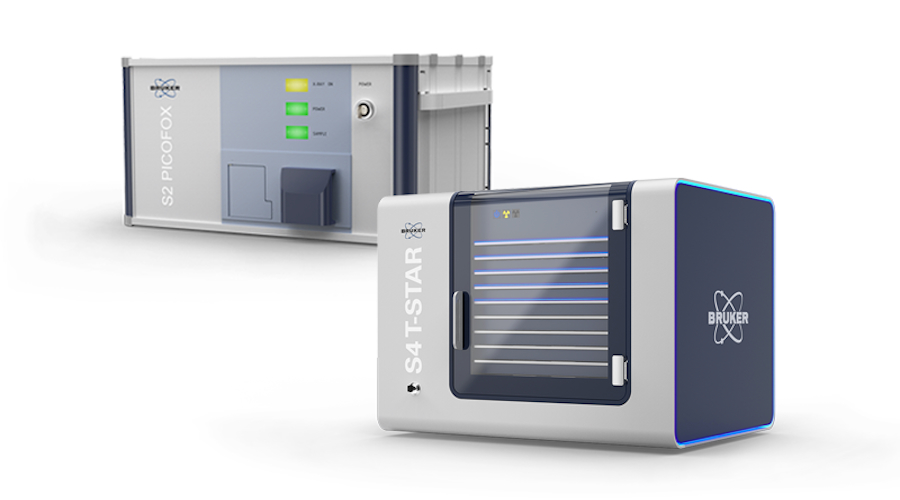
For specialized applications where ultra-trace sensitivity is required, Bruker's TXRF systems extend elemental analysis to the sub-ppb level. TXRF is the ideal choice where regulatory limits demand the lowest possible detection thresholds.




Literature
Brochures and Flyers
Contact an Expert
Interested in learning more about how XRF can help you accelerate your safety and quality control processes in the food industry? Contact a Bruker expert using this form.