


Unlocking the Potential of Your SEM: The Future of In-Situ Automated Nanoindentation with Bruker’s New PI 89 Auto SEM PicoIndenter
Seamlessly conduct nanoindentation, imaging, EBSD, and EDS
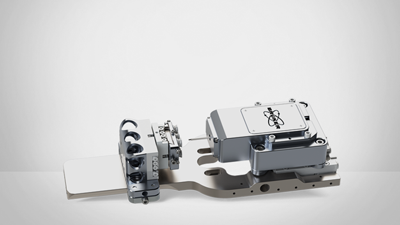
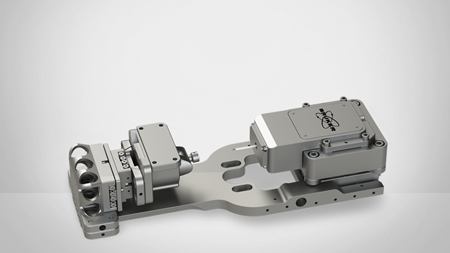
In this on-demand webinar, hear all about the newest PicoIndenter, directly from Bruker’s experts. With encoded linear stages and a patented dual-configuration rotation and tilt (R/T) stage mechanism, PI 89 Auto accelerates the process of conducting nanoindentation, imaging, EBSD, and EDS from the same sample location.
Watch the webinar to learn how PI 89 Auto delivers:
- High-throughput automated nanoindentation with limited user interaction
- Co-localized metrology with SEM imaging and EBSD/EDS analysis for structure-processing-property correlations supporting materials development
- A patented dual-configuration rotation and tilt stage to easily align with relevant detectors
The webinar includes a demonstration of the Hysitron PI 89 Auto SEM PicoIndenter and its applications.
Webinar Summary
In this on-demand webinar, Bruker’s new Hysitron PI 89 Auto SEM PicoIndenter is introduced. This nanomechanical test instrument is an in-situ nanoindenter designed to increase throughput and facilitate co-localized imaging and metrology. PI 89 Auto incorporates seamless imaging/EBSD/EDS interfacing using the encoded linear stages and a patented dual-configuration rotation and tilt (R/T) mechanism.
PI 89 Auto includes:
- Base PI 89 platform with controller
- Advanced rotation and tilt (R/T) stage
- TriboScan Auto software, which enables automation testing capabilities
Presenters demonstrate how PI 89 Auto can help to establish a correlation between structure, processing, and properties of materials. Establishing these correlations quickly is especially valuable for industrial markets like automotive, steels, nuclear, and semiconductor.
Find out more about the technology featured in this webinar or our other solutions for In-situ Automated NanoIndentation:
Featured Products and Technology
Speaker

Sanjit Bhowmick, Ph.D.
Senior Staff Scientist, Bruker
Dr. Sanjit Bhowmick is a Senior Staff Scientist at Bruker. His research interest includes understanding microstructure and mechanical property correlation of advance nanostructured materials using in-situ SEM and TEM nanomechanical techniques. He has published more than 80 papers in peer-reviewed journals.

Kevin Schmalbach, Ph.D., Staff Scientist, Nanoindentation Unit, Bruker
Kevin earned his PhD in Chemical Engineering from the University of Minnesota in 2022, where his thesis focused on the effects of temperature and strain rate in tungsten. He joined Bruker as a postdoctoral scientist in the Applications Group before transitioning to the Research and Development team as an instrumentation scientist. In this role, he played a key role in developing the PI 89 Auto capabilities as well as supporting hardware innovation and technique development for nanoindentation. He has recently advanced to a staff scientist position within the Applications Group.