

Reaction Monitoring
Rigorous Process Monitoring for Pharma and Biopharma Applications
Reaction monitoring is critical for process understanding, optimization and scaling up, leading to cost savings, and ensuring the quality of the final product. It often provides important insights into the mechanism of chemical reactions, whether it is traditional chemistry, bioproduction or (bio)catalysis. Kinetic information can be extracted from the time course data and utilised to build kinetic models that will be used to predict conditions, enabling effective process optimisation as well as risk assessment and control.
A broad range of techniques can be used for process monitoring and perhaps in-situ vibrational spectroscopy is the most popular. A primary advantage of the use of FT-IR spectroscopy is that it can be readily employed at a variety of physical scales from small development reactors (<50 cm3 vessel volume) up to full scale manufacturing plants (>1000 L vessel volume). The fact that the measurement instrumentation can be configured to operate in situ whereby a measurement probe is inserted directly into the reaction vessel and connected to a spectrometer via a fibre optic cable means that little (or no) perturbation is caused to operation of the process. Additionally, the spectra are often rich in detail and can reveal high quality information about chemical composition and physical form.
However, it is rarely the case that data from FT-IR measurements would be employed in isolation. At the very least, companion data provided by techniques such as chromatographic assays, enthalpy measurements and structural elucidation studies will also be available from other activities carried out during synthetic route development and subsequent transfer. Most of these techniques require a calibration step to normalize the output to give data on concentration versus time. NMR is able to play an important role in the calibration of other techniques as it provides an inherently quantitative signal response based on the number of nuclei, and it is also the primary structural elucidation tool for molecular characterization (including intermediates) ensuring that usually plays a strong role in the development of APIs.
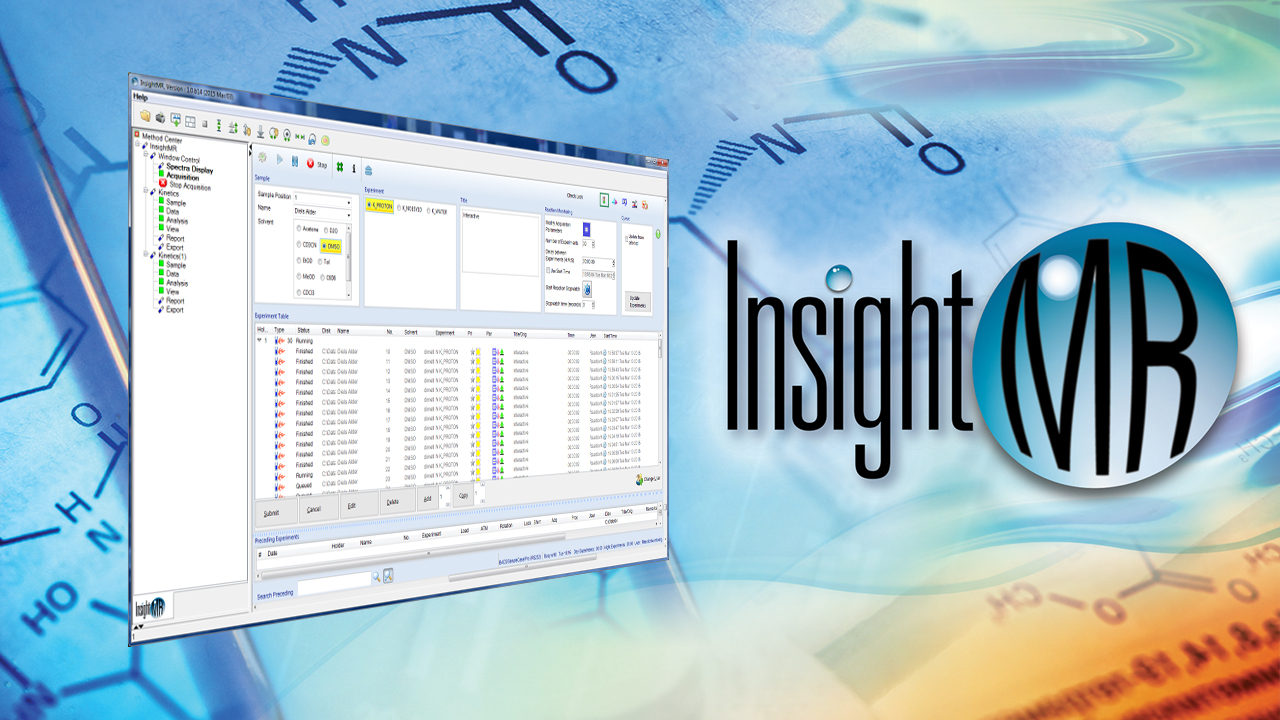
Combination of FT-IR and NMR is a very powerful one, with the NMR also enhancing reaction understanding by gaining mechanistic insights. Online flow NMR mimics real reaction conditions, enabling time zero measurements and simultaneous acquisition with other spectroscopic. In combination with Mid-IR, it increases overall confidence when transferring process from the lab to the pilot or manufacturing plant.
Process monitoring allows drug development teams to streamline workflows and reduce time taken to bring new small molecule and biologics drugs to market.
Bruker has a wide portfolio of solutions and applications to monitor chemical and biological processes in order to increase the understanding of reaction mechanisms, the formation of radicals, the details of forced degradation, and the expression of cell metabolites

Free eBook:
‘QbD & PAT for Dummies’ offers a simple and easy to follow guide on what Quality by Design (QbD) and PAT are, the regulatory framework supporting these approaches, as well as how leveraging these concepts can positively transform production processes and quality testing.





Testimonials

Read More

Enhancing Reaction Understanding with Online NMR Reaction Monitoring – Application to Chemical Route Development

Celebrating the Opening of the Dynamic Reaction Monitoring Facility
LabScape
磁気共鳴および前臨床イメージング向けのサービスとライフサイクルサポート
ブルカーは、最初のお問い合わせから評価、据え付け、その後装置が寿命を迎えるまでの購入サイクル全体を通して、お客様に比類のないサポートを提供することをお約束します。
LabScapeの保守契約、On-Site、On-DemandおよびEnhance Your Labは、現在の実験室に適した保守とサービスを行うために、新しいアプローチを提供するよう設計されています。