
Episode 3: From Stopping Hearts to FCCS: Using Lasers to Study Tissue with Light-Sheet Microscopy
Episode 3 - From Stopping Hearts to FCCS: Using Lasers to Study Tissue with Light-Sheet Microscopy
In Episode 3 of The Light-Sheet Chronicles Podcast, host Dr. Elisabeth Kugler dives into the world of lasers in light-sheet fluorescence microscopy. Joined by Prof. Dr. Jonathan Taylor (University of Glasgow) and Dr. Malte Wachsmuth (Bruker).
The episode explores how lasers can not only visualize but also manipulate tissues, enhance image quality, and push experimental boundaries. The discussion spans topics from optogenetically stopping zebrafish hearts for imaging to advanced methods, such as FCCS and FLIM-FRET.
Listen to this episode or scroll down to read more about the topics discussed.
From Stopping Hearts to FCCS: Using Lasers to Study Tissue with Light-Sheet Microscopy
In microscopy, lasers are mostly used as tools for fluorescence excitation, but in reality, lasers can be used for many more things. Lasers can be shaped, synchronised, modulated, and repurposed to reveal biological processes that would otherwise remain inaccessible.
In Episode 3 of The Light-Sheet Chronicles, host Dr. Elisabeth Kugler explores this expanded laser toolbox with two leading experts: Professor Dr. Jonathan Taylor from the University of Glasgow and Dr. Malte Wachsmuth, Managing Director of Bruker Luxendo.
This episode examines how light-sheet lasers are used not only to observe biology but to actively improve image quality, overcome experimental limitations, and enable advanced quantitative and functional measurements in living systems.
TABLE OF CONTENTS:
Improving Image Quality: Tackling Artifacts in Light-Sheet Microscopy
However much we love microscopy, for most techniques, artifacts are an unavoidable reality of imaging. Artifacts can obscure structural detail, complicate interpretation, and limit quantitative analysis. As Dr. Wachsmuth explained, for example, shadowing can be an issue when a structure blocks the illumination path, producing striping artifacts in the resulting images.
To address striping artifacts, several complementary strategies have been developed. One approach is multi-directional illumination. By illuminating the sample from opposing sides (or from multiple angles), information hidden by shadows from one direction can be recovered from another. This can be achieved either through static optical configurations with multiple illumination objectives, or dynamically by pivoting the illumination beam around its waist.
Another challenge can arise from the properties of Gaussian beams, which are commonly used to form light sheets.1 A Gaussian beam has a well-defined waist where the sheet is thinnest and brightest, but it converges and diverges along the propagation axis. This can lead to inhomogeneous illumination intensity and variable axial resolution across the field of view (FOV).
To mitigate this, Bruker’s light-sheet systems employ dynamic beam-waist scanning with fast, tunable lenses. By rapidly shifting the beam waist axially during acquisition, the illumination profile is effectively averaged, producing a more uniform excitation intensity and consistent sheet thickness across the imaging volume.
LEARN MORE ABOUT LIGHT-SHEET MICROSCOPE GEOMETRIES:
Beyond Gaussian Beams: Resolution, Field of View, and Photodamage
Professor Jonathan Taylor expanded the discussion by placing light-sheet beam engineering in a broader physical context. Gaussian beams impose a fundamental trade-off: thinner light sheets provide better axial resolution but over a limited propagation distance, constraining the usable FOV.
To overcome this limitation, scientists have explored alternative beam types such as Bessel and Airy beams.2,3 These so-called non-diffracting beams maintain a narrow central lobe over longer distances, enabling high-resolution imaging across larger FOVs. However, this advantage comes at a cost. Side lobes can introduce additional excitation outside the focal plane, increasing photodamage and background signal. As a result, these beam types often require computational deconvolution to recover optimal image quality.
While there is no “free lunch” in beam physics, the flexibility of light-sheet microscopy allows researchers to select beam profiles tailored to specific applications, balancing resolution, penetration depth, phototoxicity, and post-processing complexity.
Imaging the Moving Heart
Lasers are not only tools for observation, but they can also be used to manipulate biological systems. Classic examples include laser ablation, such as zebrafish tail wound assays used to study immune cell migration. Beyond these applications, lasers can help overcome fundamental experimental challenges.
Imaging the beating heart is one such challenge. The rapid, continuous motion of cardiac tissue makes high-resolution three-dimensional imaging extremely difficult. One solution to this is to stop the heart with lasers. Optogenetics, where light-sensitive ion channels are used to transiently stop the heart, as demonstrated in embryonic zebrafish by Arrenberg and colleagues in 2010.4
Dr. Wachsmuth emphasises that while optogenetics can be powerful, it should be applied judiciously. Wherever possible, pushing optical acquisition speed and sensitivity to their limits allows researchers to capture biological dynamics without interfering with the system.
An alternative strategy to imaging the heart is to create optics and computational methods tailored to it. Professor Taylor describes his gated imaging approach, published in Nature Communications in 2019.5 This approach drew conceptually on clinical imaging modalities such as MRI, where gated imaging synchronises image acquisition with the sample's motion.
In this case, continuous brightfield imaging was used to track the heartbeat in real time. Fluorescence images were then triggered at precisely defined phases of the cardiac cycle, effectively “freezing” the heart computationally. This approach enabled high-resolution 3D imaging of cardiac structure and cell behaviour over long time periods without interfering with normal heart function.
Advanced Laser-Based Techniques: From FRAP to FCCS
While techniques such as Fluorescence Recovery After Photobleaching (FRAP) are now widely established, which can be used to study movement and dynamics of fluorescently tagged molecules in living cells, lasers can be used for even more advanced experiments.
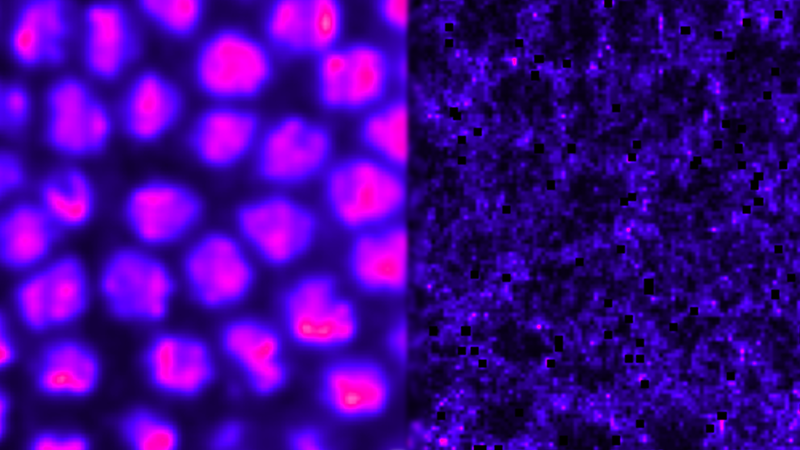
One example discussed in the episode is fluorescence cross-correlation spectroscopy (FCCS), a powerful yet still quite niche technique.6,7
Dr. Wachsmuth explained FCCS by first introducing fluorescence correlation spectroscopy (FCS). In FCS, fluorescence intensity fluctuations are recorded as molecules diffuse through a defined observation volume. Autocorrelation analysis of these fluctuations then provides quantitative information about molecular mobility, concentration, and binding states.
FCCS extends this concept to two spectrally distinct fluorophores. When two differently labelled molecules interact and co-diffuse, their fluorescence fluctuations become synchronized across detection channels. On the other hand, if there is no synchronized movement, it suggests that there is no interaction of the molecules in the observation volume. Thus, cross-correlation analysis directly reports on molecular interactions, enabling measurements about concentration, colocalization, enzyme kinetics, and mobility.
Traditionally, FCS and FCCS were limited to single-point confocal measurements. Light-sheet microscopy fundamentally changes this paradigm by enabling camera-based FCS and FCCS, where thousands of correlation measurements can be performed in parallel across a 2D FOV. This opens the door to spatial maps of concentration, mobility, and molecular interaction dynamics in vivo.8,9
In practice, deriving accurate measurements with FCCS is mathematically and computationally demanding. Where ten years ago, the main challenge was in acquiring the data and establishing parameters, the challenge has now shifted more towards the data processing and accurate interpretation of the data.
Dr. Wachsmuth highlighted that there are several technical advances that lowered the barrier to entry. GPU-accelerated correlation algorithms and machine-learning-based fitting approaches—such as those developed by Torsten Wohland’s group8—allow robust, automated analysis of large FCCS datasets. Dr. Wachsmuth notes: "What was once restricted to a small community of biophysicists is increasingly becoming accessible to a broader life science audience."

Measuring Molecular Forces in Living Systems
Lastly, the podcast discussed fluorescence lifetime imaging microscopy (FLIM), which measures the nanosecond-scale delay between excitation and photon emission.
FLIM becomes particularly powerful when combined with Förster resonance energy transfer (FRET).10 Professor Taylor’s work on FLIM-FRET tension sensors takes this a step further. These molecular sensors incorporate two fluorophores connected by an elastic linker. Any changes in mechanical tension then alter fluorophore spacing, producing measurable changes in fluorescence lifetime.
By engineering these sensors into living zebrafish tissues, building on work by Anne Karine Lagendijk et al.,11 Taylor’s group is able to visualize molecular-scale forces in vivo. One of their current works is to include these tension sensors in the context of the zebrafish beating heart. If successful, these measurements could offer new insight into how mechanical forces shape tissue morphogenesis and organ function. This is particularly interesting when combining the ability to study zebrafish development over hours and days with light-sheet microscopy.

Wrapping Up
To close the episode, both guests were asked to reflect on the future of light-sheet microscopy. For Dr. Wachsmuth, the most exciting aspect is the sheer breadth of applications—from single-molecule biophysics to whole-organism imaging—enabled by continued technical advances in optics, detectors, and computation. Professor Taylor was excited about the potential of molecular tension sensing and functional imaging in general as particularly transformative directions.
Together, this episode was a delightful insight into what can be done with lasers, which is much, much more than simple observation.

References
[1] O. E. Olarte, J. Andilla, E. J. Gualda, and P. Loza-Alvarez, “Light-sheet microscopy: a tutorial,” Adv. Opt. Photon., AOP, vol. 10, no. 1, pp. 111–179, Mar. 2018, doi: 10.1364/AOP.10.000111.
[2] M. C. Müllenbroich et al., “Bessel Beam Illumination Reduces Random and Systematic Errors in Quantitative Functional Studies Using Light-Sheet Microscopy,” Front. Cell. Neurosci., vol. 12, Sept. 2018, doi: 10.3389/fncel.2018.00315.
[3] T. Vettenburg et al., “Light-sheet microscopy using an Airy beam,” Nat Methods, vol. 11, no. 5, pp. 541–544, May 2014, doi: 10.1038/nmeth.2922.
[4] A. B. Arrenberg, D. Y. R. Stainier, H. Baier, and J. Huisken, “Optogenetic control of cardiac function,” Science (New York, N.Y.), vol. 330, no. 6006, pp. 971–974, Nov. 2010, doi: 10.1126/science.1195929.
[5] J. M. Taylor et al., “Adaptive prospective optical gating enables day-long 3D time-lapse imaging of the beating embryonic zebrafish heart,” Nature Communications, vol. 10, no. 1, Art. no. 1, Nov. 2019, doi: 10.1038/s41467-019-13112-6.
[6] K. Bacia, S. A. Kim, and P. Schwille, “Fluorescence cross-correlation spectroscopy in living cells,” Nat. Methods, vol. 3, no. 2, pp. 83–89, Feb. 2006, doi: 10.1038/nmeth822.
[7] L. Yu et al., “A Comprehensive Review of Fluorescence Correlation Spectroscopy,” Front. Phys., vol. 9, Apr. 2021, doi: 10.3389/fphy.2021.644450.
[8] T. Wohland, X. Shi, J. Sankaran, and E. H. K. Stelzer, “Single Plane Illumination Fluorescence Correlation Spectroscopy (SPIM-FCS) probes inhomogeneous three-dimensional environments,” Opt. Express, OE, vol. 18, no. 10, pp. 10627–10641, May 2010, doi: 10.1364/OE.18.010627.
[9] J. Capoulade, M. Wachsmuth, L. Hufnagel, and M. Knop, “Quantitative fluorescence imaging of protein diffusion and interaction of living cells,” Nature Biotechnology, no. 29, pp. 835–836, 2011, doi: 10.1038/%20nbt.1928.
[10] P. A. Bonilla and R. Shrestha, “FLIM-FRET Protein-Protein Interaction Assay,” in KRAS: Methods and Protocols, A. G. Stephen and D. Esposito, Eds., New York, NY: Springer US, 2024, pp. 261–269. doi: 10.1007/978-1-0716-3822-4_19.
[11] A. K. Lagendijk et al., “Live imaging molecular changes in junctional tension upon VE-cadherin in zebrafish,” Nature Communications, vol. 8, no. 1, p. 1402, Nov. 2017, doi: 10.1038/s41467-017-01325-6.


