
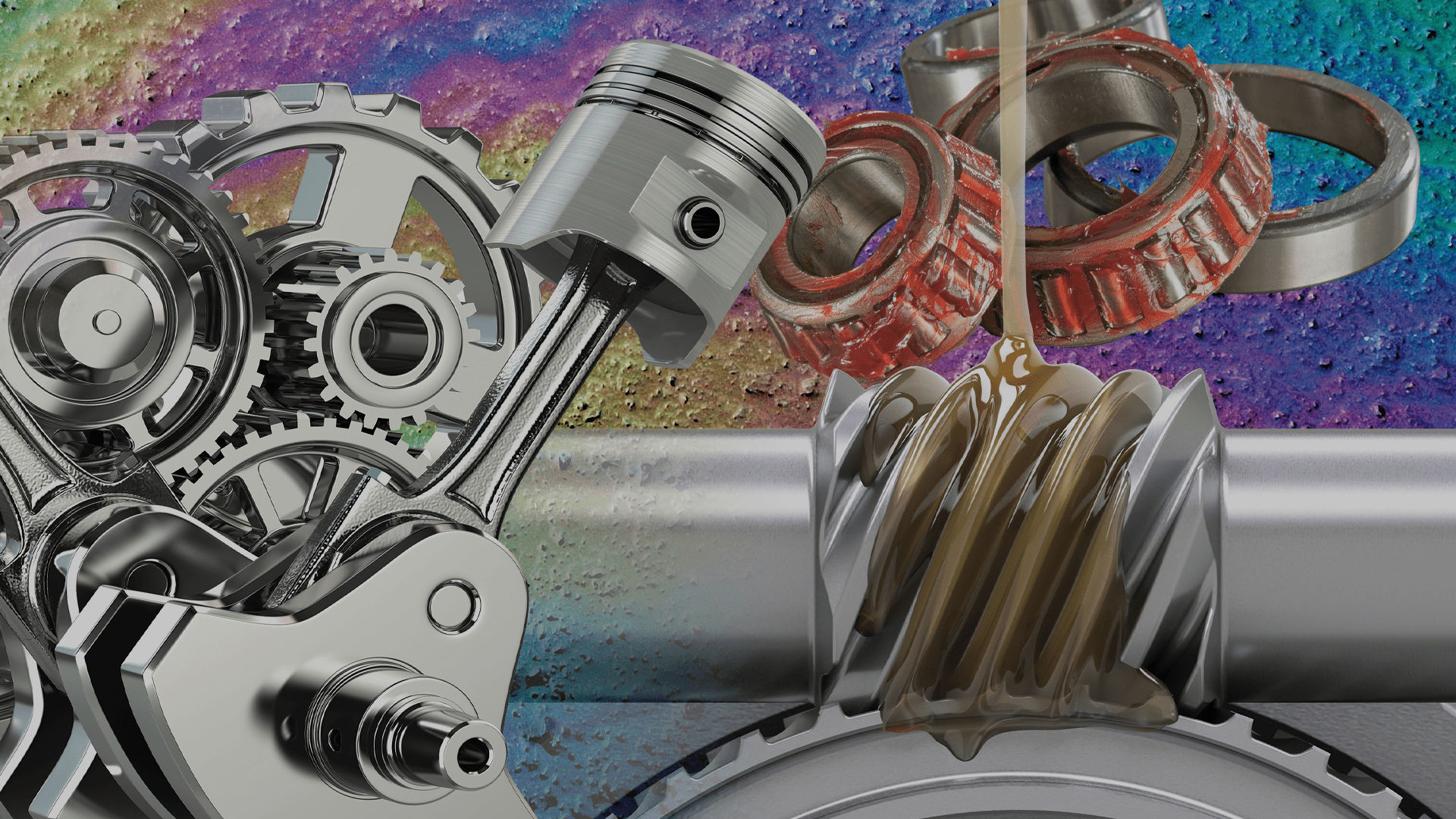
마찰/마모/윤활/스크래치 시험분석기와 특수 물성 시험분석 복합기기
마찰/마모/윤활/스크래치 시험분석기와 특수 물성 시험분석 복합기기
재료 연구 및 재료 변화에 따른 강도와 무결성, 내구성의 영향에 관한 연구는 거의 모든 산업 분야에서 제품 설계 및 개선의 필수적인 부분입니다. Bruker사의 물성 시험기능과 마찰/마모/윤활 시험기능 복합시험기는 마찰, 마모, 하중, 경도, 윤활, 스크래치와 같은 마찰학 조사연구에서 가장 포괄적이고 다양한 방법을 제공합니다. 마찰, 마모 및 재료의 물성적 특성 시험측정은 중공업,조선, 반도체, 자동차, 생물,의학,디스플레이,가전 까지 다양한 응용 분야에서 실무자에게 재료, 코팅, 윤활유에 어떻게 엄격한 기준이 유지되는지 이해하는 방법입니다.
귀사에 적합한 최고의 Tribo-Solution 찾기

Frequently Asked Questions
General Tribology and Mechanical Testing
Tribology is the science of friction, wear, and lubrication between interacting surfaces in relative motion. It focuses on how materials behave at interfaces, where surface interactions often control efficiency, durability, and failure in mechanical systems.
Many component failures originate at surfaces rather than in bulk materials. Tribology helps engineers understand why materials wear, lose efficiency, generate heat, or fail over time, enabling better material selection, surface design, and lubrication strategies.
Mechanical testing in tribology involves applying controlled forces, motion, and environments to materials or components in order to measure how they resist deformation, friction, wear, and surface damage under realistic conditions.
Traditional mechanical tests focus on bulk material properties such as strength or elongation. Tribological testing focuses on surface‑driven behavior, such as friction stability, wear mechanisms, coating adhesion, and lubrication performance during contact and motion.
Tribology addresses challenges such as excessive wear, frictional losses, vibration, noise, energy inefficiency, surface degradation, and premature component failure across industries including automotive, manufacturing, electronics, energy, and biomedical engineering.
Tribometers and Mechanical Testers
A tribometer is a laboratory instrument designed to measure friction, wear, and related surface interactions between materials under controlled conditions. It simulates contact scenarios such as sliding, rolling, scratching, or reciprocating motion.
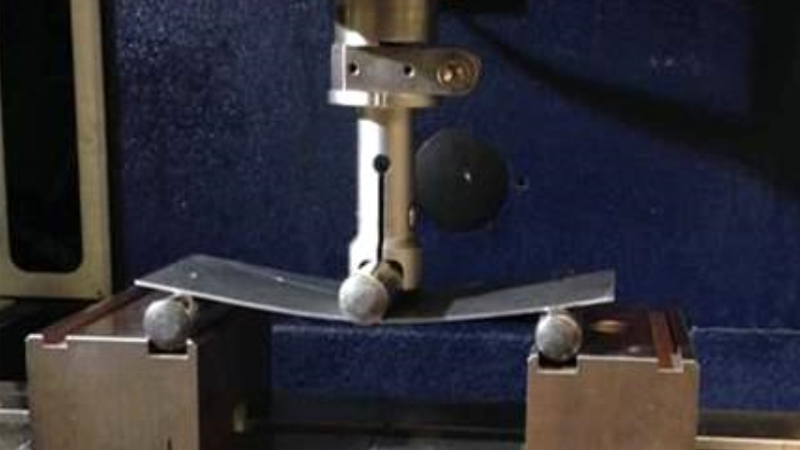
A universal mechanical tester for tribology is a modular testing platform that supports multiple tribological and mechanical test modes on a single system. Rather than being limited to one test type, it can be configured for friction, wear, scratch, hardness, bending, lubrication, and tribocorrosion tests.
Depending on configuration, tribometers and universal mechanical testers can perform:
- friction and wear tests (rotary or reciprocating)
- scratch and indentation tests
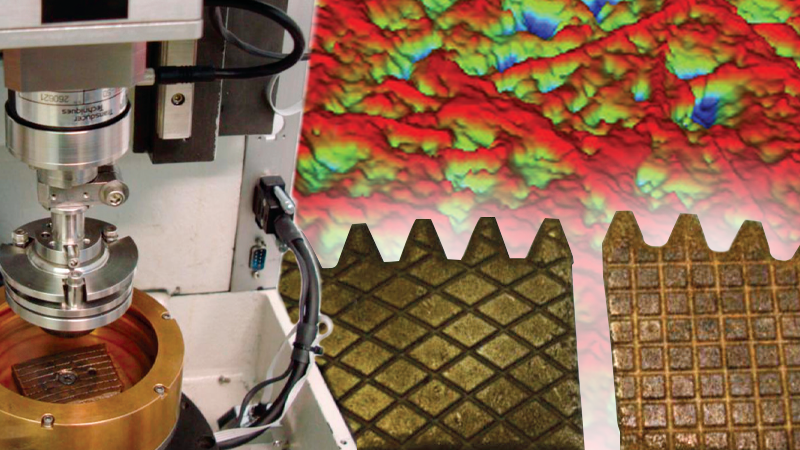
- block‑on‑ring, pin‑on‑disk, and ball‑on‑flat tests
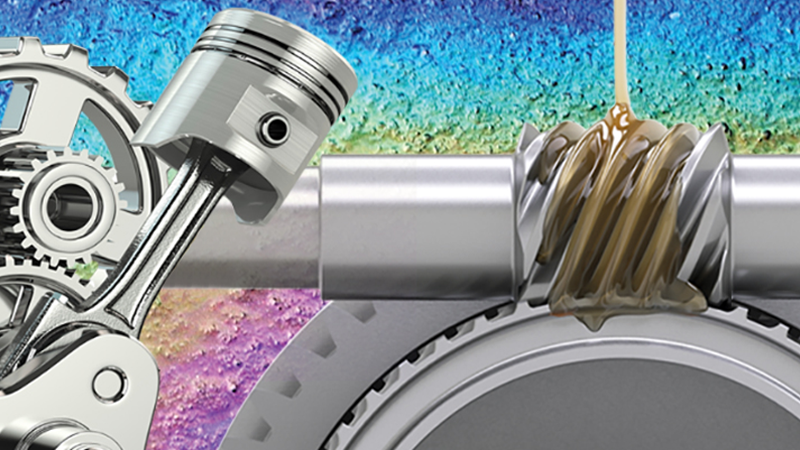
- lubrication and Stribeck curve testing
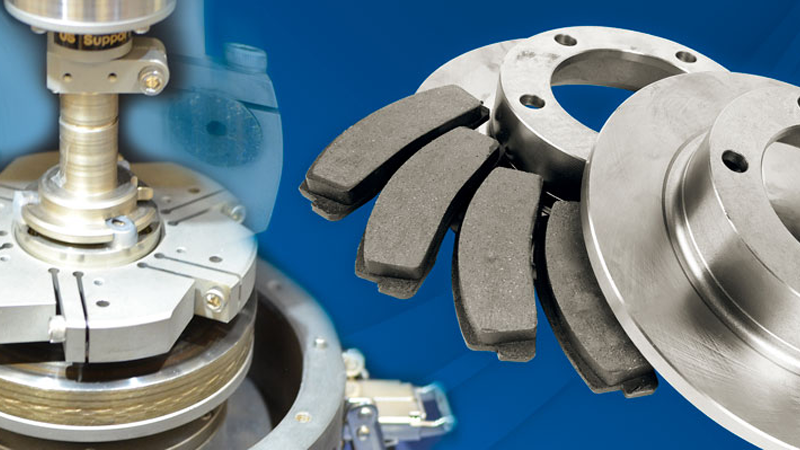
- brake and clutch material screening
- tribocorrosion and environmentally controlled tests
These systems can measure coefficient of friction, wear rate, material loss, adhesion strength, torque, normal and lateral forces, displacement, temperature dependence, and degradation mechanisms. In some cases, mechanical and electrochemical contributions to damage can be separated.
Tribometers and universal mechanical testers do not replace a dynamometer, but they complement it.
- A dynamometer evaluates full components or assemblies under near‑operational conditions (e.g., full brake systems).
- Tribometers and universal mechanical testers operate at laboratory and benchtop scale, using smaller samples to screen materials, study mechanisms, and compare formulations.
In practice, tribological testing is used earlier in development to reduce cost, down‑select materials, and understand surface behavior before committing to time‑ and resource‑intensive dynamometer testing.
More About Bruker's Mechanical Testing and Tribology Technology
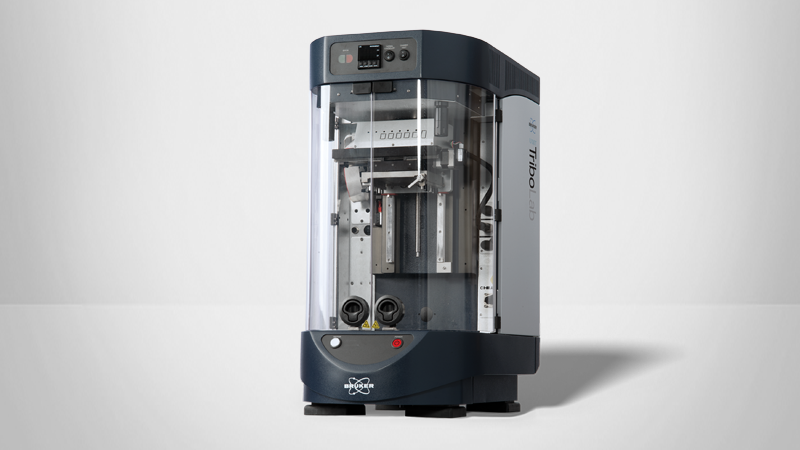
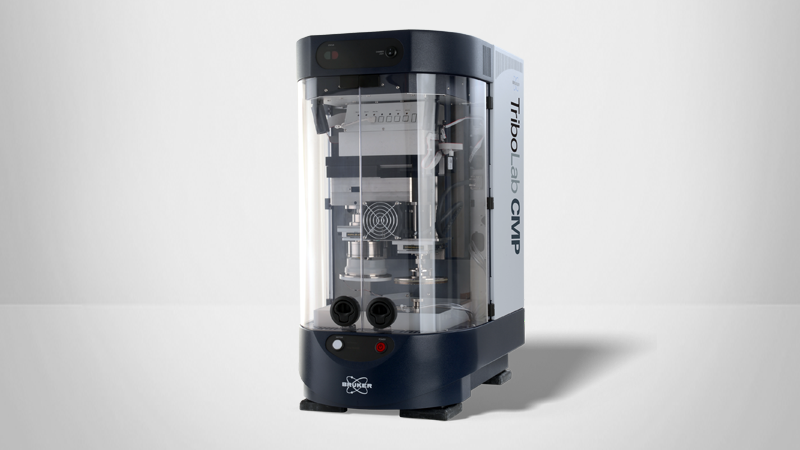
TriboLab platforms support standard rotary, reciprocating, block-on-ring, four-ball, scratch, and indentation tests. Common methods include ASTM G99, G133, G77, D4172, and C1624. Equivalent ISO methods can typically be addressed through the same hardware and scripting.
The exact scope of the included installation and operator training depends on region and contract. Confirm details with your Bruker representative.
All TriboLab systems are modular. You can select drives, force and torque sensors, environmental chambers for temperature and humidity, liquid and electrochemical options, and advanced sensors to meet your application needs. If you are not sure which modules meet your needs, our experts can help.
Bruker provides applications consulting, troubleshooting, and best practice guidance, along with optional service plans for ongoing support, maintenance, and training.
Contact us to arrange a demonstration or submit samples for an evaluation tailored to your test geometry and materials.
트라이볼로지 웨비나 보기
당사의 웨비나는 모범 사례를 다루고, 신제품을 소개하고, 까다로운 질문에 대한 빠른 솔루션을 제공하고, 새로운 응용분야, 모드 또는 기술에 대한 아이디어를 제공합니다.
View Key Publications with Bruker Tribometers and Mechanical Testers
- Zahmatkesh, S., & Rizvi, R. (2025). Evaluating Surface Texturing Technologies of Rubber Composites on Ice Using a Novel High-Velocity Tribotest Method. Tribology International, 110538.
- Li, M., Bai, Y., Ou, Y., Ren, X., & Qian, C. (2025). Study on friction and wear properties of nickel-based alloys under different working conditions. Heliyon, 11(2).
- Soranansri, P., Dubois, A., Moreau, P., Funazuka, T., Dohda, K., & Dubar, L. (2025). Tribological performance of AlCrN and TiAlN coatings in aluminum forming process at high temperature. Solid State Phenomena, 370, 89-97.
- Joukar, A., Karnik, S., Noori-Dokht, H., Younesi, S., Trippel, S. B., & Wagner, D. R. (2025). Mechanical Wear of Degraded Articular Cartilage. Annals of Biomedical Engineering, 1-10.
- Jin, B., Du, N., Meng, T., Chen, G., Cao, Y., Zhang, H., ... & Luo, J. (2025). High contact stress phase transition structural superlubricity. Carbon, 120306.
- Kalácska, Á., Parmentier, V., De Baets, P., & Kalácska, G. (2025). Wear investigation of PTFE, PEEK and UHMWPE-based reciprocating shaft seal materials with lunar/Martian regolith simulants. Wear, 205791.
- Xie, Y. F., Lu, X., Wang, J., Wang, X. Z., Liu, S., Zhang, Y., ... & Wang, F. (2025). Superior tribocorrosion resistance of Mg metal matrix composite by self-sealing PEO coating. Corrosion Science, 112938.
- Nečas, D., Gelnar, A., Rothammer, B., Marian, M., Ranuša, M., Wartzack, S., ... & Hartl, M. (2025). Frictional Behaviour and Surface Topography Evolution of DLC‐Coated Biomedical Alloys. Biosurface and Biotribology, 11(1), e70004.
- Jahromi, H. S., Mohammadi, H., Kode, S. K., Ellis, J. D., & Menon, D. R. (2025). Effect of Laser Power and Diamond Tool Parameters for Micro Laser-Assisted Ductile Mode Material Removal on Fused Silica. Journal of Micro and Nano Science and Engineering, 13(1).
- Chen, Y., Peng, K., Li, X., Sun, L., Su, T., Zhang, W., ... & Zhou, M. (2025). Lubricating and Conductive Properties of Modified Graphene/Silver Nanoparticles Under Current-Carrying Friction Conditions. Lubricants, 13(1), 38.
- Su, T., Peng, K., Zhang, D., Sun, L., Chen, Y., Yu, Y., & Zhou, M. (2025). Synergistic Lubrication and Anti-Corrosion Effects of Benzotriazole and Ionic Liquid Under Current-Carrying Friction. Lubricants, 13(2), 77.
- Liao, X., Bai, M. H., Liu, Y. W., Wei, Y. Q., Wang, J. Y., Wang, Z. G., ... & Li, K. (2025). Mitigating intubation stress, mucosa injury, and inflammatory response in nasogastric tube intubation via suppression of the NF-κB signaling pathway by engineering a hydration lubrication coating. Journal of Materials Chemistry B.
- Wang, W., Deng, Z., Chen, Z., Yuan, L., Xiang, J., Dai, L., & Tang, K. (2025). Laser-induced and Conformal liquid-silicone Casting of oxalis-inspired graphene-based Piezoresistive Pressure Sensors. Journal of Bionic Engineering, 1-14.
- Li, J., & Chen, M. (2025). Instance segmentation of on-line wear debris using deep convolutional neural network with transfer learning. Industrial Lubrication and Tribology, 77(2), 211-218.
- Zong, Y., Zhao, Y., He, W., Jia, Y., & Le, H. (2025). Research on the anti-frost performance of hydrophobic TiN-polymer composite coating on aluminum alloy surface. Composites Communications, 53, 102186.
- Bahatibieke, A., Zhao, J., Fan, D., Zhou, Z., Li, J., Wang, X., ... & Zheng, Y. (2025). Sea-Island Micelle Structured Hydrogel Scaffold: A Dual-Action Approach to Combat Cartilage Damage under RA Conditions. ACS Applied Materials & Interfaces.
- Chai, J., Ru, Y., Jia, Y., Yang, Y., Zhang, H., Chen, L., ... & Liu, M. (2025). Friction Memory Ionogels With Hysteretic Sticky‐Slippery Transition via Thermolocking the Metastable state. Advanced Materials, 37(13), 2416250.
- Zhang, J., Hu, W., & Li, J. (2025). Enhanced Tribological Performance of Melamine Long-Chain Alcohol Esters in High-Temperature Boundary Lubrication. Lubricants, 13(3), 114.
- Zhang, Y., Yan, H., Li, S., & Zheng, Z. (2025). Effect of induction heating composite shot peening on fatigue crack growth behavior, wear performance of 20CrMnTi gear steel. Surface Topography: Metrology and Properties.
- Wei, G., Wang, G., Zhong, L., Wang, Y., He, X., Li, M., ... & Liao, W. (2025). Influence of Groove Texture Parameters on the Friction Performance of Roller Bit Floating Sleeve Bearings. Journal of Tribology, 1-22.
- Elkington, R. J., Armitage, J. L., Khan, T., & Bryant, M. G. (2024). Sticky feet: A tribological study of climbing shoe rubber. Sports Engineering, 27(2), 30.
- Soranansri, P., Dubois, A., Moreau, P., Funazuka, T., Dohda, K., & Dubar, L. (2024). Identification of coulomb and constant shear frictions in hot aluminum forming by using warm and hot upsetting sliding test. International Journal of Material Forming, 17(6), 55.
- Zhang, H., Hu, X., Liu, Y., Zhu, B., & Zhang, Y. (2024, December). Research on high temperature friction performance of carbon fiber composite materials. In 7th International Conference on Advanced High Strength Steel and Press Hardening (ICHSU 2024) (pp. 382-389). Atlantis Press.
- Evans, T., & Palgrave, R. (2024). An investigative study on different magnetic ionic liquids to be used as a lubricant and sealant in a vacuum pump. Tribology and Materials, 3(1), 24-34.
- Wang, Y., Wang, Y., Wang, T., Luo, Z., & Rao, S. (2024). Influence of Heat Treatment on the Key Service Properties of Built-Up Welding Layer on Pinch Rollers. Journal of Failure Analysis and Prevention, 24(5), 2517-2529.
- Ren, B., Xia, Y., Chen, Y., Su, Y., Lou, J., Zhang, C., ... & Dai, M. (2024). Effect of C2H2 flow rate on microstructure, properties, and application in micro-drilling of aC: H films deposited by PECVD. Journal of Materials Research and Technology, 29, 1194-1205.
- Wei, R., Deng, J., Guo, X., Yang, Y., Miao, J., Liu, A., ... & Wang, R. (2024). Construction of zwitterionic coatings with lubricating and antiadhesive properties for invisible aligner applications. Macromolecular Rapid Communications, 2400234.
- Hu, L., Yu, W., Liu, J., Yang, Y., Hao, J., & Xu, L. (2024). Highly lubricative, self-healing, chemically degradable, anti-flaming and anti-irradiating magnetic gels simply prepared from binary mixtures of Fe 3 O 4 nanoparticles and water. Journal of Materials Chemistry A, 12(13), 7549-7563.
- Liao, M., Cammarata, A., & Polcar, T. (2024). Charge-induced ultralow friction between graphite and atomically flat surfaces. Carbon, 223, 119036.
- Chen, Y., Li, H., Su, F., Ma, G., Li, Q., Sun, J., & Lin, S. (2024). Friction and wear behavior of molybdenum-disulfide doped hydrogen-free diamond-like carbon films sliding against Al2O3 balls at elevated temperature. Wear, 544, 205296.
- Tang, G., Sun, S., Yang, J., Pan, Y., Liu, Z., & Liang, Z. (2024). Fabrication and tribological properties of WC-reinforced Inconel X-750 alloy at elevated temperature. Journal of Manufacturing Processes, 131, 1321-1333.
- Evans, T., & Palgrave, R. (2024). An investigative study on different magnetic ionic liquids to be used as a lubricant and sealant in a vacuum pump. Tribology and Materials, 3(1), 24-34.
- Ren, B., Su, Y., Lou, J., Zhang, C., Tang, P., Lin, S., ... & Zhou, K. (2024). PECVD technology deposition of high hardness aC: H films on micro-drill surfaces: Substrate bias voltage effects. Journal of Manufacturing Processes, 124, 385-398.
- Shi, H., Li, H., Guo, Z., Lu, H., Wang, J., & Li, J. (2024). GNBoost-Based Ensemble Machine Learning for Predicting Tribological Properties of Liquid-Crystal Lubricants. Langmuir, 40(20), 10705-10717.
- Men, S., Yang, P., Gyawali, G., Yang, Y., Li, D., Nouri, M., & Zhang, S. (2024). Insight into the corrosion behaviors and mechanism of arc discharge plasma nitrided H13 steel in molten Al-Si. Applied Surface Science, 670, 160584.
- Haider, S. B., Heon, E., Neveau, M., Chen, P., Houston, A., Rios, O., & Lass, E. A. (2024). Castable eutectic Ni–Ce high temperature alloys strengthened by γ/γʹ microstructure. Journal of Materials Research and Technology, 28, 3943-3950.
- Ren, Y., Liu, X., Chang, C., & Zhang, S. (2024). Tribological performance of c-BN/TiC-enhanced NiCrBSi coatings prepared by high-velocity oxy-fuel spraying tested from room temperature to 1000° C. Ceramics International, 50(13), 22947-22959.
- Tian, H., Cui, Z., Zhang, X., & Zhang, X. (2024). Effect of cathodic potential and corrosion product on tribocorrosion behavior of S420 steel in the marine environment. Materials Today Communications, 38, 108372.
- Liu, Q., Chen, X., Liu, K., Cristino, V. A., Lo, K. H., Xie, Z., & Kwok, C. T. (2024). Friction stir processing of M2 and D2 tool steels for improving hardness, wear and corrosion resistances. Surface and Coatings Technology, 481, 130609.
- Yurchenko, E. V., Ghilețchii, G. V., Vatavu, S. A., Petrenko, V. I., Harea, D., Bubulinca, C., & Dikusar, A. I. (2024). Composition, Structure, and Wear Resistance of Surface Nanostructures Obtained by Electric Spark Alloying of 65G Steel. Surface Engineering and Applied Electrochemistry, 60(2), 194-203.
- Xie, J., Li, P., Qian, Z., & Qian, Z. (2024). Wear simulation of pin-on-disc sliding wear test. In Journal of Physics: Conference Series (Vol. 2862, No. 1, p. 012040). IOP Publishing.
- Qi, Y., Gao, J., Liang, W., Miao, Q., Jia, F., Chang, X., & Lin, H. (2024). A comparison of the tribological properties of SiC coatings prepared via atmospheric plasma spraying and chemical vapor deposition for carbon/carbon composites. Lubricants, 12(9), 301.
- Kladovasilakis, N., Pechlivani, E. M., Sfampa, I. K., Tsongas, K., Korlos, A., David, C., & Tzovaras, D. (2024). Metal 3D-printed bioinspired lattice elevator braking pads for enhanced dynamic friction performance. Materials, 17(11), 2765.
- Elkington, R. J., Hall, R. M., Beadling, A. R., Pandit, H., & Bryant, M. G. (2024). Engineering tribological rehydration of cartilage interfaces: Assessment of potential polyelectrolyte mechanisms. Tribology International, 197, 109822.
- Buyuksungur, S., Parau, A. C., Dinu, M., Pana, I., Vitelaru, C., Schmidt, J., ... & Hasirci, N. (2024). Variations of chemical, physical, mechanical properties, and biological and antimicrobial effectiveness of Ti alloys by coating with CaP doped with different amounts of Zn via micro-arc oxidation (MAO) technique. Ceramics International, 50(19), 37096-37110.
- Zheng, X., Zheng, K., Jia, W., Qu, S., Yu, S., Zhou, B., ... & Gao, J. (2024). Plasma surface alloyed Ta diffusion layer and Ta coating on Ti6Al4V alloy: Mechanical and wear properties. Journal of Applied Physics, 136(2).
- Siahpour, P., Omar, S. M. T., Griffin, D., Amegadzie, M. Y., Tieu, A., Donaldson, I. W., & Plucknett, K. P. (2024). Evaluating surface mechanical properties and wear resistance of Ti–6Al–4V alloy subjected to ultrasonic pulsed waterjet peening. Wear, 550, 205400.
- Zhang, C., He, Y., Zhang, S., Li, C., Gou, R., Zhang, J., & Sun, D. (2024). A novel siloxene@ MoS2 heterostructure for improving the wear and corrosion resistance performance of epoxy coatings. Colloids and Surfaces A: Physicochemical and Engineering Aspects, 700, 134785.
- Chen, X., Sun, S., Wang, D., Li, J., Yang, C., Jiang, Y., & Chang, X. (2024). Construction of robust superhydrophobic surfaces with an'armour'structure on the low-temperature steels by picosecond laser processing. Tribology International, 195, 109637.
- Elkington, R. J., Hall, R. M., Beadling, A. R., Pandit, H., & Bryant, M. G. (2024). Brushing up on cartilage lubrication: Polyelectrolyte-enhanced tribological rehydration. Langmuir, 40(20), 10648-10662.
- Ozdemir, I., Bulbul, B., Kiracbedel, U., Grund, T., & Lampke, T. (2024). Wear Performance Evaluation of Polymer Overlays on Engine Bearings. Materials, 17(15), 3802.
- Escherová, J., Krbata, M., Kohutiar, M., Barényi, I., Chochlíková, H., Eckert, M., ... & Dubcová, P. (2024). The Influence of Q & T Heat Treatment on the Change of Tribological Properties of Powder Tool Steels ASP2017, ASP2055 and Their Comparison with Steel X153CrMoV12. Materials, 17(5), 974.
- Biedma, Á., Sánchez, G., de Nicolás, M., Bertalan, C., Useldinger, R., Llanes, L., & Gordo, E. (2024). A Comparative Study on the Wear Performance and High-Temperature Oxidation of Co-Free Cermets and Hardmetals. Materials, 17(14), 3615.
- Yin, Y., Shi, P., Zhang, S., Qing, T., Zhou, N., Qian, L., & Chen, L. Deeply Understanding Lubrication Failure of Steel Ball Against Oil-Impregnated Porous Polyimide in Double-Contact Friction with Rolling‑Sliding Motion. Available at SSRN 4692446.
- Park, J. E., Je, H., Kim, C. R., Park, S., Yu, Y., Cho, W., ... & Wie, J. J. (2024). Programming Anisotropic Functionality of 3D Microdenticles by Staggered‐Overlapped and Multilayered Microarchitectures. Advanced Materials, 36(7), 2309518.
- Yun, S., Um, Y., Park, H. W., & Kim, S. (2024). Static friction of magneto-rheological elastomer pads in wall-climbing robots. CIRP Annals, 73(1), 441-444.
- Wang, L., Ta, T., & Tieu, K. A. Tribological Roles of Glass‐Based Lubricants in Hot Rolling of Steel. steel research international, 2400107.
- Devenport, T. M., Lu, P., Rolfe, B. F., Pereira, M. P., & Griffin, J. M. (2024, October). Acoustic Emission Characteristics of Galling Behavior from Dry Scratch Tests at Slow Sliding Speed. In Acoustics (Vol. 6, No. 4, pp. 834-869). MDPI.
- Gong, L., Zhang, Z., Yu, W., Zeng, J., Cao, J., Fan, B., ... & Zhang, C. (2024). Ultra‐Durable Polysilicon Based Tribovoltaic Nanogenerators for Bearing In Situ Rotational Speed Sensing. Small, 20(50), 2405992.
How Can We Help?

Bruker partners with our customers to solve real-world application issues. We develop next-generation technologies and help customers select the right system and accessories. This partnership continues through training and extended service, long after the tools are sold.
Our highly trained team of support engineers, application scientists and subject-matter experts are wholly dedicated to maximizing your productivity with system service and upgrades, as well as application support and training.