
HYPERION II
FT-IR z QCL
Moc analityczna i innowacje
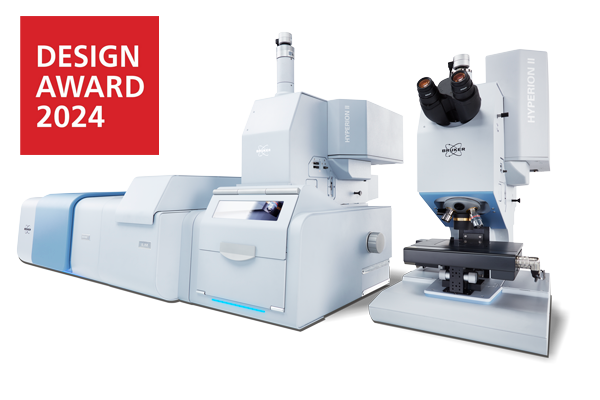
Platforma badawcza do obrazowania i mikroskopii FTIR
Co nowego w HYPERION II:
Jak zintegrowaliśmy obrazowanie laserowe
w podczerwieni:
Opatentowana przez nas redukcja koherencji przestrzennej:
Mikroskopia FT-IR wzbogacona o QCL | Obrazowanie laserowe w podczerwieni
HYPERION II to prawdziwa innowacja w mikroskopii w podczerwieni. Umożliwia obrazowanie w podczerwieni do granicy dyfrakcji i wyznacza jakość w mikroskopii ATR. Po raz pierwszy łączy mikroskopię FT-IR i obrazowanie laserowe w podczerwieni (ILIM) w jednym urządzeniu, oferując wszystkie trzy tryby pomiaru: transmisję, refleksję i ATR.
Cechy HYPERION II:
- Szeroki wybór detektorów µ-FT-IR:
Szeroko-, średnio-, wąskopasmowe detektory LN2-MCT, chłodzony termoelektrycznie (TE) MCT
- Detektor FPA do obrazowania w podczerwieni (64 x 64 lub 128 x 128 pikseli)
- Opcjonalna implementacja QCL za pomocą modułu do laserowego obrazowania w podczerwieni (ILIM, laser klasy 1)
- Szeroki wybór obiektywów: 3.5x/15x/36x/74x IR, 20x ATR, 15x GIR, 4x/40x VIS
- Szeroki zakres spektralny – od bliskiej podczerwieni (NIR) do dalekiej podczerwieni (FIR)
- Wybór apertur: ręczna apertura knife-edge, automatyczna apertura knife-edge, koło apertur. Metalowa apertura dla NIR
- Szeroki wybór akcesoriów i stolików pomiarowych: akcesorium do makro obrazowania IR, stolik grzewczo/chłodzący, komora pomiarowa itp.
- Wybór narzędzi wizualnych/optycznych: oświetlenie w ciemnym polu, oświetlenie fluorescencyjne, polaryzatory IR, polaryzatory VIS, itp.
HYPERION II zapewnia:
- Idealne dopasowanie obrazów spektralnych i wizualnych. Dotyczy dowolnego trybu pomiaru (w tym obrazowania ATR)
- Wysokoczułą mikroskopie i obrazowanie FTIR z wykorzystaniem detektora ogniskowej matrycy (FPA) ograniczona dyfrakcją
- Pierwsze w historii połączenie technologii FT-IR i QCL przez (opcjonalny) moduł do obrazowania laserowego w podczerwieni (ILIM, laser klasy 1)
- Obrazowanie laserowe w podczerwieni we wszystkich trybach pomiarowych (ATR, transmisja, refleksja)
- Opatentowaną redukcje koherencji dla pomiarów obrazowania laserowego bez artefaktów oraz bez utraty czułości i prędkości.
- Wysoką prędkość obrazowania:
0.1 mm2 na sekundę (FPA, pełne widmo)
6.4 mm2 na sekundę (ILIM, pojedyncza liczba falowa) - Opcjonalny detektor TE-MCT do pomiarów mikroskopowych IR o wyskoiej czułości i rozdzielczości przestrzennej bez konieczności stosowania ciekłego azotu
- Możliwość spektroskopii emisyjnej i opcjonalne rozszerzenie zakresu spektralnego
Zastosowanie HYPERION II:
- Badania life-science | obrazowanie komórek
- Farmacja
- Badania emisyjności (np. diody LED)
- Analiza wtrąceń i przyczyn źródłowych
- Kryminalistyka
- Mikroplastik
- Badania R&D w przemyśle
- Polimery i tworzywa sztuczne
- Charakterystyka powierzchni
- Półprzewodniki
Mikroskop badawczy FT-IR dla pionierów i innowatorów
Prawie żaden z naszych mikroskopów IR nie odzwierciedla naszych użytkowników tak jak HYPERION II: wszechstronny, precyzyjny, konfigurowalny, adaptowalny i zawsze na granicy tego, co jest możliwe.
Przejmij pełną kontrolę
Przede wszystkim najważniejszy jest dostęp do instrumentu. Dostęp do eksperymentu, próbek i parametrów. To jest fundament HYPERION II i jego najcenniejszy atut: zapewnienie pełnej kontroli.
Niezależnie od tego, czy chodzi o pomiary FT-IR w trybie jednopunktowym, mapowanie czy obrazowanie za pomocą różnych detektorów lub obiektywów, specjalnych stolików pomiarowych lub z użyciem obiektywu ATR lub Grazing Angle - w dowolnym momencie możesz wpłynąć na wynik swoich wyników i ulepszyć je.
To wyraźna różnica w porównaniu do naszego mikroskopu IR LUMOS II. Tam, gdzie LUMOS II zwalnia użytkownika od żmudnych eksperymentalnych szczegółów i automatyzuje proces pomiarowy, HYPERION II pozostaje precyzyjnym narzędziem, które robi to, czego wymaga użytkownik.

Pomnik swojej przeszłości
Wielu użytkowników zna HYPERION II i jego mocne strony dzięki jego poprzednikowi. Od prawie 20 lat HYPERION jest siłą napędową innowacyjności w mikroskopii i obrazowaniu IR. Cechy, któe sprawiły, że HYPERION był znakomitym mikroskopem FT-IR, wciąż istnieją - tylko w lepszym, szybszym i innowacyjnym wydaniu.
HYPERION II nadal posiada wszystkie funkcje, których potrzebujesz w codziennej rutynie badawczej: chłodzony ciekłym azotem lub termoelektrycznie detektor MCT, detektory FPA do obrazowania IR, narzędzia wzmacniające kontrast wizualny oraz oczywiście mnóstwo dedykowanych akcesoriów.
Koniec końców chcieliśmy ponownie wyznaczyć standardy w mikroskopii i
obrazowaniu FT-IR i zasłużyć na miano lidera innowacji, wprowadzając nową oraz ekscytującą technologię przy zachowaniu uznanych i cenionych metod.

Wzbogacenie FT-IR o obrazowanie laserowe w podczerwieni (QCL)
QCL i FT-IR w jednym urządzeniu
Po raz pierwszy użytkownicy mają dostęp do mikroskopu IR, który łączy technologię FT-IR i QCL w jednym instrumencie. Dzięki temu otwieramy zupełnie nowe drzwi do nauk przyrodniczych i badań materiałowych.
Zbierz widmo FT-IR, wybierz długości fal, które chcesz zbadać za pomocą QCL i twórz wspaniałe obrazy chemiczne w ciągu kilku sekund.
Dzięki całkowicie nowemu podejściu do obrazowania FT-IR oraz laserowego obrazowania w podczerwieni, dajemy wreszcie użytkownikom, badaczom i naukowcom narzędzie do opracowywania nowych zastosowań, ale także do ulepszania uznanych i sprawdzonych aplikacji.
Prawdziwy mikroskop QCL o wyjątkowej wydajności
HYPERION II oferuje bezkompromisową mikroskopię QCL w najnowocześniejszym mikroskopie FT-IR. Opracowaliśmy i opatentowaliśmy nowatorską technologię redukcji koherencji, aby zapewnić niezrównaną wydajność obrazowania laserowego IR - bez cyfrowego przetwarzania końcowego.
Oto przykład: w klasycznej FT-IR koherencja przestrzenna nie odgrywa żadnej roli. Jednak w pomiarach mikroskopowych IR z QCL nieuchronnie występuje zjawisko koherencji przestrzennej. Pojawiające się prążki oraz plamki na obrazach i widmach IR są niepożądane dla obrazowania chemicznego (patrz z prawej strony; DOI: 10.1002/jbio.201800015).
Rzeczywiście, nie jest łatwym zadaniem oddzielenie informacji chemicznych próbki od informacji fizycznych opisujących związek fazowy rozproszonych fotonów. HYPERION II rozwiązuje ten problem w sposób pragmatyczny dzięki inteligentnej konstrukcji sprzętu i umożliwia pozyskiwanie danych obrazowania chemicznego wolnych od defektów.
Porównanie spektroskopii FT-IR i QCL
Porównanie obu technik sugerowałoby, że mogą one równie dobrze wykonywać te same zadania analityczne - popularne nieporozumienie. Obrazowanie FT-IR i obrazowanie laserowe w podczerwieni mają wyraźne zalety i tylko praktyczne połączenie obu technik pozwala osiągnąć najlepsze wyniki.
Wiemy, że większość naukowców i badaczy nie chce utracić wszechstronności FT-IR. Nie lubią ograniczać się do jednej, najnowocześniejszej techniki, która nie ma punktu odniesienia. Na szczęście HYPERION II to zarówno wyjątkowy mikroskop do obrazowania FT-IR, jak i ambitny mikroskop QCL.
Postawiliśmy na podwójne podejście i tam, gdzie technologia QCL rejestruje dane znacznie szybciej przy tym samym stosunku sygnału do szumu, nadal jest ona ograniczona do węższego zakresu MIR. Dlatego ponownie pozostajemy wierni koncepcji HYPERION II. Ty wybierasz. Masz pełną kontrolę.


Zastosowanie mikroskopii IR (FPA, MCT, QCL)
Analiza tkanek biologicznych

Badania materiałowe

Kryminalistyka

Rozwój leków

Geologia i mineralogia

Analiza mikroplastiku

Energy Materials / Photonic Crystals

In the study by Arpin et al. (2013), 3D self-assembled tungsten photonic crystals retain their structure up to ~1,400 °C, while exhibiting tailored IR reflectance/emissivity spectra that show enhanced useful thermal emission and suppressed undesired IR emission.
The role of HYPERION: researchers used reflectance IR to infer spectral emissivity via Kirchhoff’s law and applied reflectance analysis to directly link to emissivity control of tungsten photonic crystals.
Nanophotonics / Bioanalytics

Amenabar et al. (2013) demonstrated infrared nanospectroscopy (nano-FT-IR) mapping of individual protein complexes (e.g. ferritin, insulin fibrils) with ~30 nm lateral resolution, interpreting local broadband spectra in the amide I/II region to deduce secondary structure at the nanoscale.
The role of HYPERION: FT-IR spectra were acquired as reference spectra and to compare peak positions and band shapes with the nano-FT-IR data, thereby supporting assignments of local secondary-structure resonances.
Plastmonics / Supercrystals

Mueller et al. synthesized three-dimensional, self-assembled gold nanoparticle “supercrystals” and demonstrated that plasmon polaritons in these crystals induce strong near-field enhancement across visible to mid-IR bands, enabling both SERS and SEIRAS of ligand molecules.
The role of HYPERION: IR reflectance and transmittance spectra on plasmonic supercrystal films where collected demonstrating coupling between plasmonic modes and molecular vibrations and quantifying SEIRAS enhancement.
On-Chip-Screening / Biomedical

In Benz et al. (2020) a dendrimer-based, patterned indium-tin-oxide (ITO) slide was used to generate >50,000 nanodroplet vessels per plate, enabling on‐chip chemical synthesis and ultra-sensitive MALDI-TOF MS, UV–Vis reaction monitoring (RM) and on-chip IR spectroscopy for RM and characterization in high-throughput drug discovery.
The role of HYPERION: IR spectra from the droplet array spots provided molecular vibrational absorption signatures to complement MS and UV-Vis data, thus supporting high-throughput characterization of the synthesized library.
Plasmonics / Metamaterials

Paggi et al. (2023) demonstrate an over-coupled metasurface resonator that enhances molecular vibrational absorption across the mid-IR range (5–10 μm) by coupling weak plasmonic modes to molecular vibrations, achieving reflectivity variations up to 1% per nanometer of molecular layer thickness.
The role of HYPERION: IR spectra in the mid-IR allowed to assess the influence of the metasurface resonator on vibrational modes, shed light onto the broadband SEIRA mechanism and supported the design of detection platforms.
Polariscopy / Nanomaterials

Honda et al. (2019) demonstrated infrared (IR) polariscopy using hyperspectral imaging with a focal plane array (FPA) detector in the IR spectral region under illumination by thermal and synchrotron light sources. They show that the time required for polariscopy at IR wavelengths can be substantially reduced by the FPA-FTIR imaging.
The role of HYPERION: Both the offline FPA-FT-IR experiments and the synchrotron based hyperspectral imaging were performed on the Hyperion enabling the analysis of the targeted sub-wavelength features via polariscopy.
Energy Materials / Metamaterials

Dyachenko et al. report the design and fabrication of a refractory multilayer metamaterial composed of tungsten and hafnium dioxide that exhibits an optical topological transition between epsilon-near-zero and hyperbolic dispersion. This transition allows control over the material’s thermal emission properties at high temperatures, enabling selective tuning of emissivity.
The role of HYPERION: Reflectance spectra were collected in the NIR region to determine the spectral position and strength of optical resonances in the multilayer structure.
Optics / IR Imaging

Stavitski et al. (2013) achieved diffraction-limited spatial resolution by coupling synchrotron infrared (IR) beamlines to focal plane array detectors (FPA), enabling full-field imaging with high chemical sensitivity and rapid acquisition times. Using this approach, they successfully map chemical composition in heterogeneous samples with spatial resolution down to approximately 5 µm.
The role of HYPERION: Equipped with an FPA detector, the HYPERION served as the imaging platform coupled to the synchrotron which was used for the chemical and compositional analysis.
Catalysis / Energy Materials

Cao et al. report using operando synchrotron radiation FT-IR (SR-FT-IR) under working potentials to detect a reversible vibrational absorption band at ~764 cm⁻¹ of an atomically dispersed Ru₁–N₄ catalyst, which they attribute to the adsorption/desorption of an oxygen intermediate (O*), thereby revealing the dynamic involvement of O species at the Ru site during catalysis.
The role of HYPERION: An operando SR-FT-IR setup was used to spatially and spectroscopically interrogate the catalyst under bias, capturing the vibrational signature of O* on the Ru site and supporting direct linkage between intermediate adsorption and catalytic function.
Catalysis / Energy Materials

In Su et al., the authors design CuO clusters supported on N-doped carbon and show that under applied potential the clusters dynamically reconstruct into Cu₂–CuN₃ species with charge asymmetry, which correlate with high Faradaic efficiency toward C₂⁺ products (notably ethanol). They combine operando XAS, quasi-in situ XPS, and operando FT-IR (with DFT support) to trace structural, electronic, and adsorbate changes in real time.
The role of HYPERION: As part of their operando FTIR setup, it was used to focus the synchrotron-based IR beam into the reaction cell and collect reflectance spectra under applied potentials. These measurements enable tracking of molecular vibrational features and charge-asymmetry signatures linked to the Cu₂–CuN₃ clusters and thus substantiate the structure–activity correlations under working conditions.
Akcesoria i obiektywy IR
Płytka walidacyjna

Uchwyt na próbki MicroVice

Akcesorium makro ATR

Uchwyt na filtry

Stolik grzewczo/chłodzący

Obiektyw 3.5x do obrazowania

Standardowe obiektywy transmisyjne

Obiektyw ATR

Obiektyw Grazing Angle

Diamentowa cela kompresyjna

OPUS Release 9.0 Highlights for HYPERION II | Q1 2025
New Feature: The Autonomous Composition Identifier (A.I.D.) simplifies search and identification.
The Autonomous Composition Identifier (A.I.D.) is an AI-driven software tool for identifying the chemical composition of samples based on IR or Raman spectral data. It incorporates the previous O/SEARCH features and adds a multi-step algorithm to find the best match from reference spectral databases, whether dealing with pure substances or complex mixtures. A.I.D. intelligently evaluates and recommends optimal matches with a balance of reliability and sensitivity—automatically generating diagnostics and visual reports, including residual spectra and hit quality graphs. It delivers high-performance results in seconds and supports in-depth, interactive analysis of alternative identifications.

New Feature: Co-local Measurement – Unified Analysis Across IR and Raman
The Co-local Measurement function, part of the OPUS/OBJECT package, enables seamless analysis of the same region of interest on microscopic samples using both IR and Raman microscopy. It allows the transfer of overview images and measurement areas between LUMOS II, HYPERION II, and SENTERRA II instruments. This ensures that IR and Raman data are collected from precisely the same spot, enabling complementary chemical insights. Co-local Measurement bridges the gap between two techniques, improving data correlation and boosting confidence in results for heterogeneous or complex samples.

Updated Feature: OPUS/OBJECT now combines "Find Particle" and "Cluster ID"
The Particle Identification function (part of the OPUS/OBJECT package) combines the power of “Find Particles” and “Cluster ID” into one streamlined workflow. It detects particles within IR and Raman chemical images, determines their dimensions, and identifies their chemical makeup—all in one go. This integrated approach simplifies analysis and accelerates decision-making for complex samples.

OPUS Release 8.7 | HYPERION II | Q3 2021
New Feature: High Performance Chemical Image Generation by New Adaptive K-means Clustering Function
This new function is the logical next development step for our well known Cluster analysis function.The Adaptive K-means Clustering Function is based on a new algorithm, which enables a non-supervised and autonomous determination of spectral variance within your imaging or mapping results.
- Forecasting or time consuming searching of the included amount of chemical classes is no longer been necessary as the algorithm can predict all included chemical classes by itself.
- This major function is important for all kind of chemical imaging and distribution analysis of unknown samples or small structures within larger datasets.
- Make analysis and evaluation is as easy as possible and safes your valuable time and nerves.
New Feature: “Cluster ID” Function for Identification of Classes in 3D Spectral Data
Our new Cluster ID function enables the identification of clusters within imaging and mapping data using the OPUS functions: spectrum search in libraries, quick compare, or identity test.
- Easy determination of the chemical identity of classified sample components for particles, layers in laminates, components of pharmaceutical tablets and other inhomogeneous materials.
- Reliable and comprehensive statistics reports about quantity, size and of course identity of all analyzed structures is provided and leads particle and technical cleanliness analysis to a new, autonomous level.
Updated Feature: "Find Particles" function now contains a novel particle detection method
The proven "Find Particle" software can now be applied to both: the visual and the IR image. With this updated feature, you are able to do particle detection based on chemical images that were measured by the LUMOS II.
- While particle recognition for low contrast structures and off-white/transparent particles/fibers on off-white filter membranes can be tedious, a postrun particle determination based on the chemical IR image allows you to determine quantity and size of particles from your imaging or mapping results.


Materiały dodatkowe
Dowiedz się więcej o naszych mikroskopach i rozwiązaniach FT-IR, pobierając dostępne materiały.