
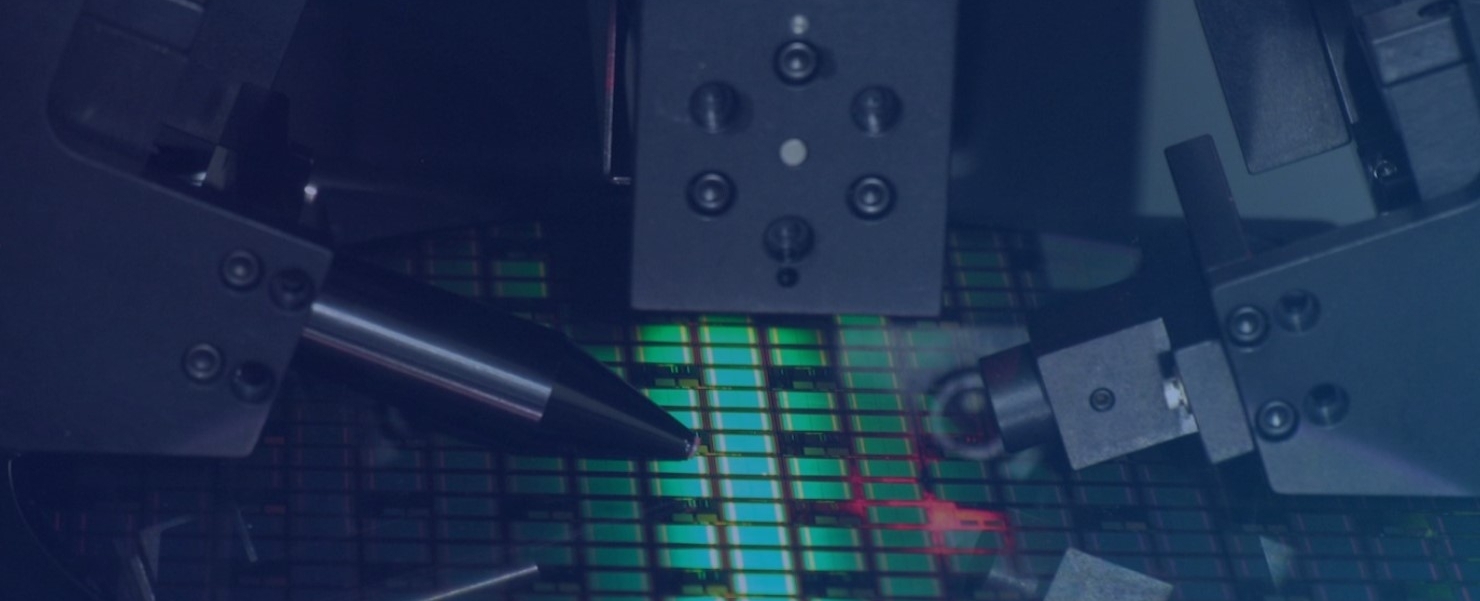
Ellipsometry and Reflectometry Systems
Advanced Optical Metrology Solutions from R&D to Production
Based on non-contact optical techniques, FilmTek tools simultaneously measure multiple-angle and multi-modal data to determine film thickness and refractive index. By measuring multiple angles of incidence, a wavelength shift is introduced between spectra collected at different angles. The wavelength shift between the spectra is only a function of the refractive index of the film and the angle difference between the spectra. By independently determining refractive index from a wavelength shift (as opposed to extracting index information from amplitude changes), FilmTek tools have best-in-class performance for film thickness and refractive index measurement. This level of performance allows FilmTek tools to address applications that otherwise may not be possible with more conventional ellipsometry or reflectometry methods.
Contact us or request a quote to discuss your unique measurement needs with a Bruker applications expert.
Find the Best Film Metrology Solution for You
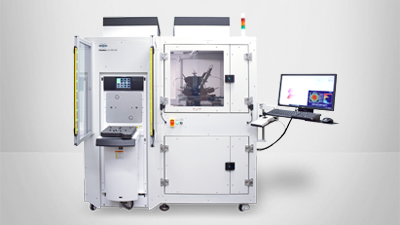
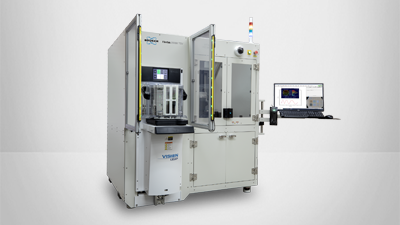
Stand-Alone Models
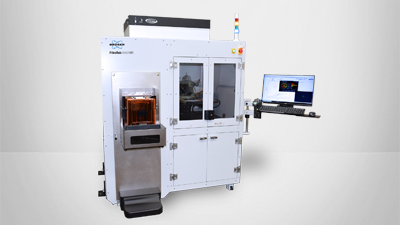
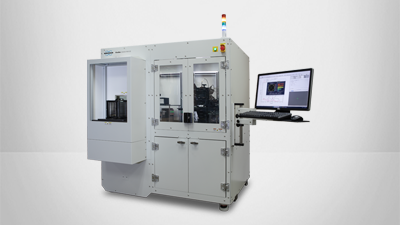
Benchtop Models
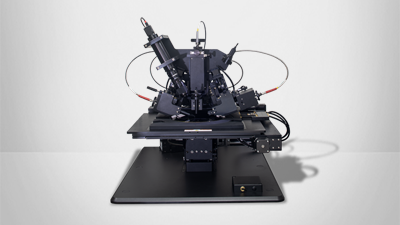
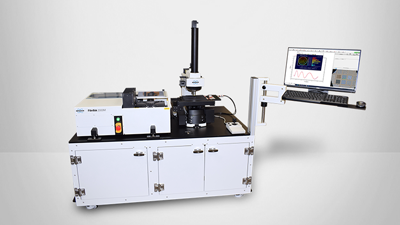
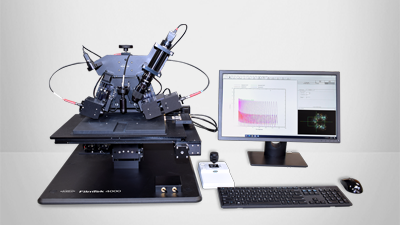
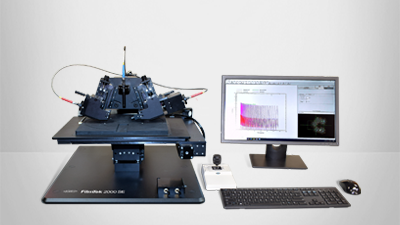
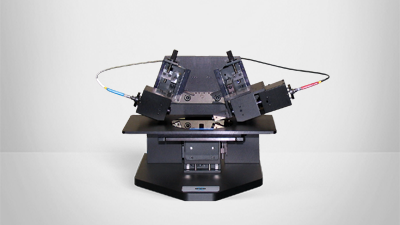
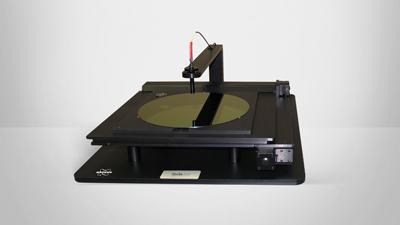
Contact us to discuss your measurement requirements, find out about the systems best-suited for your application, discuss options for system specialization, or request a quote based on your specific needs.
With installed systems in the world’s top development labs and industrial production floors, these metrology tools boast the highest accuracy and refractive index resolution for many thick, thin, and multilayer film applications that are not feasible with other metrology systems and are suited for use in settings ranging from academic research and R&D to high-volume manufacturing in controlled environments.
To support the broadest range of applications, samples, and environments, FilmTek systems are available in a variety of standard and customizable configurations. These range from manual benchtop instruments to fully automated production-line-ready models and include both single-technique and multimodal systems that combine our core technologies and additional technical integrations.
Advanced Thin Film Metrology with Application-Specific Solutions

Front End Semiconductors
Perform fast, accurate, and repeatable multi-layer film thickness and refractive index measurements on patterned device wafers for front end semiconductor manufacturing.
FilmTek systems enable process control of oxides, nitrides, ONO, Oxide / Nitride / Cu, polysilicon / oxide, AlN, TaN, TiN, SiGex and composition control, resist, Si3N4/GaAs, ARC, gate oxide, and GaAs films, CMP on Cu, and many other materials encountered throughout the entire wafer fabrication process.
RECOMMENDED SYSTEMS:

Advanced Packaging
Measure the complete range of back-end manufacturing and process control packaging parameters.
FilmTek process control solutions enable fully automated measurements for thick resist thickness for bump coplanarity, high-aspect-ratio TSV depth and top CD for interconnects, bonded silicon thickness or Total Thickness Variation (TTV), and thin metal-oxide thickness in bonding processes to prevent non-wet open failures.
RECOMMENDED SYSTEMS:

Silicon Photonics
Measure film thickness and refractive index with a 10x performance advantage over the best prism coupler contact systems.
Filmtek non-contact multi-angle reflectometry systems deliver precise high-resolution measurements and enable automated, in-line process control for a wide range of planar waveguide and silicon photonics applications (e.g., SiON, Si3N4, Ge-SiO2, P-SiO2, BPSG, APOX, HiPOX, and multi-layer SiO2/ SiON film stacks).
RECOMMENDED SYSTEMS:

Multi-layer Thin Films
Collect accurate, precise production measurements of thin films and multi-layers on patterned device wafers for front and back-end manufacturing.
Filmtek advanced multi-angle and multi-modal technology enables in-line composition control (e.g., %Ge in SiGex) for thin films, Oxide / Nitride / Cu, CMP process monitoring, and measurement of thin metal oxide thickness (SnO, CuO, InO) with sub-Angstrom repeatability to prevent non-wet open failures in bonding processes.
RECOMMENDED SYSTEMS:

Medical Sensors & Devices
Enhance the quality, consistency, and performance of medical devices and sensors with accurate and robust thickness measurement of biologically active films.
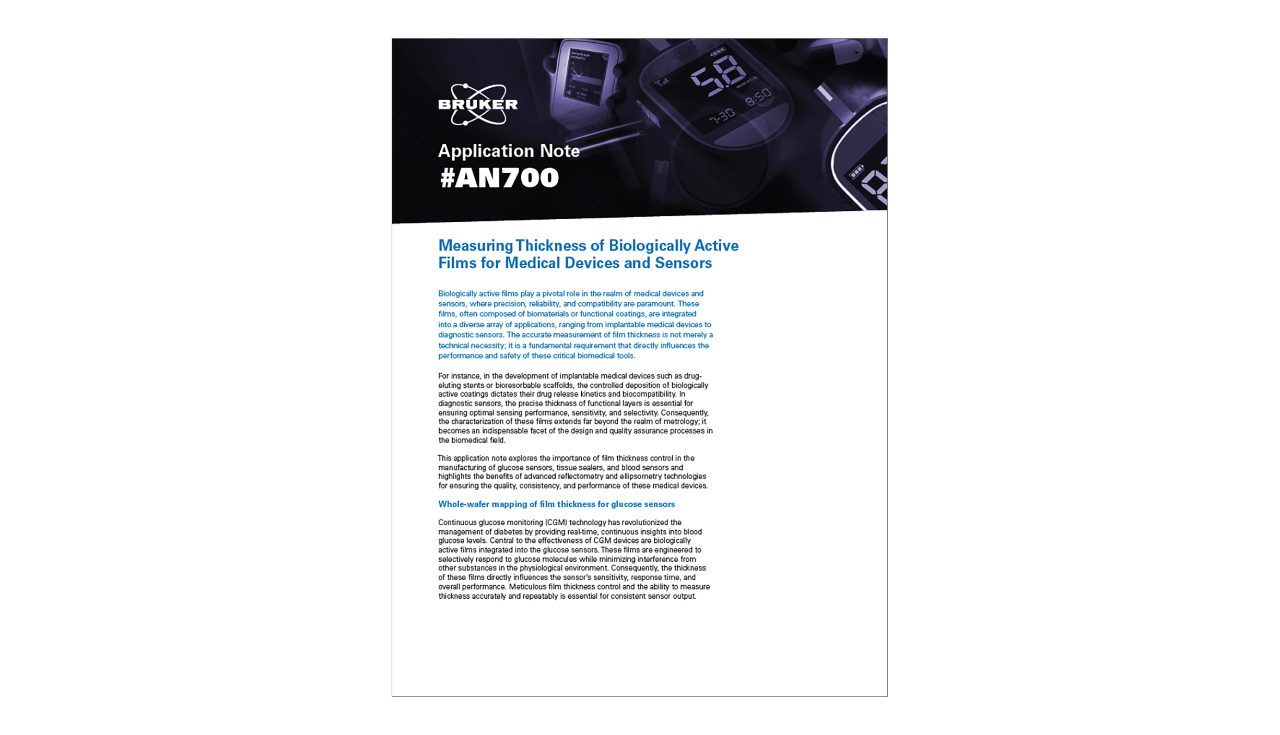
FilmTek thin film metrology instruments enable automated non-contact measurement and whole-wafer mapping of film thickness for glucose sensors, coating thickness mapping on the surface of metal jaws, and film thickness determination for multi-layer stacks in single-use blood sensors.
RECOMMENDED SYSTEMS:

MEMS
Perform fully-automated film thickness and refractive index measurements of oxide, nitride, oxide/nitride, ONO, amorphous carbon, resist, and oxide/polysilicon/oxide films on patterned device wafers.
Fully-automated FilmTek ellipsometry and reflectometry tools feature cassette-to-cassette wafer handling, 50µm spot size, pattern recognition, and SECS/GEM with a best-in-class combination of performance and price.
RECOMMENDED SYSTEMS:

Transparent Substrates
Accurately and uniquely determine thickness and optical constants of thin absorbing films on transparent substrates.
FilmTek reflection and transmission spectrophotometry systems enable non-contact optical characterization of virtually all translucent films ranging in thickness from less than 100 Å to approximately 150 µm with very high accuracy and repeatability. Typical measurement applications include ITO, NPB, Alq3, Si3N4, SiO2, polysilicon, a-Si, and multi-layer structures.
RECOMMENDED SYSTEMS:

New Materials
Characterize new materials with a wide range of rapid, accurate, and reliable R&D measurement capabilities.
FilmTek benchtop tools with automated wafer mapping enable measurements of multiple layer thicknesses, indices of refraction [n(λ)], extinction (absorption) coefficients [k(λ)], energy band gap [Eg], composition (e.g., %Ge in SiGex, % Ga in GaxIn1-xAs, %Al in AlxGa1-xAs, etc.), surface roughness, constituent / void fraction, crystallinity / amorphization (e.g., degree of crystallinity of Poly-Si or GeSbTe films), and film gradient.
RECOMMENDED SYSTEMS:

Unknown/Complex Materials
Independently and unambiguously determine thickness (t), refractive index (n), and extinction coefficient (k) for unknown materials.
FilmTek combined multiple-angle reflectometry and rotating compensator design ellipsometry systems deliver unprecedented performance with high-throughput automated mapping of patterned and un-patterned samples, 0.03 Angström repeatability for thin films, an extended thickness range from bare substrate to 50µm, and sub-Angström accuracy for complex, multi-layer thin film structures.
RECOMMENDED SYSTEMS:
Frequently Asked Questions
By combining Ellipsometry with multi angle reflectometry, we are able to provide best-in-class Refractive Index accuracy down to 2x10⁻⁵. The ellipsometry component is capable of measuring very thin films on the Angstrom level, while the multi-angle reflectometry component can measure films up to 350 µm thick.
FilmTek’s product line typically uses a light source for both 0° and 70° incident angles. The 0° light travels down to the sample, reflects off the sample and then back up to a detector. The 70° light travels through a polarizer and a compensator before arriving at the sample, and the reflectance off the sample travels through a compensator and into a detector. This signal is used for both ellipsometry and reflectometry.
We use a visible light source (~400 - 950 nm) for ellipsometry and 70° reflectometry, and a DUV/Vis light source (~220 - 950 nm) for 0° reflectometry, with an optional NIR source extending the range to ~1690 nm.
FilmTek tools can measure Refractive Index and Extinction Coefficient, film thicknesses for single-layer or multilayer stacks, roughness, and crystallinity.
Any type of solid/semi-solid sample can be used with FilmTek tools, and the thickness ranges will change by sample due to differences in optical properties of various materials (i.e. pure metals, like copper, will become opaque at smaller thicknesses than materials like SiO2.)
While typical ellipsometry has a limited amount of data to use for modeling, which can often result in multiple solutions, FilmTek tools combine ellipsometry with mutliangle reflectometry, which allows for a unique solution. This allows for Film Thickness accuracy to the sub-Angstrom level, and Refractive Index accuracy down to 2x10⁻⁵.
FilmTek tools can be found in a wide variety of industries, from medical devices to sensors to front-end and back-end semiconductor manufacturing. The tools are used in both R&D and inline production environments.
For semiconductor fabrication, the FilmTek tools are generally used to measure optical properties and film thicknesses of single layers and multilayer stacks, especially for films like Si3N4 where the Refractive Index can vary greatly at different process tools and even across wafers. FilmTek products are found in both R&D and inline production environments.
Medical devices typically use FilmTek tools for thicker films, phase change materials, and to measure optical properties.
FAQs About Operation and Data Collection/Analysis
No setup required. The sample is either handloaded or loaded via robot, and the data is collected based on the recipe selected by the user.
No preparation required. Sample can be measured as is.
An NIR light source might be required for thicker films (>150 µm.)
After data is collected, a model can be created using each layer on the film stack down to the substrate (if a layer in the stack is opaque, that can be assumed to be the substrate in the model.) The optical properties of each layer can be varied. The model data can then be fit to the measurement data, adjusting the thickness and optical properties of each layer, as set by the user. Once the model is complete, it can be saved as a recipe and used automatically.
The primary source of error in ellipsometry and reflectometry is an incorrect model, either utilizing an incorrect thickness range or using the wrong material and/or optical properties.
A poor fitting of simulated spectra to measured spectra typically results from a mistake in modeling. By floating optical properties or adjusting thickness ranges, a poor model can be corrected to yield good results.
Looking for support with your specific data? Contact our ellipsometry and reflectometry experts.
Learn More About Our Technology


Get Expert Support
Ask us a question, request more information, or get in touch with a Bruker sales representative.