
superlimator™
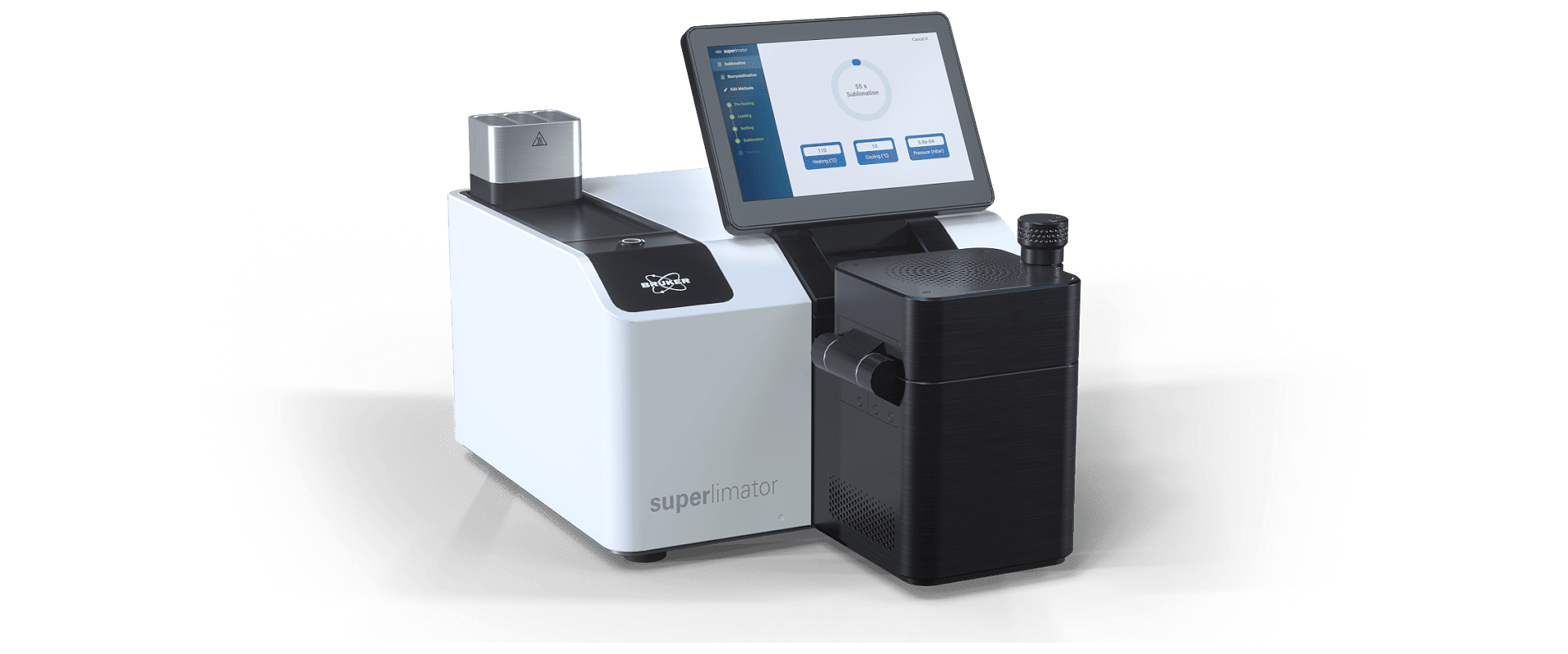
ボタンひとつでサンプル調製を行い、イメージングを効率化
質量分析の再現性は万全です。では、マトリックスコーティングはどうでしょうか?
一部の空間解析手法では、メソッド移管や施設間での再現性に課題があります。しかし、MALDIイメージングではその心配はありません。superlimator™の自動化ワークフローにより、装置、施設、オペレーターに依存しない高い再現性を備えたサンプル調製を実現します。
3台のsuperlimator™と、広く使用されている3種類のマトリックス(DHAP、DHB、CHCA)を用いた評価では、マトリックス転写効率は一貫して75 ± 5%を達成しました。
この高い信頼性により、自施設の装置で取得したデータはもちろん、共同研究先のラボや異なるオペレーターによる測定結果でも、一貫性と比較可能性に優れたMALDIイメージングデータを得ることができます。経験豊富なユーザーから新規ユーザーまで、誰が使用しても信頼できる結果を提供します。

必要なときに確かな再現性を。求めるときに柔軟性を。

superlimator™は、日常的な分析から探索的研究まで幅広い用途に対応できるよう設計されています。一般的なMALDIマトリックス向けの検証済みプロトコルを標準搭載しており、導入初日から高い再現性を実現します。一方で、各種パラメータを柔軟に設定できるため、経験豊富なユーザーは条件の最適化や新規マトリックスの評価、新たなアプリケーションに合わせたワークフローの構築も可能です。これらすべてを、直感的に操作できる単一のプラットフォームで実現します。
さらに、検証済みプロトコルは長期間にわたり高い再現性を維持するため、今日取得したデータも数か月後のデータと比較可能です。これは、長期的な研究や多施設共同研究において極めて重要な要素です。
2-in-1ソリューション: 蒸着と再結晶化ワークフローを1台に統合
すでにBrukerの質量分析計とSCiLS™ソフトウェアをご利用であれば、superlimator™がMALDIイメージングワークフローを完成させます。BrukerのMALDIイメージングソリューション向けに設計され、IntelliSlides®およびfleXmatrix®キットに最適化されているため、メソッド開発やサードパーティ製システムとの複雑な連携作業を行うことなく、既存の検証済みワークフローにシームレスに組み込むことができます。
さらに、マトリックス蒸着と制御された再結晶化を1台の自動化装置に統合することで、個別の装置や煩雑な手作業を不要にします。1つのプラットフォーム。1つの検証済みワークフロー。スライドからイメージング、そして新たな知見へ。

細胞レベルの空間分解能で、信頼性の高い生物学研究を実現

シングルセルMALDIイメージングでは、個々の細胞の分子情報を保持できる均一なマトリックス層が不可欠です。
細胞の不均一性、腫瘍微小環境、オルガノイド、希少細胞集団の解析では、分析対象物質のわずかな拡散であっても、生物学的に重要な違いを見えにくくしてしまう可能性があります。
superlimator™は、極めて薄く均一なマトリックスコーティングを形成することで、細胞レベルの構造情報を保持しながら、シングルセルレベルでの代謝物や脂質の高感度かつ信頼性の高い検出を可能にします。さらに、自動化された蒸着ワークフローにより、スライド間で一貫したサンプル調製を実現し、研究者がサンプル調製ではなく生物学的な発見そのものに集中できる環境を提供します。
迅速・高効率・シームレスなラボ導入を実現

superlimator™は、高速処理と省スペース設計を両立。一般的なMALDIマトリックスをわずか5~10分で蒸着し、迅速なサンプル調製とハイスループット運用を実現します。
コンパクトな筐体は既存のラボ環境へ容易に導入でき、さらに少量のマトリックスで高い転写効率を実現することで、ランニングコストの低減にも貢献します。
Technical Features
| Fast | 5 - 10 minutes for standard matrices |
| Easy | Validated workflows available |
| Reproducible | < 5% standard deviation of matrix transfer between different matrices and instruments |
| Efficient | Reliable / reproducible matrix transfer of 75%
|

「質量分析のサンプル調製が、これほどシンプルになるとは思ってもいませんでした。superlimator™の直感的で再現性の高いワークフローにより、MALDIイメージングで5 µmの空間分解能を達成できるようになり、空間プロテオミクスやマルチモーダル研究の可能性が大きく広がりました。」
Prof. Dr. Rajkumar Savai, Chair of Lung Microenvironmental Niche in Carcinogenesis, Institute for Lung Health (ILH), Justus Liebig University Giessen, Germany

「superlimator™は、蒸着が難しいマトリックスであっても、MALDIイメージング用サンプルのコーティングを迅速かつ容易に、そして高い再現性で実現します。直感的な操作性と優れたメンテナンス性に加え、必要なマトリックス量も最小限です。とりわけ高空間分解能イメージングにおいて、当研究室の標準的なサンプル調製プラットフォームとして活用しています。」
Dr. Jens Soltwisch, Group leader Biomedical Mass Spectrometry, University of Münster, Münster, Germany
よくあるご質問



研究用にのみ使用できます。臨床診断には使用できません。