Magnetic Particle Imaging (MPI) represents a breakthrough in preclinical imaging, offering researchers and scientists a powerful tool for visualizing magnetic nanoparticles with unmatched speed, sensitivity, and quantitative accuracy. Unlike traditional imaging modalities, MPI delivers virtually in real-time, three-dimensional images at millisecond intervals—enabling dynamic tracking of biological processes, in vivo cell migration, and rapid assessment of disease progression. This technology is entirely ionizing radiation-free, making it ideal for longitudinal studies and repeated imaging without compromising subject safety.
Explore MPI's signal behavior — now, in your browser:
https://www.bruker.com/en/landingpages/bbio/mpi-simulator.html
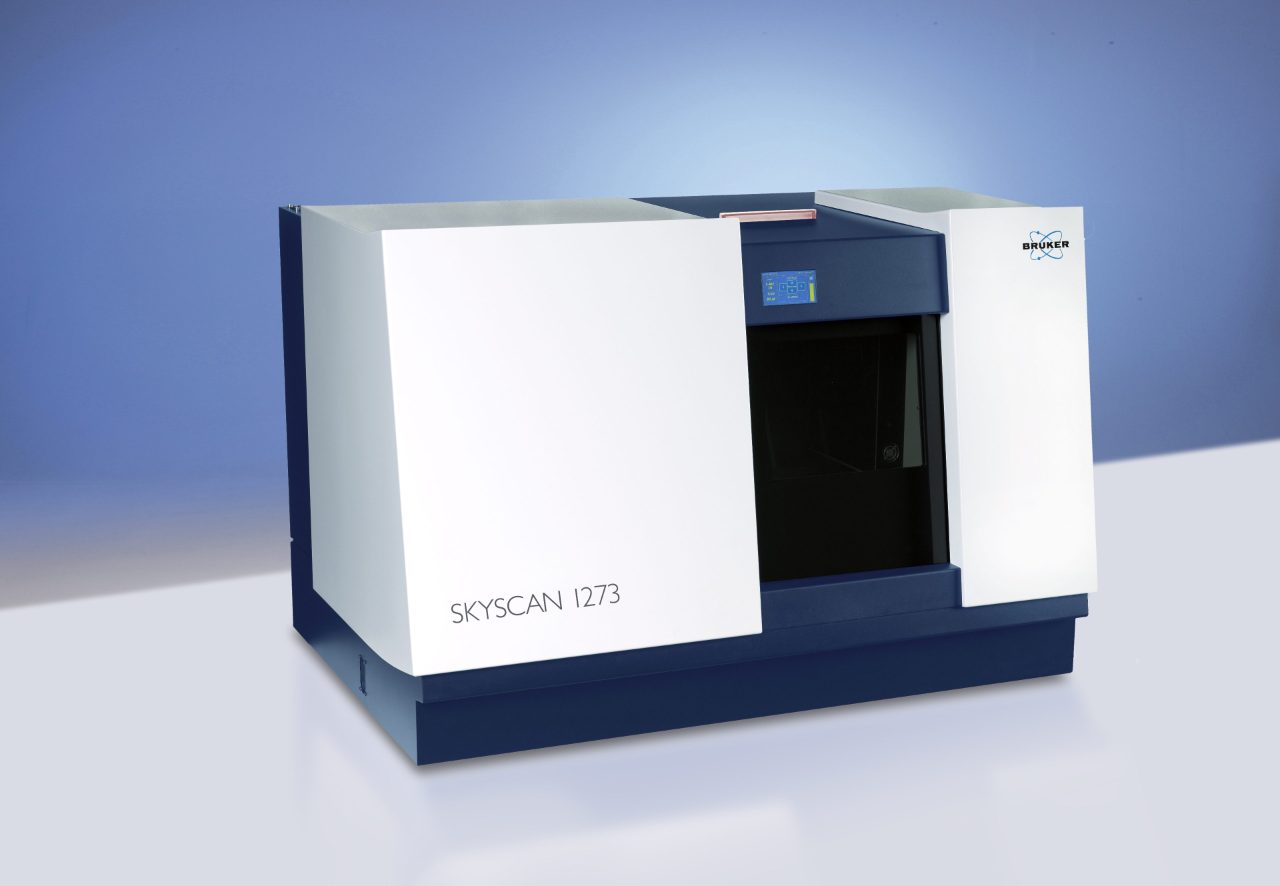
Currently under development through close collaboration with leading academic and industry partners, Bruker’s next-generation MPI platform is designed to meet the evolving needs of the biomedical research community. By integrating advanced features such as dual-frequency transmission, sequential CT, and magnetic fluid hyperthermia, our system empowers users to seamlessly transition from diagnostics to localized therapy within a single workflow. With a focus on sustainability, operational efficiency, and future-proof innovation, Bruker’s MPI solution is paving the way for new discoveries in cardiovascular research, oncology, neurovascular imaging, and beyond—helping scientists and clinicians unlock new possibilities in precision medicine and theranostics.
Theranostics – the integration of diagnostics and therapy – addresses a critical challenge in modern medicine: bridging the gap between disease detection and treatment. By uniting both processes within a single platform, theranostics minimizes delays, reduces errors, and enables more direct, adaptive, and personalized interventions. This approach is especially valuable in complex therapies, where factors like invasiveness, dosage, localization, specificity, and control are deeply interconnected. Traditionally, optimizing one aspect often compromises another, but theranostics helps overcome these trade-offs by linking diagnosis and treatment into a unified, responsive strategy.
Magnetic Particle Imaging (MPI) exemplifies the theranostic principle by combining highly sensitive imaging with localized therapy. Using the field-free region (FFR) of MPI, spatial information is precisely encoded, allowing for 3D targeted magnetic fluid hyperthermia (MFH). By combining high-frequency magnetic fields with the MPI`s FFR, magnetic nanoparticles can be heated up at the desired location, providing magnetic control over the therapy target. The tunable FFR ensures that treatment is both precise and minimally invasive, while MPI-based thermometry serves as a feedback signal to regulate the extent of heating – serving as an integrated dosage control. Thus, these tracers act as nanoscale sensors, helping clinical researchers maintain optimal thermal dosages and customize therapy for each application. This capability reduces the risk of both over- and under-treatment, thereby enhancing the MHF dosage control.
The combination of MPI-based diagnostics and spatially selective MFH has demonstrated significant potential as an integrated theranostic platform (https://doi.org/10.7150/thno.86759).
It enables:
Discover more about theranostic MPI-guided MFH applications in our detailed app note:
Theranostic systems offer promising avenues to enhance treatment options for complex diseases
The state-funded future project “TherSys” (German Federal Ministry for Economic Affairs and Energy) is centered on developing integrated theranostic platforms that combine mRNA-based therapeutics with virtually real-time tracking inside the body. This project is lead by the two industry partners BioNTech and Bruker and supported by several high-stake academic partners. Specialized lipid nanoparticle delivery systems are designed to carry both therapeutic RNA and imaging agents, such as magnetic nanoparticles. Once administered, these multifunctional carriers can be tracked in vivo with high spatial and temporal resolution using Magnetic Particle Imaging and other advanced imaging modalities. In the second phase, the project involves the local activation of mRNA therapy at the target site through magnetically induced hyperthermia.
For more information on future mRNA projects and project partners visit https://konsortium-mrna.de/.
We are also proud to collaborate with Fraunhofer IMTE (Fraunhofer IMTE - Fraunhofer IMTE) on an initiative to integrate a novel hyperthermia insert into Bruker’s upcoming MPI scanner. This innovation was recently presented at the International Workshop on Magnetic Particle Imaging (IWMPI) 2025, marking a significant milestone in the development of a next-generation theranostic platform.
MPI performance arises from the synergy between the characteristics of the advanced MPI system and optimization of the tracer design. Developed by micromod Partikeltechnologie GmbH, synomag®-pro represents the gold standard of MPI tracers. A PEG surface provides a biostealth effect while the isotonic formulation ensures physiological tolerability. The tracer retains benchmark sensitivity and quantitative performance, with high-contrast, high-temporal-resolution imaging demonstrated in vivo at clinically relevant iron doses (find out more in the whitepaper). These characteristics establish synomag®-pro as an excellent and ready-to-use tracer for preclinical MPI. synomag®-pro is recommended for in vivo animal studies, especially on Bruker’s upcoming theranostic-ready MPI platform BioTracer OctwoPI. We are proud to collaborate with micromod to make the tracer available to the MPI community (visit the webshop).
Multi-color Magnetic Particle Imaging
Cardiovascular Imaging
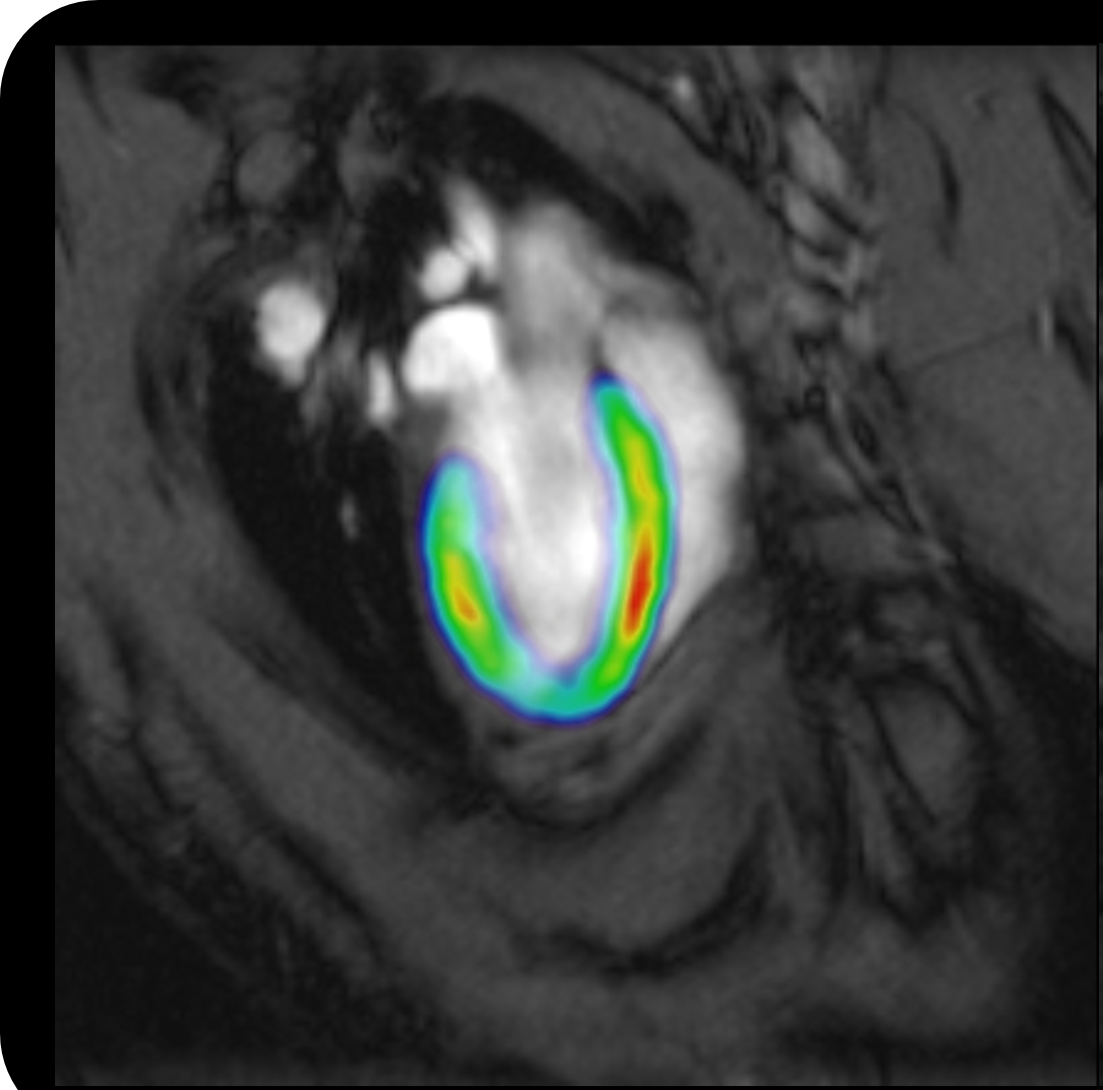
MPI enables ultra-fast, non-invasive tracking of blood flow dynamics and heart function at millisecond resolution, as demonstrated in in vivo mouse heart imaging using clinically approved tracers.
[J. Franke et al., IEEE Trans Med Imaging, 2020, doi:10.1109/TMI.2020.3017160]
Neurovascular Imaging