
pmod Quantification Software
Bruker’s Multimodality Image Analysis Toolkit
Current freeware and in-house software typically provide users with limited functionality. This may prove simple to work with when you are getting started, but once you run into the limitations of the tool you will have to learn to use new tools or lose time developing extended functionality.
pmod brings you tools for basic quantification such as SUV and %ID/cc, all the way to fully quantitative analysis of PET data using kinetic modelling. With over 30 years of experience in quantitative image analysis, pmod has been cited in nearly 4000 publications since 2013 (>600 in 2021), including many high-impact journals pmod even includes a flexible Scientific Data Management System to help you structure, track and archive your projects.
pmod streamlines complex image analysis workflows by bringing advanced post-processing, co-registration, and fusion capabilities into one intuitive environment. With support for cross-modality annotation and analysis in 2D, 3D, and 4D, and dedicated tools for MRI, NMI, and microCT, it enables seamless, efficient data exploration across modalities.
Experience the improved, user-friendly interface designed to accelerate your analysis—register now to reserve an extended 3‑month trial*.
*Extended trial will be delivered upon software release. Standard trial is 1-month. Software installation and online license activation required.
Stay Current with pmod Software
The latest version of pmod software is 4.5. If you're still using version 4.3 or earlier, your software is now more than one version behind, meaning you're potentially missing out on powerful new features and enhanced performance.
To ensure you're benefiting from the latest advancements and improvements, we strongly recommend upgrading to the current version today.


Why Choose pmod?
pmod...
- brings a graphical user interface to complex workflows
- is your workhorse for a broad range of imaging projects
- is a proven translational tool
- is your trusted tool for quantitation & publication
- supports reproducible science
- keeps your tools up-to-date
- is here to empower your image analysis

Data Management (SDMS)
The Scientific Data Management System is built into all pmod licenses as standard. Bring professional power to your research environment with pmod’s SDMS, giving you centralized and scalable data management. Safe archiving of processed images and all results, plus protocols for reproducible repeat analysis and batch processing enhance your image analysis workflows.

Tutorial Videos
Learn how to work with your data and workflows for typical applications with our step-by-step tutorial videos.
FAQs
Is pmod only for brain PET analysis?
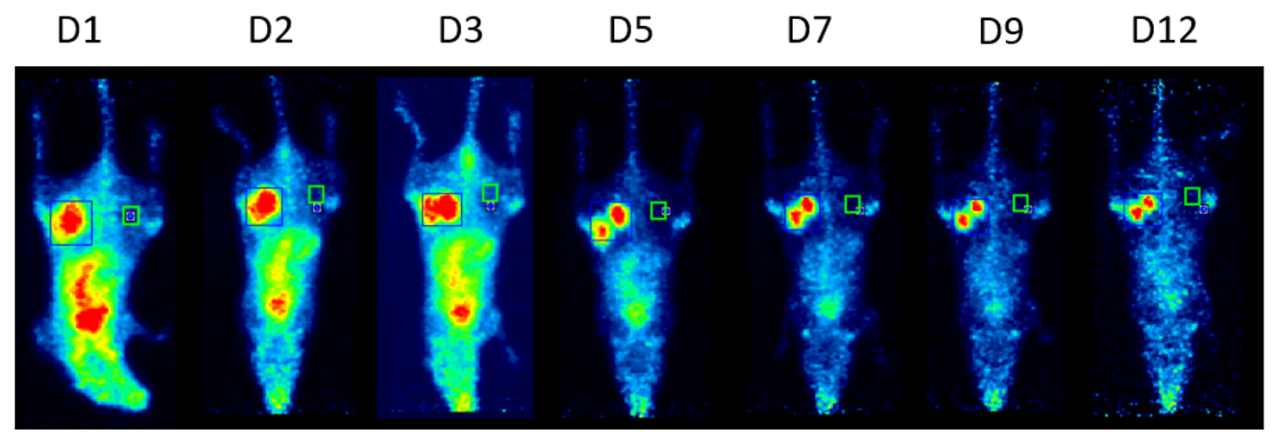
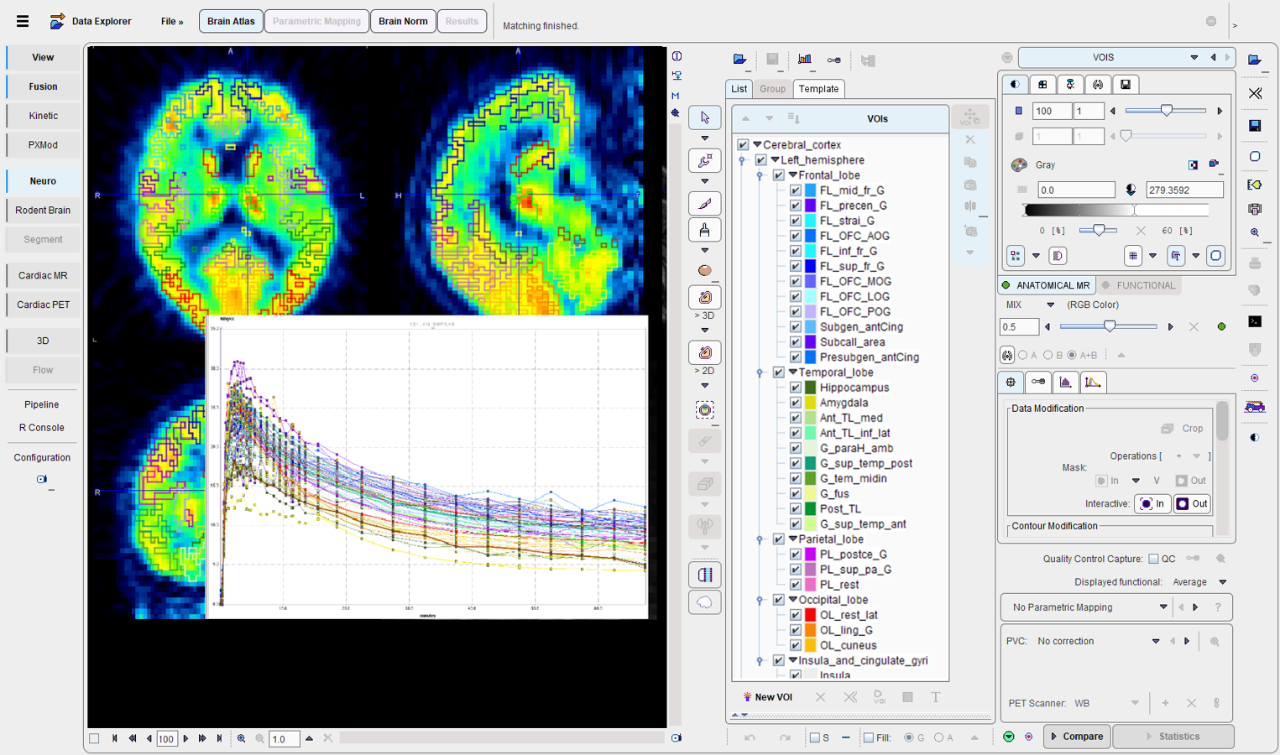
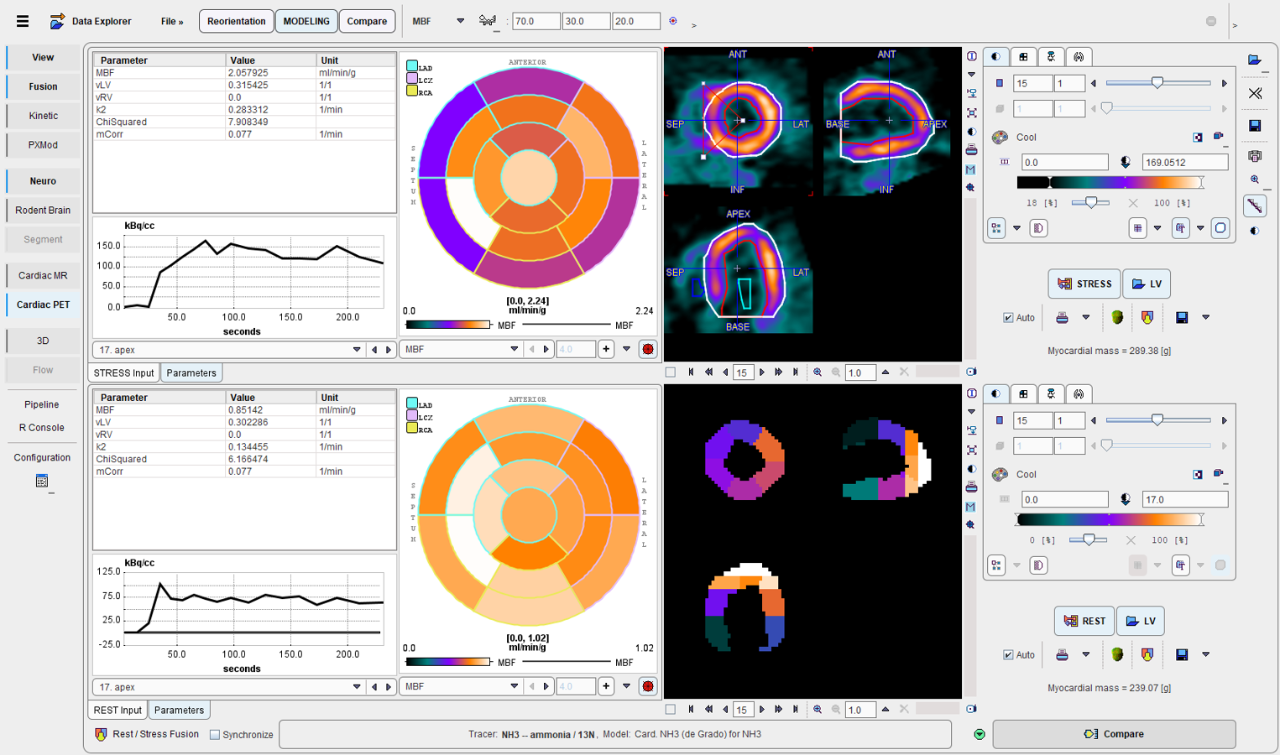
No. pmod’s Core Toolkit is designed for a wide variety of research applications across multiple disciplines. While it launched as a leader in quantitative brain PET, our platform now powers Oncology and Cardiology research as well. For example, researchers utilize pmod to analyze dynamic whole-body PET scans with the latest large-axial-field-of-view PET/CT systems—enabling kinetic modeling for organs like the liver, heart, and tumor biomarkers, far beyond solely neuroimaging.
Is pmod only for PET kinetic modelling?
No. pmod’s flexible capabilities extend to SPECT, CT, and MRI modalities, as well as hybrid and multi-modality data formats. You can apply our region-growing, threshold-based, and atlas-driven segmentation tools to quantify organ and tissue tracer uptake or contrast in your datasets. For example, measure Standard Uptake Values (SUV), SUVR, or percent injected dose in PET or SPECT, and extract time-series such as blood-brain barrier transport in MRI. Visualize outputs with maximum-intensity projections (MIP), interactive 3D rendering, and publication-quality exports ready for your manuscripts.
Is there a steep learning curve to start using pmod?
Some workflows, such as advanced kinetic modeling, require familiarity with the underlying methodology. However, each new release of pmod delivers intuitive updates to user interfaces, reducing barriers for new users. For instance, you can access model configuration and parametric mapping tools through graphical interfaces with no coding required. Our extensive tutorial video library walks you step-by-step through workflows including SUV analysis, batch segmentation, and export for statistical analysis—helping you get up to speed rapidly.
Can pmod do batch processing?
Yes. pmod provides integrated batch processing in multiple modules, including PNEURO (neurological PET quantification), PNROD (organ kinetic modeling), and PXMOD (kinetic modeling for different imaging modalities). Additionally, our Pipeline interface allows you to build fully customized automated analysis workflows through a drag-and-drop graphical user interface—enabling you to process datasets from longitudinal mouse studies or large clinical cohorts without a single line of code.
What does professional software offer above freeware?
While freeware and open-source solutions may offer basic tools, pmod delivers comprehensive quality, reliability, and support critical for high-stakes research. Our software is developed with rigorous security standards, integration of the latest code libraries, and fully-tested support for current versions of Windows, MacOS, and select Linux distributions. You benefit from expert technical support, rapid bug fixes, continuous rollouts of new features, and peace of mind that your analysis meets data integrity and security standards required for grant, publication, and regulatory compliance.
Are certain versions of pmod now outdated?
Versions more than five years old are no longer supported or available. The current pmod version 4.5 was released in December 2024 and features major user interface upgrades, significantly enhanced performance, and adoption of the Java LTS version 21 runtime—ensuring stability and compatibility for modern computing environments.
What are the benefits of annual software licensing?
Our annual subscription licensing gives you complete flexibility—scale the number of users and tools to fit each project’s needs, with no long-term commitments or up-front capital required. For example, core facilities can add users for a high-volume project year and adjust the following year as needed. As a subscriber, you’re always entitled to the latest software version, with immediate access to new analysis features, performance gains, and full compatibility with your institution’s mandated software update cycles.
Does pmod include data management for all my results?
Yes. Every pmod license includes our Scientific Data Management System, allowing you to centralize project databases for your research group or imaging facility. Store and retrieve all your processed images, segmentation masks, statistical outputs, and kinetic modeling files in an organized, auditable structure—facilitating reproducibility and collaboration across teams and projects.
Does pmod support FAIR data principles?
Yes. By combining pmod’s results export tools with our Scientific Data Management System, your data becomes Findable, Accessible, Interoperable, and Reusable. Project-level metadata, standards-compliant export formats, and robust search features help you meet institutional, funding, and publication requirements for data stewardship.
Does pmod support dosimetry?
Yes. pmod streamlines extraction and analysis for dosimetry studies, including first-in-human PET tracer evaluations. You can merge sequential acquisitions spanning multiple radionuclide half-lives, perform series-wide decay corrections, and adapt 4D segmentations for moving organs or tissues between scans. pmod also supports model-based organ cumulated activity calculations compatible with standard reference tools for effective dose assessment in research and regulatory submissions.
Where do I download the software and activate my license?
You can download the installers and full documentation for all supported pmod versions on our Service page: https://www.bruker.com/protected/en/services/software-downloads/preclinical-and-biomedical-imaging.html. To access, create a Bruker account—legacy credentials from www.pmod.com are no longer valid, and the old website now redirects to our new pages. Upon purchase, licenses for pmod 4.5 are delivered as electronic activation tickets with detailed step-by-step instructions.
Can pmod handle multimodal high-throughput preclinical imaging?
Yes. pmod is validated for both clinical and preclinical research. Our robust toolkit supports applications such as multi-animal PET/CT imaging using 4-mouse cradles, neurological studies with atlas-based batch quantification in rodent models, and streamlined high-throughput analysis for large-scale datasets. Dedicated batch pipelines are available for preclinical and human brain PET studies, ensuring you can efficiently process and analyze multi-modality data without bottlenecks.
Is there a difference between pmod for academia and pmod for industry?
Yes. pmod packages for industry include advanced access control and audit trail features to support compliance in regulated environments. Pmod ATL, our industry-grade edition, is available for Windows and MacOS. Academic licensing includes support for Windows and MacOS, with extended compatibility for specific Linux environments—tailored to meet the needs and IT policies of universities and research institutes worldwide.
Does pmod support floating site-licenses?
Yes. Floating licenses maximize your return on investment by allowing flexible use across your institution. With pmod 4.5, all licenses are eligible for floating configuration—enabling multiple team members to run analyses in parallel without restricting use to a single scanner workstation. This setup boosts productivity, supports remote workflows, and helps imaging facilities maintain continuous quality control while researchers are actively acquiring or analyzing data.
Ready to advance your research with powerful, flexible analysis tools? Contact us today to discuss the best pmod package and licensing options for your needs, or visit our Service page to get started with the latest version.